
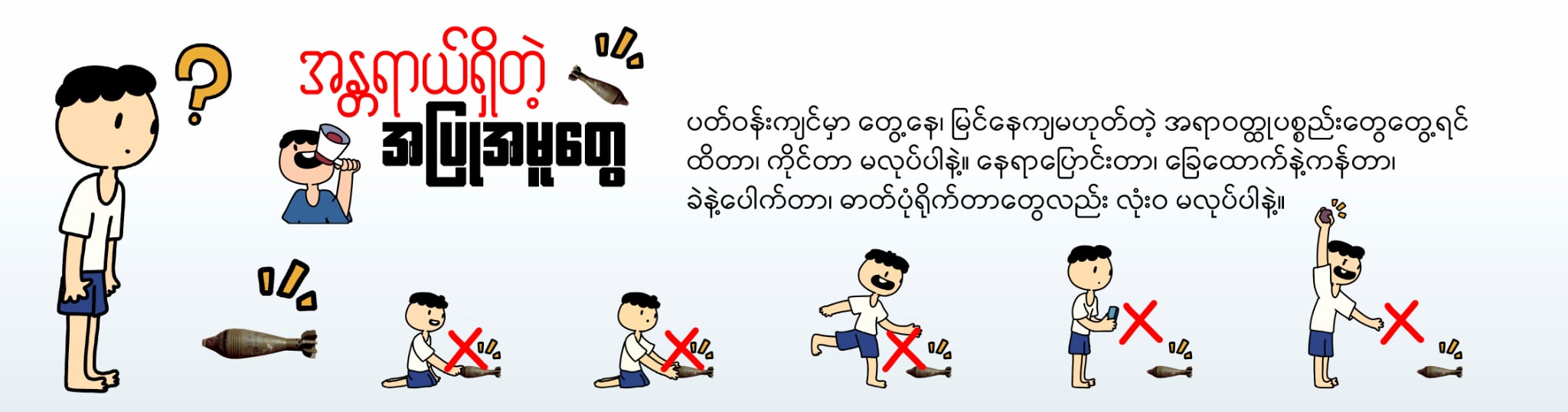

- Civilian casualties rise in southern Arakan amid relentless junta bombardments
- Photo exhibition in Mae Sot raises funds for Arakanese IDPs
- Ineligible youths recruited under NDEP in Mrauk-U, families say
- Arakan Army repels junta advances as clashes intensify in Kyaukphyu
- Photo News: “Silent Message” photo exhibition in Mae Sot highlights plight of war-affected Arakanese civilians
DMG Editorial: The Military’s Shift to Group Aerial Warfare
Since early 2026, the military council’s airstrikes are no longer conducted by single aircraft. Instead, operations now involve formations of four or more aircraft. This marks a shift toward coordinated, large-scale bombardment effectively a strategy of “mass killing” carried out through group aerial attacks.
19 Apr 2026
.jpg)
Since early 2026, the military council’s airstrikes are no longer conducted by single aircraft. Instead, operations now involve formations of four or more aircraft. This marks a shift toward coordinated, large-scale bombardment effectively a strategy of “mass killing” carried out through group aerial attacks.
According to recent documentation by DMG, when the military targets a location, it now deploys multiple aircraft including jet fighters and Y-12 planes in coordinated formations. These attacks are carried out in sustained waves lasting between 30 and 45 minutes, with continuous bombardment throughout that period.
CDM Captain Zin Yaw notes that this shift in tactics is intended to maximize destructive capacity from the air.
These attacks are no longer limited to conflict zones or military targets. Instead, they increasingly represent an expansion of aerial violence directed at civilian populations.
The March 8 bombing of a detention site in Ann Township, which reportedly resulted in the deaths of more than 100 detainees, and the April 1 airstrike near Ngapali that killed civilians, reflect a pattern of systematic and deliberate aerial attacks.
The intensification of airstrikes in Arakan, Sagaing, and Magway further indicates the erosion of the military’s control on the ground. As the Arakan Army (AA) expands its territorial control, the military has increasingly turned to the skies as its primary instrument of force escalating destruction against civilian infrastructure.
The targeting of markets, villages, and healthcare facilities goes beyond conventional military objectives. It reflects an attempt to dismantle local governance systems and undermine the foundations of civilian life.
Today, Arakan exists within a complex and fragile dual reality. On the ground, administrative structures under the United League of Arakan (ULA) are emerging in many areas, attempting to manage social relations, local economies, and governance.
At the same time, these developments are unfolding under the constant threat of aerial attack. Civilian life remains insecure, and reconstruction efforts are repeatedly disrupted.
The military council now appears increasingly indifferent to international pressure, carrying out attacks openly and with little restraint. As long as access to aviation fuel and technical support continues, these aerial assaults are unlikely to stop. Statements of “concern” from the international community have proven insufficient to protect civilian lives in Arakan.
The growing reliance on airpower has become both the military’s primary instrument of force and a driver of an escalating humanitarian crisis.
Arakan today is no longer just a battlefield. It has become a testing ground for whether civilian protection can be upheld amid sustained aerial warfare.

Opinion
.jpg)
How Can Myanmar’s Political Crisis Be Brought to an End?
By Admin 13 Sep 2026

By Cutting Trees, We Are Killing Ourselves
By Admin 06 Sep 2026

A Modern August We Must Never Forget
By Admin 31 Aug 2026
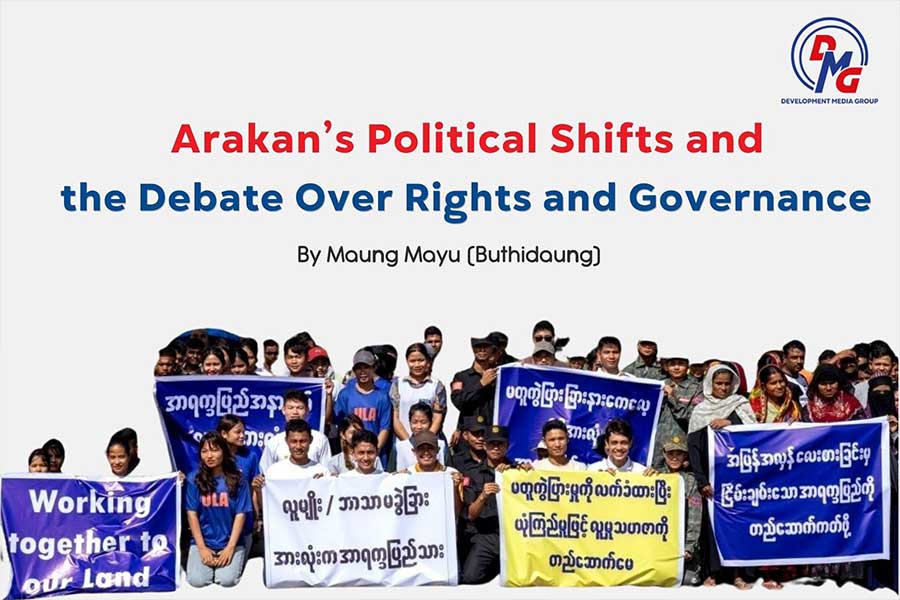
Arakan’s Political Shifts and the Debate Over Rights and Governance
By Admin 27 Aug 2026
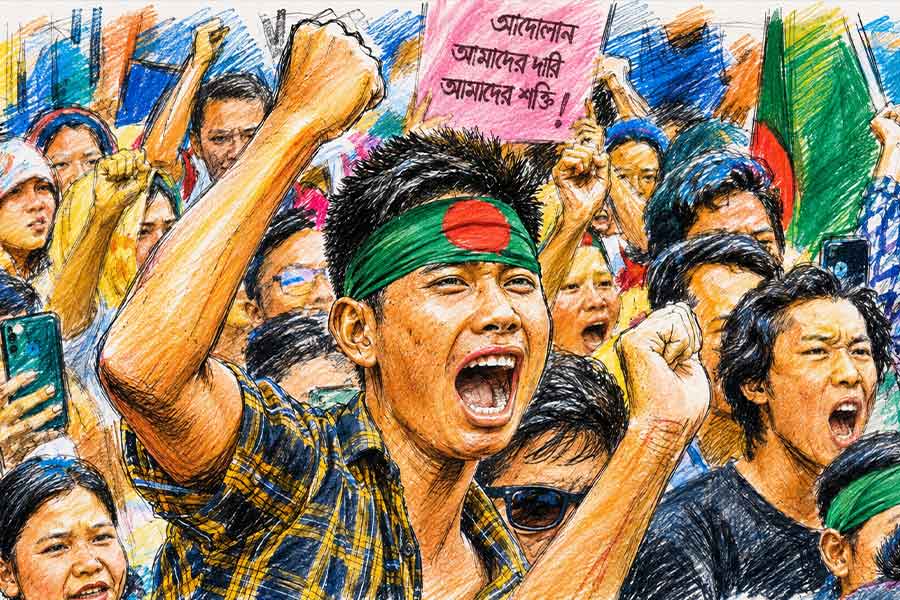
Securing Rights for Bangladesh's Indigenous Peoples is Indispensable
By Admin 09 Aug 2026
POLITICS

BUSINESS
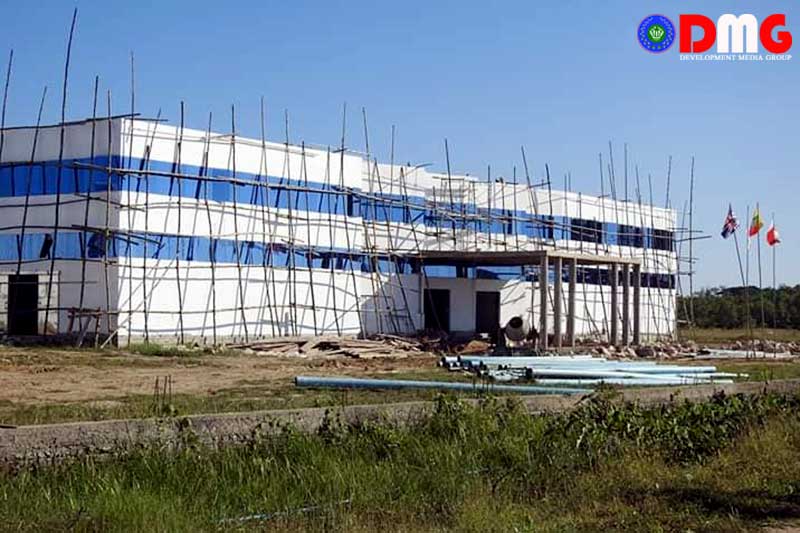
Industry to manufacture finished goods from coconut starting in early 2020
By Aung Kaung Zaw 20 Nov 2019