
- Junta intensifies offensive against resistance-held territory in strategic Sagaing town
- Fighting escalates in Sittwe as Arakan Army captures junta outposts
- Survivors of deadly Kyauktaw airstrike urgently need medical, humanitarian aid
- Junta seeks foothold on strategic island in Kaladan River as Arakan Army counterattacks
- Begging nearly doubles amid livelihood crisis in southern Arakan
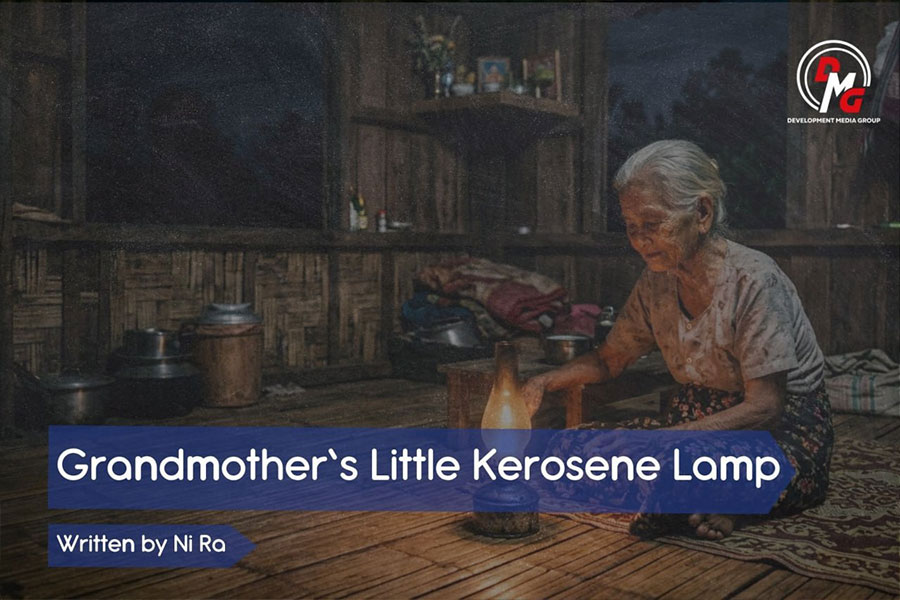
Grandmother’s Little Kerosene Lamp
If I were to say that my grandmother, my mother’s mother, belongs to a generation that preserved the tradition of the kerosene lamp, it would be both fitting and accurate.
08 Apr 2026
Written by Ni Ra
If I were to say that my grandmother, my mother’s mother, belongs to a generation that preserved the tradition of the kerosene lamp, it would be both fitting and accurate. She is a rural woman who was born and raised in a remote, isolated village, so remote, in fact, that she only saw and heard about electricity for the first time when she was already over 80 years old, when it was finally installed in her village.
From a very young age, my grandmother became familiar with the kerosene lamp. The same lamp she knew as a child remained with her throughout her life into her years as a grandmother with grandchildren and even great-grandchildren. That is why I say she belongs to the generation that carried forward the tradition of the kerosene lamp.
Yet, despite using it every day, she knew almost nothing about the oil itself where it came from, how it was extracted, who worked in the oil fields, or which countries produced it. These things did not seem important for someone like her, a village woman already in the twilight of her life. But one thing is undeniable: as long as she lived, that small kerosene lamp was essential to her existence.
I still remember my childhood, when I lived with my grandmother during my primary school years, separated from my mother. My mother had to struggle alone to support our household and pay for the education of her three children. Out of both compassion for my mother and a desire to ease her burden, my grandmother decided to take me in to raise me, care for me, and support my schooling.
And so, I moved from my mother’s care into my grandmother’s.
During those years, everything in my life revolved around her. She bathed me, fed me, applied thanaka to my face, and dressed me for school. When I wandered off through the village, she would follow me strictly, stick in hand, keeping me in line. It would not be wrong to say that my days were inseparable from her presence.
Living with her, I also became deeply familiar with her constant companion, the kerosene lamp. I studied under its dim light. I remember waking up at dawn, around three in the morning, to see her lighting the lamp and preparing the fire. After that, in its glow, she would make sweets to sell in the morning. Even now, whenever I see the flicker of a candle flame, I am suddenly reminded of her and her kerosene lamp.
There is one memory that has stayed with me even more strongly.
One night, I had a severe stomachache, so painful that I could not sleep. There was no clinic in the village, no pharmacy. If we wanted medicine, we had to travel more than two miles to the nearest village. As I writhed in pain, my grandmother gently turned me over, scooped a little kerosene from the lamp into her palm, and rubbed it onto my stomach. Not long after, the pain subsided, and I fell asleep without even realizing it.
Although my grandmother used the kerosene lamp frequently, she never used it wastefully. If others did, she would stop them. Having lived through many difficult times, she had developed a strong habit of frugality. She dried and stored rice, cooked meals early, and went to bed soon after sunset. These habits, I believe, were shaped by the harsh eras she had endured.
For me, the image of my grandmother feels more complete when seen through the light of that lamp. Her deep wrinkles, the age spots on her face, her slightly glistening, gentle eyes, and her silver-white hair, all seemed clearer and more vivid under its glow.
Now, I am approaching thirty. My mother herself has become a grandmother. And my own grandmother has lived to see her great-grandchildren grow up.
As for me, I have come of age in a time of war, a dark era. We, too, have lived through nights illuminated not by electricity, but by kerosene lamps. During the war, the bright lights of the city have been replaced by the dim glow of these small lamps. Especially for the lower classes, the kerosene lamp has become a central presence in their story of survival in this dark time.
In the markets, rows of handmade kerosene lamps are sold. For people who live day to day, the light of these lamps sustains their nights.
Last year, at the beginning of the rainy season, I visited my grandmother. She had grown very old. From a distance, she could no longer clearly recognize me. That night, the two of us sat together, talking about the past about old times, and about what had happened in the village during the war.
As elders do, she advised me to be careful how to live and move cautiously during wartime. Drawing lessons from the difficult eras she had lived through, she offered guidance and warnings to me, the younger generation.
Beside us, her small, soot-blackened kerosene lamp glowed steadily in the darkness.

Opinion
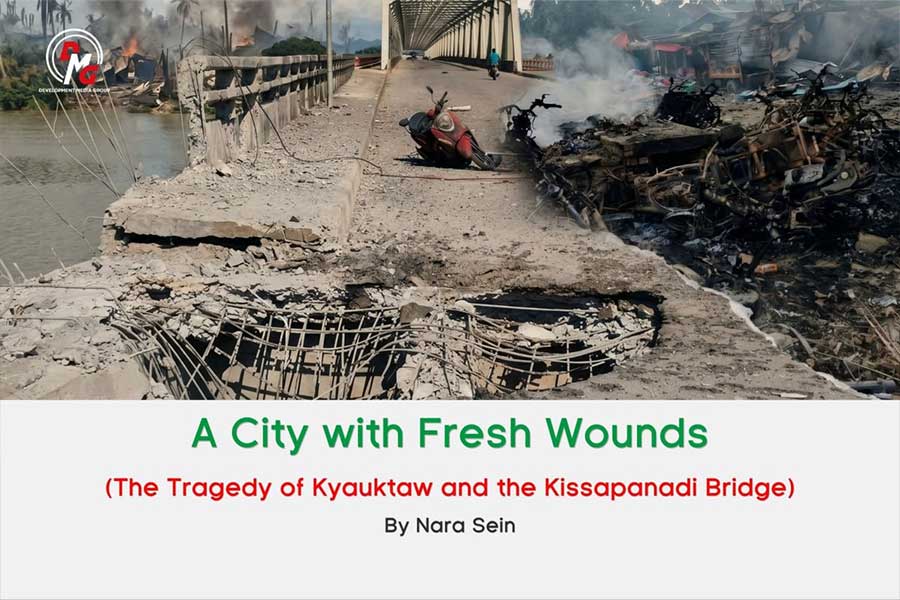
A City with Fresh Wounds (The Tragedy of Kyauktaw and the Kissapanadi Bridge)
By Admin 01 Oct 2026

Arakan Army’s Gains and the Changing Geopolitics of Arakan
By Admin 29 Sep 2026

Beyond Military Victory: What Is Myanmar’s Ultimate Political Objective?
By Admin 26 Sep 2026

UN at a Crossroads: Six Priorities for a Shared Future
By Admin 23 Sep 2026

.jpg)
How Can Myanmar’s Political Crisis Be Brought to an End?
By Admin 13 Sep 2026
POLITICS


BUSINESS
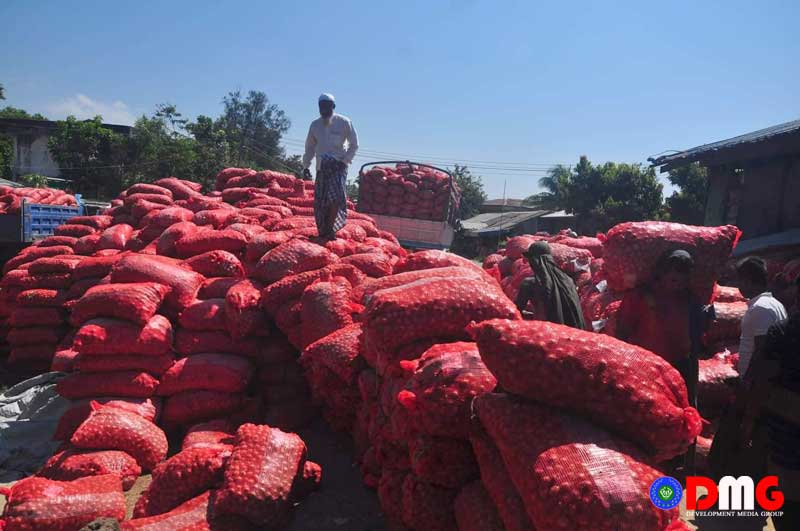
Industry to manufacture finished goods from coconut starting in early 2020
By Aung Kaung Zaw 20 Nov 2019