


- ULA warns Arakan residents of airstrike risks during Thadingyut festival
- Months-long internet blackout drives up costs for residents of Thandwe and Gwa
- At least five injured in junta Y-12 airstrikes on Werathani villages
- Junta orders Sittwe residents to dismantle home bomb shelters
- Arakan records most armed incidents as 78 civilians killed across Myanmar: NLTA
Bangladesh’s New Foreign Policy Gamble and the Arakan Puzzle
Bangladesh’s political landscape entered an extraordinary turning point in 2026. The fall of the Sheikh Hasina government, which had dominated power for nearly two decades, not only reshaped Bangladesh but also disrupted the geopolitical balance across South Asia.
06 Apr 2026
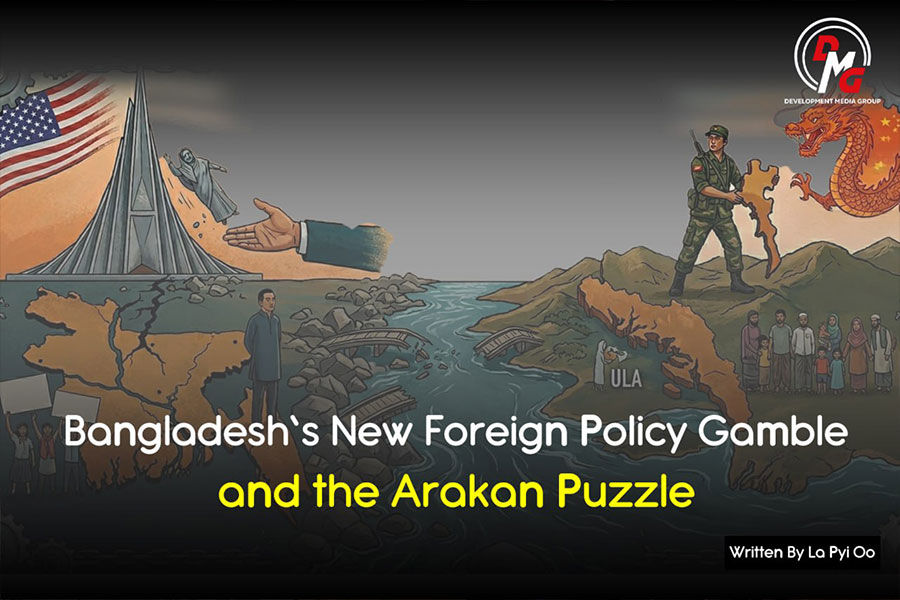
Written By La Pyi Oo
Introduction
Bangladesh’s political landscape entered an extraordinary turning point in 2026. The fall of the Sheikh Hasina government, which had dominated power for nearly two decades, not only reshaped Bangladesh but also disrupted the geopolitical balance across South Asia.
For India in particular, this meant the loss of one of its closest regional partners. Relations between Dhaka and New Delhi have since entered a period of marked strain. In this context, the rise of a new BNP-led government under Tarique Rahman has not only begun redefining India-Bangladesh relations, but has also brought neighboring Myanmar’s Arakan (Rakhine State) into play as a new strategic variable.
Historical Context and a Turning Point
Looking back, just as Myanmar’s 1988 pro-democracy uprising challenged authoritarian rule, Bangladesh’s 2026 student-led uprising represents a historic rupture against prolonged repression. The key difference, however, is that Bangladesh’s transformation has also directly shaken India’s regional influence.
India’s “Neighbourhood First” policy, which had largely centered on Sheikh Hasina, now appears to have been a major strategic miscalculation. Hasina’s flight to India weakened years of Indian influence and created significant obstacles to rebuilding ties with the new government in Dhaka.
Diplomatic Tensions: The Hasina Issue
The most immediate diplomatic challenge between Dhaka and New Delhi revolves around Sheikh Hasina.
Her presence in India has fueled public anger in Bangladesh. The Tarique Rahman government, under pressure to uphold the rule of law and respond to public demands, is expected to continue pressing India over her status and possible return, especially given the serious allegations and investigations surrounding her.
If India refuses to cooperate, bilateral relations could descend into a prolonged period of tension.
India, meanwhile, faces a dilemma: surrendering a former ally carries reputational and political costs, while refusing risks deepening mistrust with Bangladesh. Some observers may view relocation to a third country, such as Thailand or the UAE, as a possible face-saving exit, though such an outcome remains speculative.
Public Sentiment and Anti-India Waves
Anti-India sentiment in Bangladesh has reached unusually high levels. Many Bangladeshis believe India supported Hasina’s authoritarian rule at the expense of the country’s democratic aspirations.
Prime Minister Tarique Rahman appears to be managing this public sentiment carefully, using it as leverage in negotiations with India while also recognizing the practical necessity of maintaining ties with New Delhi.
As a result, Bangladesh now seems to be pursuing a more balanced and reciprocal relationship with India, one based on mutual respect and national interest rather than the one-sided alignment of the past.
Economic and Geopolitical Competition: China and the United States
Bangladesh is also diversifying its foreign policy to reduce excessive dependence on India.
China has moved quickly to capitalize on this shift, expanding engagement and seeking a larger role in infrastructure projects, especially ports and industrial zones. This positions Beijing as an important counterweight to India’s influence.
The United States, meanwhile, has welcomed Bangladesh’s democratic transition and appears interested in integrating Dhaka more deeply into the wider Indo-Pacific strategic framework. Washington’s broader interest is to see Bangladesh emerge as a more autonomous regional actor, less constrained by overdependence on any single power.
The Arakan Factor: A Strategic Key
Perhaps the most distinctive factor shaping the future of Bangladesh-India relations is the Arakan question.
The United League of Arakan/Arakan Army (ULA/AA) currently controls most of Arakan and is building a de facto governance system. Its efforts particularly in fostering improved social relations between Muslim and Arakanese communities in some areas have raised hopes in Bangladesh regarding the future of repatriation and broader border stability.
The Tarique Rahman government appears increasingly interested in pragmatic engagement with the AA as one possible pathway for addressing the Rohingya crisis and related security concerns.
For India, the stakes are equally high. The Kaladan Multi-Modal Transit Transport Project, which is strategically important for connecting India’s northeast to the Bay of Bengal, passes through territory now influenced or controlled by the AA. This reality makes some level of engagement with the AA increasingly difficult to avoid.
By strengthening ties with the AA, Bangladesh could gain added strategic leverage in its dealings with India. If Dhaka’s influence in Arakan grows, India may become more dependent on Bangladesh for regional security coordination and connectivity.
Diplomatic Thaw and Strategic Recalibration
Recent reporting suggests that both Bangladesh and India are exploring ways to stabilize relations after a period of significant strain. India has publicly signaled interest in building ties with the new BNP government, while Bangladeshi and Indian political contacts increasingly point to recalibration rather than permanent rupture.
This reflects a dual reality: the new government in Dhaka must manage domestic anti-India sentiment, but it also has strong incentives to restore practical economic and security cooperation.
Any renewed diplomatic engagement is likely to touch both immediate bilateral tensions and broader geopolitical questions including Hasina’s presence in India and the strategic implications of Arakan.
Conclusion
In conclusion, post-2026 Bangladesh-India relations are entering a delicate transitional phase. The previous model of asymmetric alignment under Sheikh Hasina now appears to belong to the past.
The Tarique Rahman-led government is pursuing a more pragmatic foreign policy grounded in national interest.
Within this evolving landscape, the stability of Arakan and the role of the AA are emerging as major factors in the reshaping of bilateral relations.
Whether India chooses to recognize both Bangladesh’s political transformation and the new realities in Arakan will significantly influence the future trajectory of South Asian geopolitics, one that is likely to become more complex, but also more consequential.

Opinion
Can the UN Restore Trust in a Fractured World?
By Admin 23 Oct 2026
Arakan Amid the Storm: From Survival to Rebuilding a People
By Admin 22 Oct 2026
Surviving Amid the Bombs: Arakan's Quiet Resistance
By Admin 19 Oct 2026
Shadows Over Childhood: Confronting the Reality of Missing Children
By Admin 16 Oct 2026
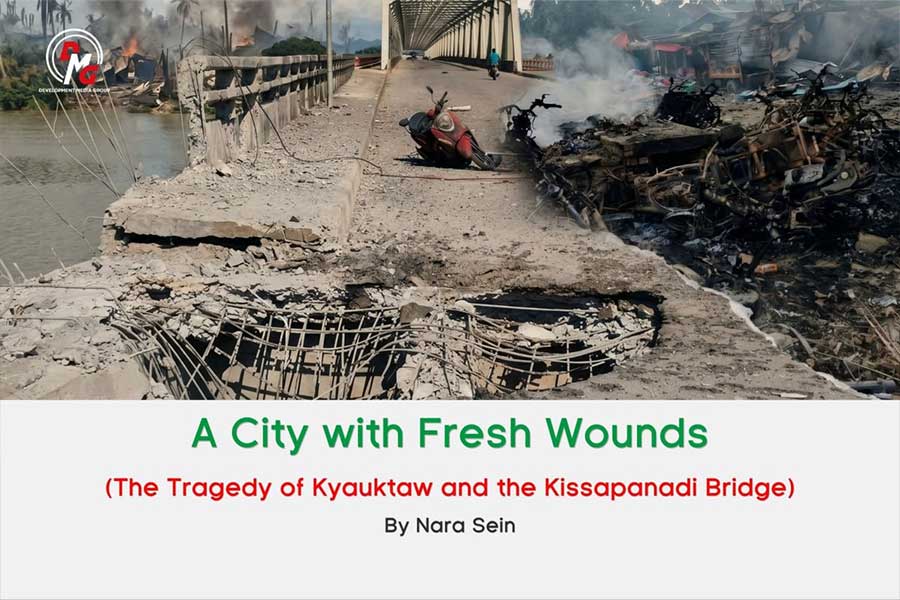
A City with Fresh Wounds (The Tragedy of Kyauktaw and the Kissapanadi Bridge)
By Admin 01 Oct 2026
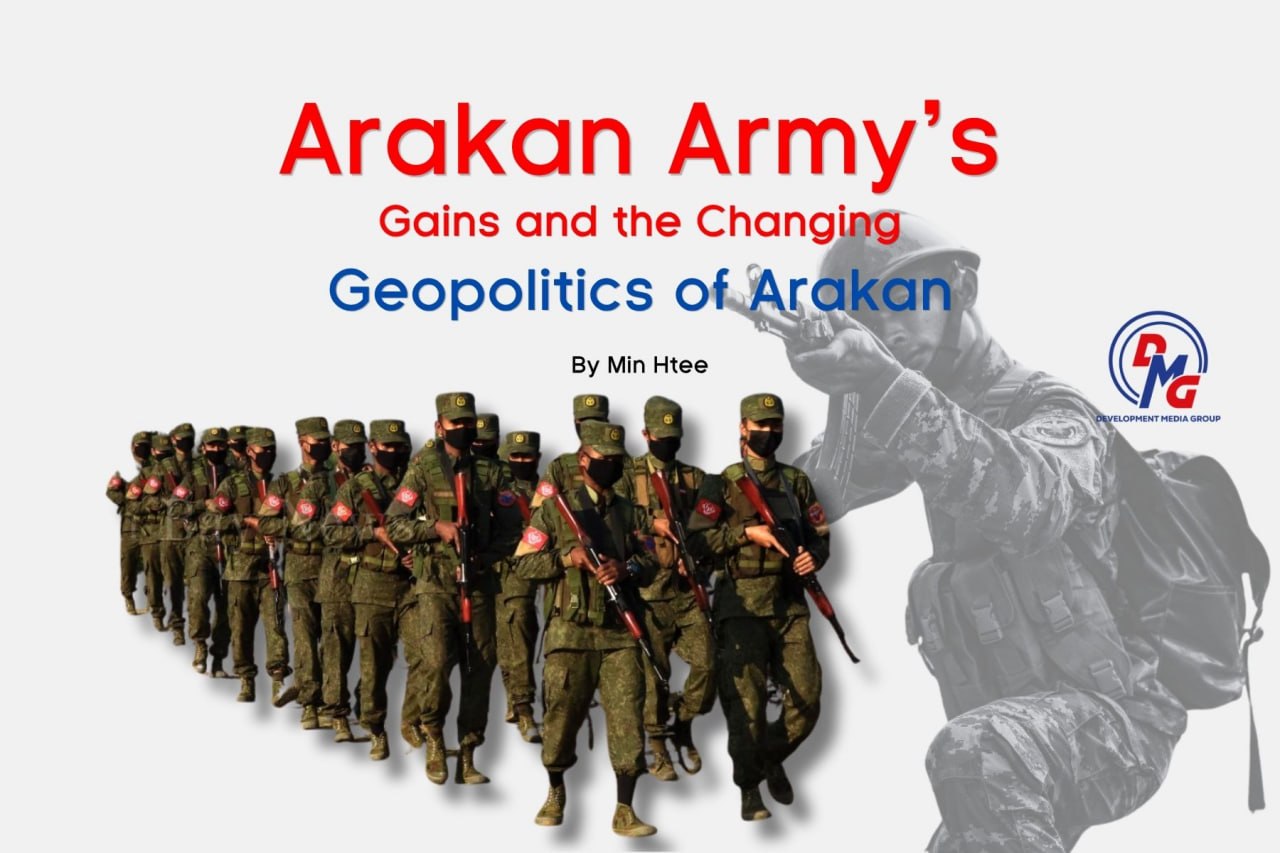
Arakan Army’s Gains and the Changing Geopolitics of Arakan
By Admin 29 Sep 2026
POLITICS



BUSINESS
Industry to manufacture finished goods from coconut starting in early 2020
By Aung Kaung Zaw 20 Nov 2019