

- High airfares leave low-income families stranded in blockaded Sittwe
- MSF rrges civilian protection after Sittwe shelling kills two, injures 17
- ULA warns Arakan residents of airstrike risks during Thadingyut festival
- Months-long internet blackout drives up costs for residents of Thandwe and Gwa
- At least five injured in junta Y-12 airstrikes on Werathani villages
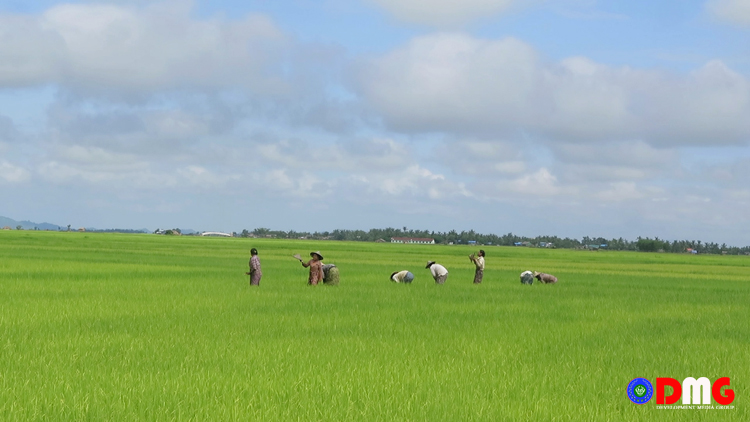
Need to lift curfew for monsoon paddy cultivation
Farmers could not do cultivation in time because of the curfew imposed in the region, said U Than Shwe, member of the Committee for Protecting the Rights and Enhancing the Interests of Farmers.
21 May 2019
Khin Tharaphy Oo/ DMG
May 21, Sittwe
Farmers from seven townships in Northern Arakan State are facing difficulties to do monsoon paddy cultivation because of the curfew imposed in their regions, Arakan Peasant Union said.
A curfew was imposed in Rathedaung, Mrauk-U, Kyauktaw, Buthidaung, Maungdaw, Minbya and Ponnagyun Townships in Northern Arakan State because of fighting between the Tatmadaw and the Arakan Army.
Farmers could not do cultivation in time because of the curfew imposed in the region, said U Than Shwe, member of the Committee for Protecting the Rights and Enhancing the Interests of Farmers.
“Paddy cannot be grown in time on nearly 100,000 acres of farmland if a curfew is imposed. There will be many difficulties for farmers,” he said.
Moreover, if paddy cannot be grown in a year, their living and their children’s education would be negatively affected next year, he added.
“Farmers have to go to their farm at nights to nurture their plants. For example, they need to drain or irrigate fields at night because of high tide water at night. They can do their work more effectively if they can go outside any time, day or night,” he said.
The Arakan Peasant Union submitted a letter to the President on May 16 to provide required aid for farmers to be able to grow paddy in time in spite of the regionally imposed curfew.
There are 99,600 acres of paddy filed in the seven townships that mainly grow monsoon paddy.
Some predicted that rice prices are likely to increase in the coming years if farmers could not grow paddy this year.

Top News
High airfares leave low-income families stranded in blockaded Sittwe
By Admin 25 Oct 2026
MSF rrges civilian protection after Sittwe shelling kills two, injures 17
By Admin 25 Oct 2026
ULA warns Arakan residents of airstrike risks during Thadingyut festival
By Admin 24 Oct 2026
Months-long internet blackout drives up costs for residents of Thandwe and Gwa
By Admin 24 Oct 2026
At least five injured in junta Y-12 airstrikes on Werathani villages
By Admin 24 Oct 2026