
- Junta column heading toward Kyindwe suffers heavy casualties in resistance ambushes
- Junta replaces Arakan State security minister amid escalating battles near Sittwe
- Junta Y-12 bombing raid injures two women in Anjanapura
- Two junta defectors urge conscripts to surrender to AA to save their lives
- NGO, INGO staff relocate to Yangon as fighting nears Sittwe
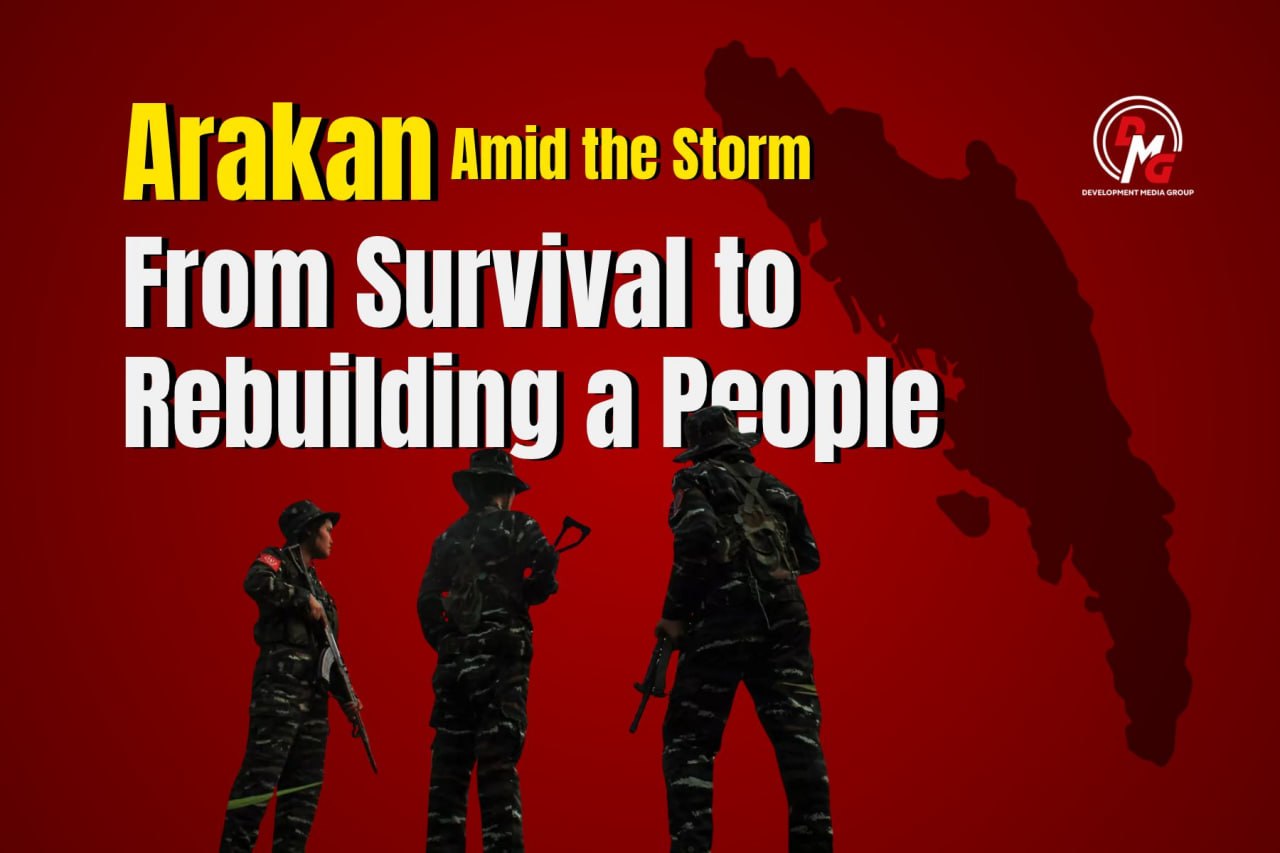
Arakan Amid the Storm: From Survival to Rebuilding a People
If we are to think systematically about Arakan’s future, therefore, we need an “Arakan Social Resilience System”, a framework for strengthening social resilience and rebuilding society.
22 Oct 2026
By Mtz SAXOPHONE
Arakan today is not merely undergoing an ordinary political transition. It is passing through a historic period of transformation in which armed conflict, socioeconomic hardship, displacement, disruption to education, and challenges to preserving cultural and religious heritage are unfolding simultaneously.
At such a moment, whether we live in Arakan, elsewhere in Myanmar, or abroad, the question we should ask ourselves should not simply be:
“What have we lost?”
The more important question should be:
“What will we have built for the generations to come?”
The strength of the Arakan people should not be measured solely by weapons, territory or political power. The long-term strength of a people rests on educated young people, cohesive communities, a strong economic foundation, a language and culture that can be preserved, thriving religious institutions, and responsible systems of leadership.
If we are to think systematically about Arakan’s future, therefore, we need an “Arakan Social Resilience System”, a framework for strengthening social resilience and rebuilding society.
First Pillar — Protecting People and Preserving Human Capital
People must come first.
Displaced families, orphaned children, young people whose education has been interrupted, those who have lost their livelihoods, and other vulnerable groups need systematic and sustainable support.
When a young person loses access to education, it is not simply a problem for one family. Arakan society may also be losing a future doctor, engineer, teacher, entrepreneur or leader.
Education, therefore, is not something to be considered only after emergency relief has been provided. It must be a central part of the long-term security and reconstruction strategy of a people.
Second Pillar — Preserving Identity, Religion and Culture Through Knowledge
Loving one’s own people does not mean hating others.
Valuing one’s own religion does not mean excluding other faiths.
Genuine cultural preservation means ensuring that our history, language, literature, arts, traditions, archaeological heritage and religious heritage can be systematically passed on to future generations.
Schools, monastic education, libraries, digital archives of Arakan literature and culture, historical records and archaeological heritage should be systematically documented and preserved using modern technology.
Culture is not simply a past to be stored away. It is a living heritage to be passed on to the next generation.
Third Pillar — Building an Economic Foundation
No matter how great its history may be, a society trapped in poverty will struggle to remain resilient over the long term.
For Arakan’s future, agriculture, fisheries, trade, ports and transportation, small and medium-sized enterprises, technology, and skilled workforce development must therefore be developed in ways that reinforce one another.
Rather than looking only to financial contributions from Arakan communities abroad, reconstruction should also draw on their knowledge, technical expertise, professional experience, international networks and investment capacity.
Reconstruction does not mean merely rebuilding what has been destroyed. It also means creating an economic foundation that enables people to stand on their own feet again.
Fourth Pillar — Building Strong Institutions and Systems
A good system is more sustainable than dependence on a single good individual.
Education, healthcare, social assistance, cultural preservation, youth development and economic cooperation therefore require strong institutions, clear rules, auditing mechanisms, accountability and transparency.
If 100 units are donated, there should be a system through which the public can see how all 100 were spent. Scholarship recipients should be selected according to clear criteria. Social assistance should be based on genuine human need rather than ethnicity, religion or personal connections.
Such systems can help rebuild public trust.
Without functioning institutions, even the best intentions can disappear with an individual or organisation. With strong systems, however, those efforts can endure from one generation to the next.
Fifth Pillar — Developing the Next Generation of Leaders
If hatred is all we pass on to the next generation, conflict will continue from one generation to another.
But if we pass on knowledge, discipline, courage, integrity and the ability to solve problems, a stronger society can emerge even from adversity.
Young Arakanese people must know their history. But they cannot live only in history.
They must learn English. They must develop technological skills. They must understand artificial intelligence. They must build expertise in fields such as engineering, medicine, economics, accounting, law, public administration and international relations.
In the 21st century, the strength of a people is not measured by population alone. Knowledge capital is also a source of strength.
Sixth Pillar — Connecting Arakan Communities at Home and Abroad
Arakan people living in Yangon, Mandalay and elsewhere across Myanmar, as well as those in Thailand, Malaysia, Singapore, India, Japan, South Korea, Europe, the United States and other parts of the world, should not simply be regarded as people living away from home.
Together, they can become part of a Global Arakan Human Capital Network.
Doctors can share medical knowledge and expertise. Engineers can provide technical training. Entrepreneurs can help develop small and medium-sized businesses. Academics and professionals can establish scholarship funds. IT specialists can build digital education platforms.
Rather than everyone working separately in different places, connecting these efforts under a common vision and systematic framework could greatly increase the collective capacity of the Arakan people.
Arakan’s Future Must Be Built Today
The suffering experienced by the Arakan people today cannot be denied.
But throughout history, the strength of a people has never been measured solely by how much suffering they endured.
It is also measured by what they were able to build after that suffering.
Buildings can be rebuilt after they are destroyed.
An economy can recover after it declines.
Roads can be rebuilt after they are damaged.
But if a generation of young people loses its education, if social trust breaks down, if cultural heritage disappears, and if people lose trust in one another, rebuilding those foundations can take generations.
The responsibility of every Arakan person today, therefore, is not merely to worry about what is happening.
It is to begin building from wherever we can.
Those with education should build through knowledge.
Entrepreneurs should build through jobs and economic opportunities.
Teachers should build the next generation.
Religious leaders and communities should preserve compassion, ethical values and knowledge.
Those living abroad should reconnect their knowledge, experience and global networks with their homeland.
Young people should understand their history and make knowledge a source of strength for the future.
Arakan’s future does not rest in the hands of any single individual.
It rests in the collective knowledge, unity, integrity, mutual trust and capacity of Arakan society to build systematically.
This period of hardship is not the end.
If we prepare and build systematically, the hardships of today can one day become the starting point for a new Arakan society, one that is better educated and more resilient, values its own culture, and at the same time respects the dignity of others.
“Let us not forget the past.
Let us face the present with courage.
But let us devote our greatest responsibility to the future.”

Opinion
Arakan Amid the Storm: From Survival to Rebuilding a People
By Admin 22 Oct 2026
Surviving Amid the Bombs: Arakan's Quiet Resistance
By Admin 19 Oct 2026
Shadows Over Childhood: Confronting the Reality of Missing Children
By Admin 16 Oct 2026
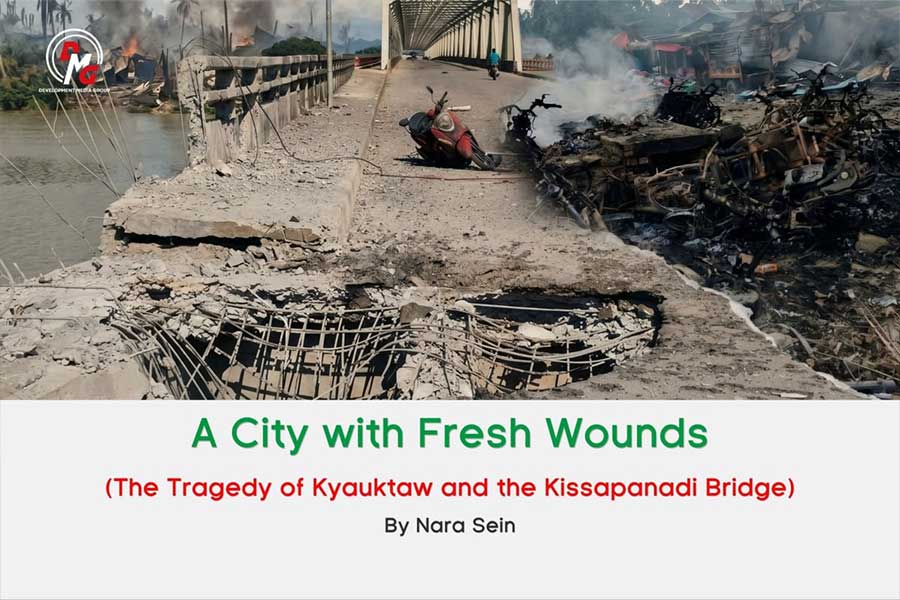
A City with Fresh Wounds (The Tragedy of Kyauktaw and the Kissapanadi Bridge)
By Admin 01 Oct 2026
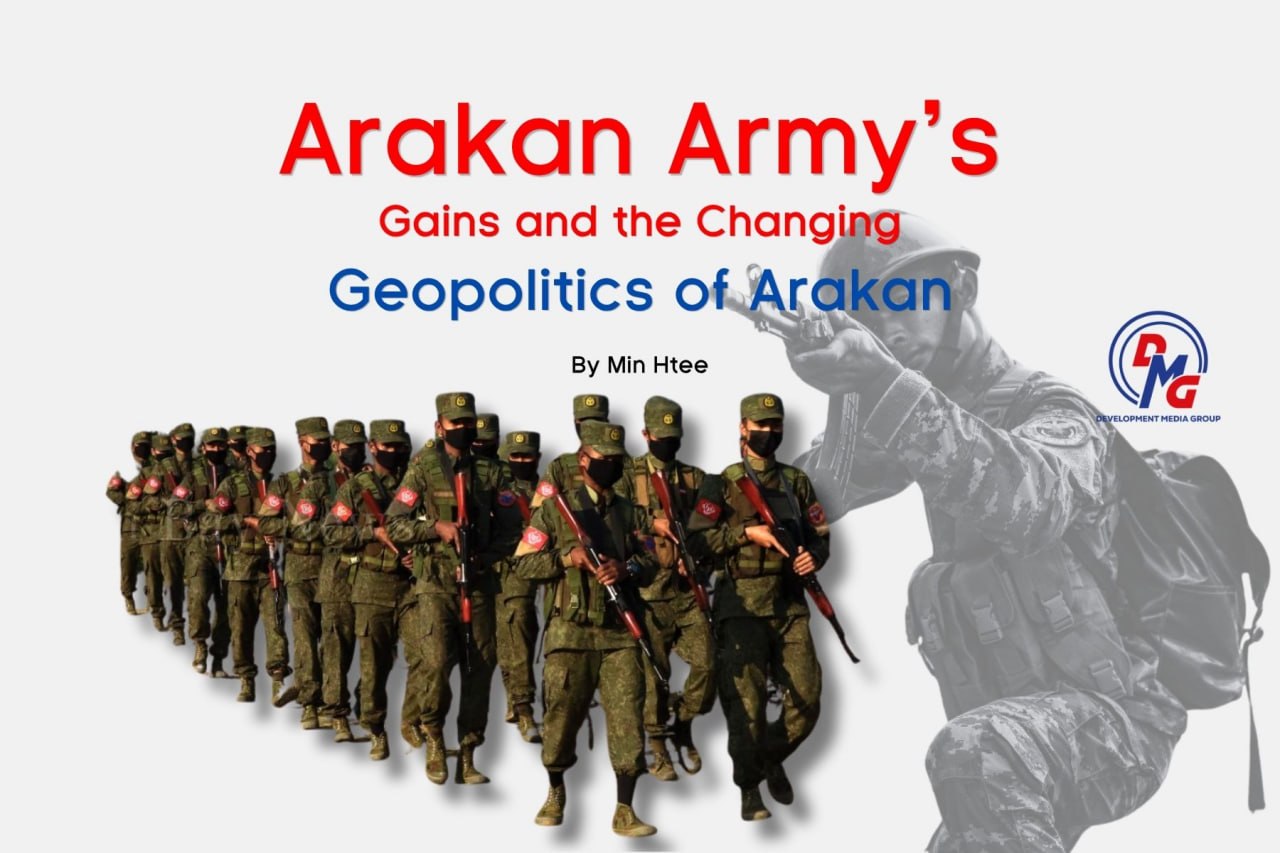
Arakan Army’s Gains and the Changing Geopolitics of Arakan
By Admin 29 Sep 2026
Beyond Military Victory: What Is Myanmar’s Ultimate Political Objective?
By Admin 26 Sep 2026
POLITICS
BUSINESS
Industry to manufacture finished goods from coconut starting in early 2020
By Aung Kaung Zaw 20 Nov 2019