

- Junta extends martial law in 55 townships, including AA-held areas
- Financial hardship limits access to healthcare in Arakan
- Rice shortages worsen in Taungup as prices soar
- Junta airstrike kills at least seven, injures many in Paletwa Twsp
- Military operations spread despite decline in clashes, BNI report finds
Surviving Amid the Bombs: Arakan's Quiet Resistance
It is an act of quiet resistance, a way of telling those responsible for the attacks: “No matter how many bombs you drop, you will not break our spirit. We will not surrender.”
19 Oct 2026
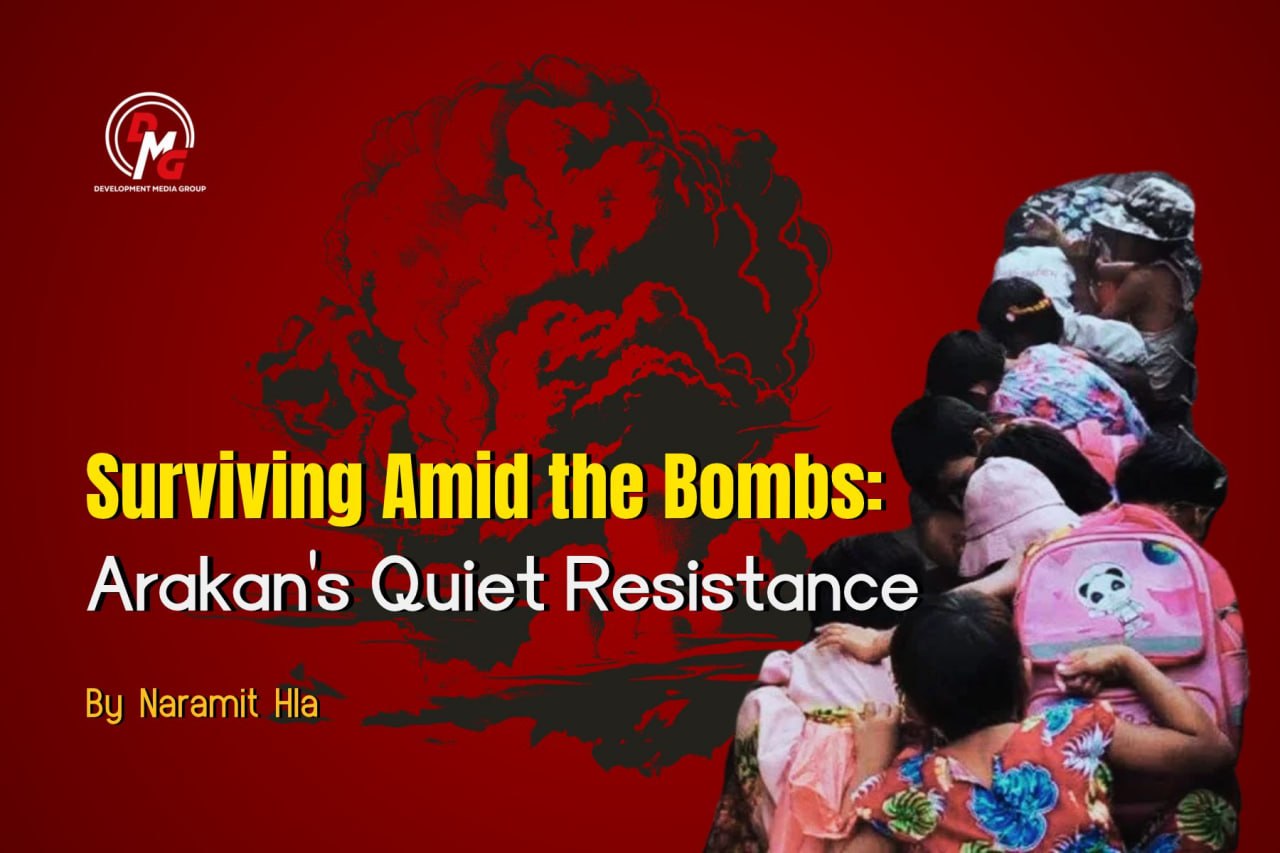
By Naramit Hla
In 1940, during World War II, Nazi Germany launched relentless bombing raids on Britain, deploying thousands of aircraft in an attempt to force the country into submission. During the Blitz, which lasted from September 1940 to May 1941, British civilians struggled to maintain their everyday lives as bombs rained down around them.
The term “Blitz” comes from the German word for lightning and is associated with “Blitzkrieg,” or “lightning war,” a military strategy involving rapid attacks.
At the time, Prime Minister Winston Churchill and senior military and government officials worked in underground command facilities in London to protect themselves from the bombing. London endured 57 consecutive nights of air raids, while the wider Blitz campaign killed approximately 43,000 civilians across Britain and destroyed countless homes.
Yet the British people did not lose their resolve.
Their resilience was often symbolized by the image of Londoners continuing to drink tea even as German aircraft bombed their city. Some regarded such portrayals as exaggerated British pride, but the determination of the British people was far more than empty boasting.
Despite the devastation and suffering, Britain, together with its Allied partners, ultimately defeated Nazi Germany in 1945.
The situation in Arakan (Rakhine) State, western Myanmar, today bears striking similarities to what Britain experienced during that period.
Following a Myanmar military airstrike on Kyauktaw on September 28, 2026, the town's streets were deserted and eerily silent the following morning. Overwhelmed by fear, some residents temporarily fled to safer areas, while others closed their shops and businesses and remained inside their homes.
But the Myanmar military regime's bombing campaign did not stop. Its aircraft continued carrying out airstrikes, including attacks on camps sheltering internally displaced people in Ponnagyun Township.
Under such devastating circumstances, the people of Arakan have been left with only one practical choice: to find whatever ways they can to survive and continue living amid the bombs.
In reality, the military's aerial bombardment of Arakan is nothing new. Since fighting began between Myanmar's military and the Arakan Army (AA), an ethnic armed organization, the regime has repeatedly carried out airstrikes across the region.
According to records compiled by Development Media Group (DMG), Myanmar military airstrikes in Arakan State killed at least 667 civilians and injured 1,302 others between April 2024 and September 30, 2026, bringing the total number of civilian casualties to 1,969. Among those killed or injured were 327 children.
Despite these devastating attacks and the suffering they have caused, the people of Arakan have continued to endure, adapting to their circumstances and finding ways to survive.
The military has not only bombed Arakan from the air but has also blocked land and water transport routes in an effort to weaken the population economically and force people into submission.
The regime has restricted the entry of essential supplies, including medicine, food and fuel such as petrol and diesel. Telephone and internet communications have also been disrupted or cut off, leaving communities increasingly isolated.
Yet amid these widespread restrictions and the devastation of war, the resilience of the people of Arakan has only grown stronger.
When they hear aircraft approaching, people stop what they are doing and rush into bomb shelters. Once the sound of the aircraft fades, they return to their fields to grow food for their families. Markets reopen, vendors resume selling their goods, and trading activities begin again.
Although people face the threat of death at any moment, the military regime has been unable to bring everyday life to a complete standstill.
Even when we ourselves have little, we must do our best to share what we have with families displaced by the fighting. Households must support one another, villages must help neighboring villages, and communities must come together to care for the wounded as much as they can.
Although schools have been forced to close because of security threats, communities have continued trying to prevent interruptions to children's education. They have organized makeshift classes in bomb shelters, under temporary coverings and through community-run schools.
These efforts demonstrate a determination not to abandon the future, no matter how difficult the circumstances become.
Looking back at history, Londoners endured Nazi bombing raids by sleeping in underground railway stations and taking shelter wherever they could. In much the same way, the people of Arakan today are confronting the military regime's brutal airstrikes with courage and determination rather than surrendering to fear.
The military's bombing campaign, in my view, is intended to terrorize civilians and disrupt the stability of their everyday lives.
Yet whenever the bombing subsides, the people of Arakan return to their workplaces. They resume farming and trading, while community-based humanitarian organizations continue their activities.
The determination to stop temporarily when bombs fall and then resume the struggle for survival is more than simply staying alive.
It is an act of quiet resistance, a way of telling those responsible for the attacks: “No matter how many bombs you drop, you will not break our spirit. We will not surrender.”
As history has demonstrated, the British people who refused to surrender in 1940 went on to defeat Nazi Germany alongside their Allies in 1945.
Likewise, since fighting began between the Arakan Army and Myanmar's military, the people of Arakan have risked their lives and endured repeated bombing attacks.
Their unity, unwavering determination and ability to find ways to survive amid devastation will, I firmly believe, one day become a powerful force in bringing an end to military dictatorship.
The sound of bombs and the darkness of oppression cannot last forever.
With the enduring spirit of its people, the light of peace and freedom will inevitably shine again over Arakan.
Naramit Hla is pursuing a master's degree in public affairs and is a political observer who contributes political analysis and opinion articles to regional media outlets.

Opinion
Surviving Amid the Bombs: Arakan's Quiet Resistance
By Admin 19 Oct 2026

Shadows Over Childhood: Confronting the Reality of Missing Children
By Admin 16 Oct 2026
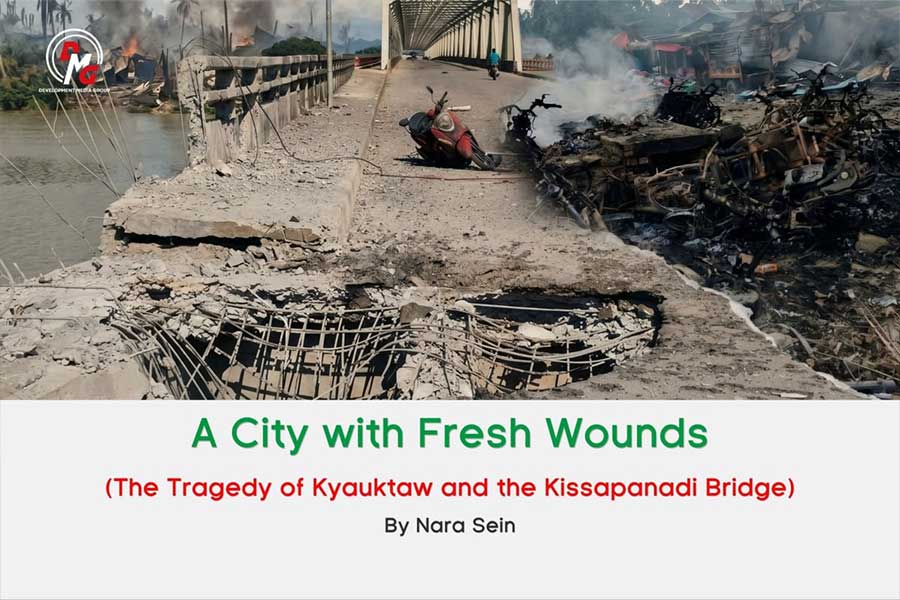
A City with Fresh Wounds (The Tragedy of Kyauktaw and the Kissapanadi Bridge)
By Admin 01 Oct 2026

Arakan Army’s Gains and the Changing Geopolitics of Arakan
By Admin 29 Sep 2026

Beyond Military Victory: What Is Myanmar’s Ultimate Political Objective?
By Admin 26 Sep 2026
UN at a Crossroads: Six Priorities for a Shared Future
By Admin 23 Sep 2026
POLITICS



BUSINESS
Industry to manufacture finished goods from coconut starting in early 2020
By Aung Kaung Zaw 20 Nov 2019