
- Military operations spread despite decline in clashes, BNI report finds
- Junta aerial attacks force school closures across three Arakan townships
- Family demands swift arrest of statutory rape suspect in Werathani
- Women face shrinking employment opportunities in Myanmar, UNDP reports
- AA seizes five junta outposts as Arakan records most civilian-targeted airstrikes: NLTA
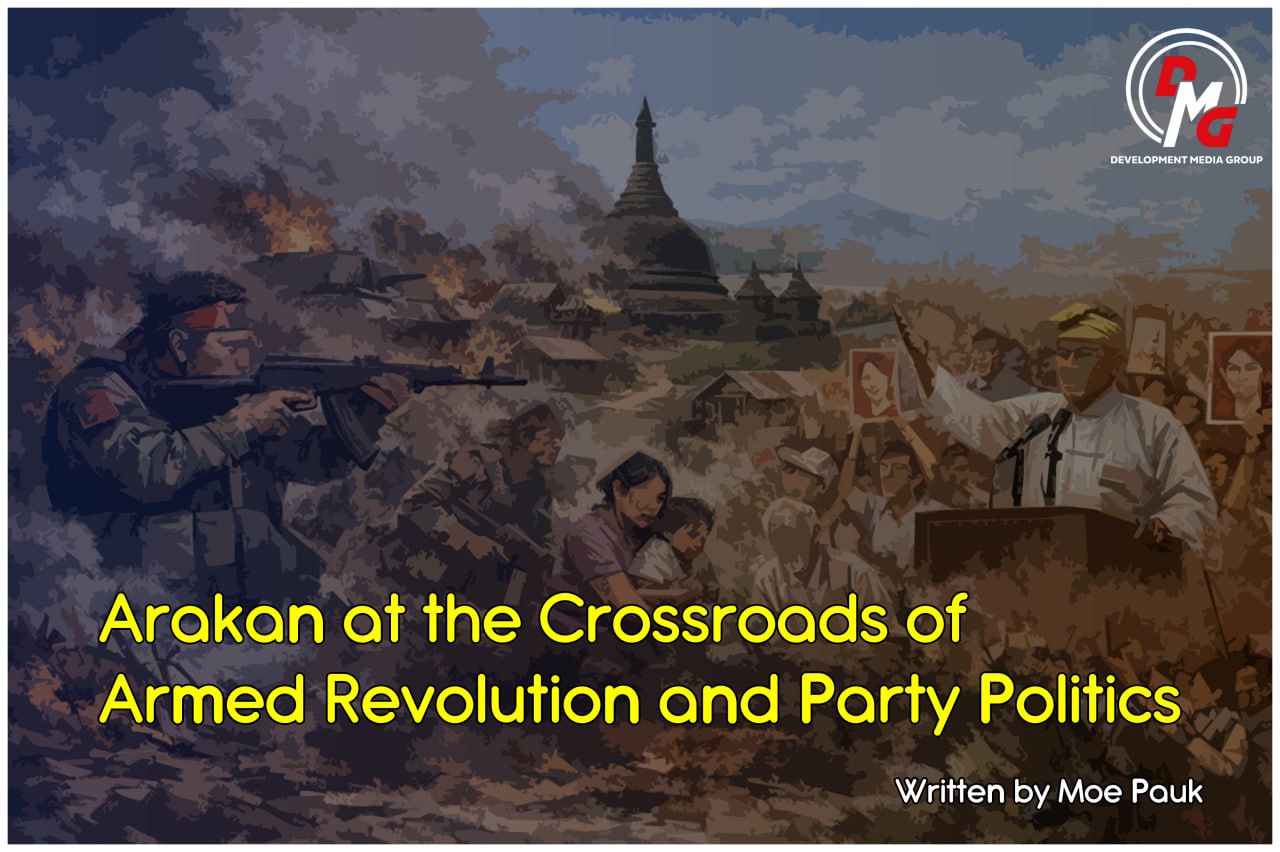
Arakan at the Crossroads of Armed Revolution and Party Politics
A former 88 Generation Arakan student leader concluded: “2026 will be a year of momentum toward the complete removal of the junta from Arakan. For the ULA/AA, it will be a decisive year not only of territorial control, but of emerging as a sovereign authority capable of international engagement and economic governance.”
29 Jan 2026
Written by Moe Pauk
The political landscape of Arakan (Rakhine State) in 2026 is taking shape amid intensifying competition between the military junta’s ballot-box politics and the United League of Arakan/Arakan Army (ULA/AA)’s system of territorial governance. What is emerging is a striking and consequential confrontation between two authorities or two systems claiming legitimacy, creating a political dynamic of growing significance.
The aftermath of the junta-organised elections held in late December 2025 clearly exposed the political positions of Arakan politicians and laid bare the widening gap between party politics and the revolutionary path.
Many observers believe that 2026 will be a year in which the revolutionary convictions of the Arakanese people become more deeply entrenched, while the failures of party politicians become increasingly visible. Arakan’s political future, they argue, now depends primarily on who controls the ground.
“Most of the territory on the ground is already under the control of the Arakan Army. The parliament that emerges from this election is nothing more than a puppet stage for the junta to show the world that it still has an ‘administrative mechanism,’” said a former 88 Generation Arakan student leader.
Although the junta divided its election process into Phases (1), (2), and (3), in Arakan it was only able to conduct Phase (1) and even then only partially in Kyaukphyu, Sittwe, and Manaung. Phases (2) and (3) failed to materialise in the state.
The junta’s inability to hold elections in 14 townships controlled by the ULA/AA has instead strengthened public reliance on and confidence in the ULA/AA’s governance structures.
“If the AA were to gain full control of Sittwe and Kyaukphyu, this could trigger a geopolitical shift in which neighbouring countries would be compelled to engage with the AA not the junta as the legitimate future authority,” the former 88 Generation leader observed.
The 2026 Arakan Parliament and the Junta’s Strategy
Many analysts argue that the Arakan parliament formed by the junta in 2026 will not represent the will of the people. Instead, it will function as an extension of the junta’s military objectives and as a tool to prolong authoritarian rule.
A review of parliamentary history shows that even during periods when Arakan political parties were relatively strong, the state’s core political issues saw little meaningful change. Under renewed military dictatorship, Arakan people understand that even fewer changes can be expected.
Ko Tin Oo, former General Secretary of the All Arakan Students’ and Youth Congress (AASYC), stated: “Any parliament formed under the 2008 Constitution has no real authority. Parliaments exist only to implement orders from the military bloc, while other parties serve merely as political puppets.”
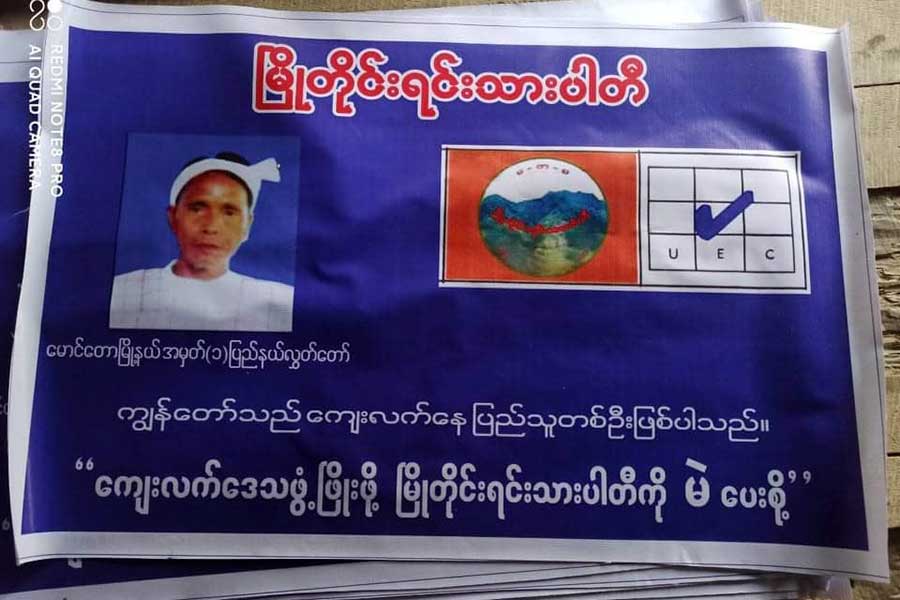
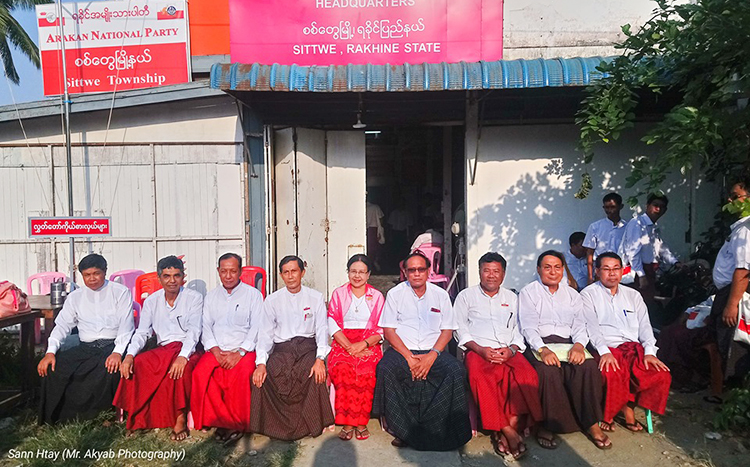
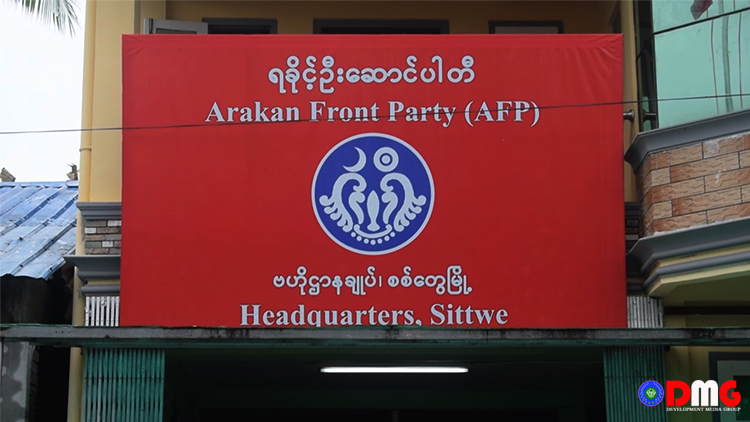
The defeat of Arakan parties in the latest election where they failed to compete with the military-backed USDP [Union Solidarity Development Party] has reinforced public perceptions that these parties merely decorated the junta’s electoral process, making them even more visibly expendable tools of the regime.
Public Disillusionment with Party Politicians
According to the 2025 election results, the USDP secured all parliamentary seats in Sittwe and Kyaukphyu, a result widely interpreted as proof that even the junta itself does not trust Arakan political parties.
As a result, Arakan parties that chose to participate in the election are increasingly seen by the public as having ignored the suffering and aspirations of the Arakanese people in exchange for political opportunity and favour from the junta.
Many political observers believe these party politicians will be remembered in history as loyalists of military leaders, with their political legitimacy irreparably destroyed.
Hard lessons have already shown that the Arakanese people’s aspiration for self-determination cannot be achieved through parliamentary pathways under the 2008 Constitution.
In areas where the junta’s administrative system has collapsed, the courts, police forces, and administrative mechanisms established by the ULA/AA have become practical and trusted institutions for the public.
A former member of the Arakan National Party (ANP) Youth Affairs Committee remarked: “Only the AA can meet the needs of the Arakanese people. Even if there are difficulties during this transitional period, the people will continue to support the AA as their sole source of hope.”
The 2026 Challenge Between Two Administrative Systems
While 2025 was marked by significant territorial gains in Arakan, 2026 is shaping up to be a decisive year for the ULA/AA one focused not only on controlling territory, but on governance, administration, and institutional competition.
The ULA/AA is attempting to demonstrate a harmonious and inclusive governance model, one that provides public services without discrimination based on ethnicity or religion, including Muslims and other minority communities.
On the other hand, military analysts warn that as the Arakan Army strengthens its economic base and improves healthcare and education services, the junta may escalate destructive airstrikes and heavy artillery attacks in response.
“When the Arakan Army succeeds in stabilising the economy and delivering health and education services, the military is likely to intensify air attacks as a strategy of destruction,” warned CDM Captain Zin Yaw, speaking on threats to regional stability.
Arakan residents anticipate that 2026 will bring not only military pressure, but also severe challenges in economic survival, education, and healthcare. Yet many believe that life under ULA administration already offers a more hopeful future than under past military regimes.
“The Rakhita Way promoted by the AA is no longer about demanding political rights, Rit is about seizing them through struggle. The AA has proven that power and territory can be won outside the ballot box,” said a young man from Kyaukphyu.
The End of Illusory Politics and the Future of a New Arakan
As the junta uses elections to legitimise its illegal seizure of power, the people of Arakan increasingly place their hopes in shaping their own destiny under the leadership of the ULA/AA.
Party politics, many believe, now serves only to extend military dictatorship and enrich opportunistic politicians. Armed resistance and grassroots governance, by contrast, are viewed as the only genuine path to liberation for the Arakanese people.
The year 2026 is expected to clearly distinguish between illusory politics and genuine political transformation, marking a pivotal phase in Arakan’s national reconstruction.
With the decline of puppet politicians, the consolidation of ULA/AA governance is becoming more visible signalling a historic step toward a new Arakan.
A former 88 Generation Arakan student leader concluded: “2026 will be a year of momentum toward the complete removal of the junta from Arakan. For the ULA/AA, it will be a decisive year not only of territorial control, but of emerging as a sovereign authority capable of international engagement and economic governance.”
Political analysts note that Arakan’s 2026 landscape will be defined by war on one front and state-building on the other, making the political trajectory of the ULA/AA essential to watch.

Opinion
Shadows Over Childhood: Confronting the Reality of Missing Children
By Admin 16 Oct 2026
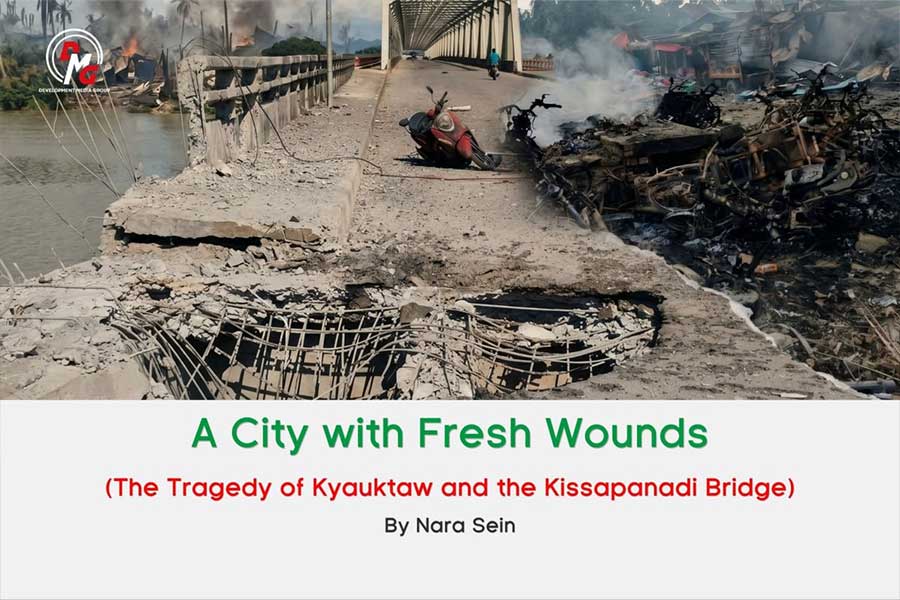
A City with Fresh Wounds (The Tragedy of Kyauktaw and the Kissapanadi Bridge)
By Admin 01 Oct 2026
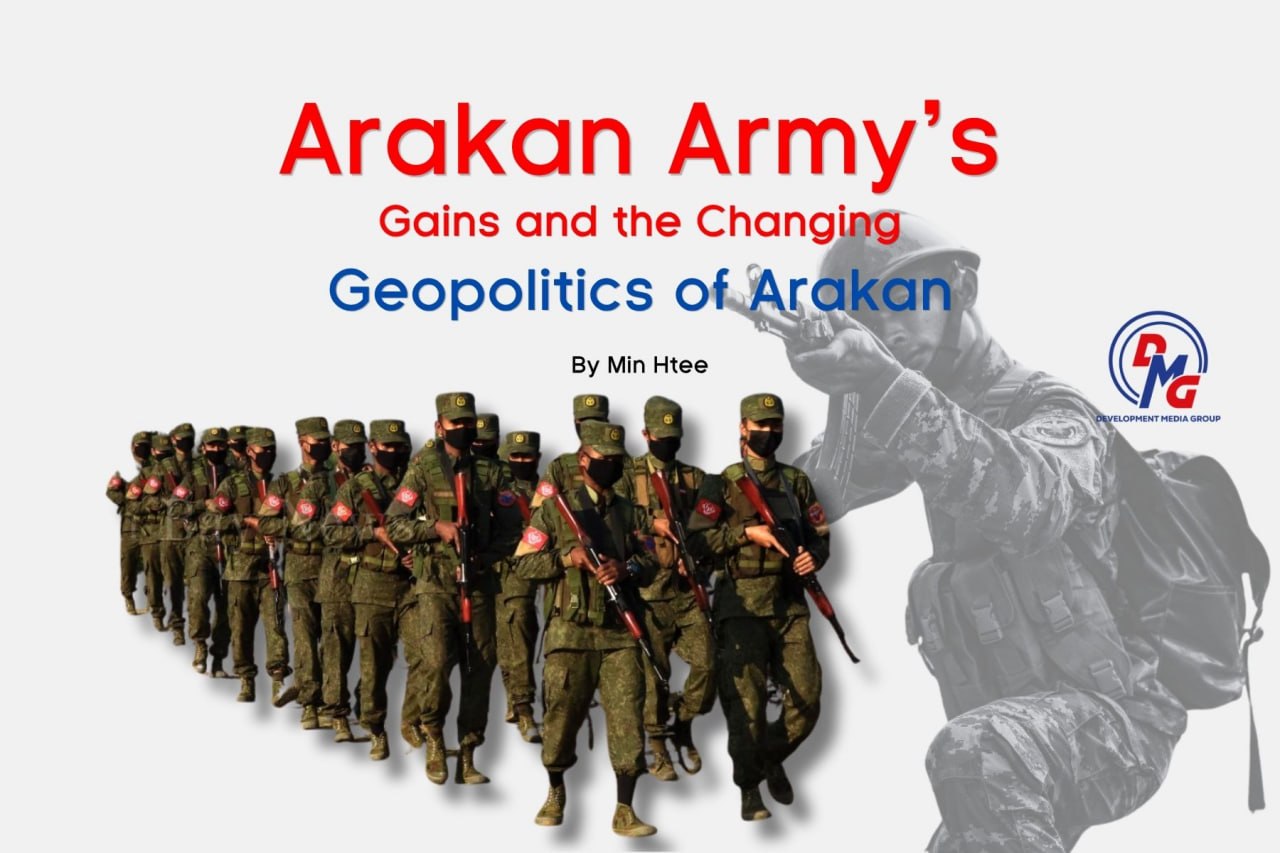
Arakan Army’s Gains and the Changing Geopolitics of Arakan
By Admin 29 Sep 2026
Beyond Military Victory: What Is Myanmar’s Ultimate Political Objective?
By Admin 26 Sep 2026
UN at a Crossroads: Six Priorities for a Shared Future
By Admin 23 Sep 2026
POLITICS

BUSINESS
Industry to manufacture finished goods from coconut starting in early 2020
By Aung Kaung Zaw 20 Nov 2019