
- Magway records most airstrikes since new military chief took command: ISP-Myanmar
- Junta warship destroys two fishing boats, seizes another off Werathani
- Junta jet fighters drop 500-pound bombs on former junta battalions in Mrauk-U
- Junta deploys fighter jets to bomb Ponnagyun
- Rathedaung villagers set up night watches amid Sittwe clashes, ARSA threat
Hidden Schools and Education in Arakan
“I passed, but I’m not happy. My marks are high and I wanted to study computer science. But there are no universities anymore. I can’t pursue my dreams.”
09 Dec 2025
Written by Gaung
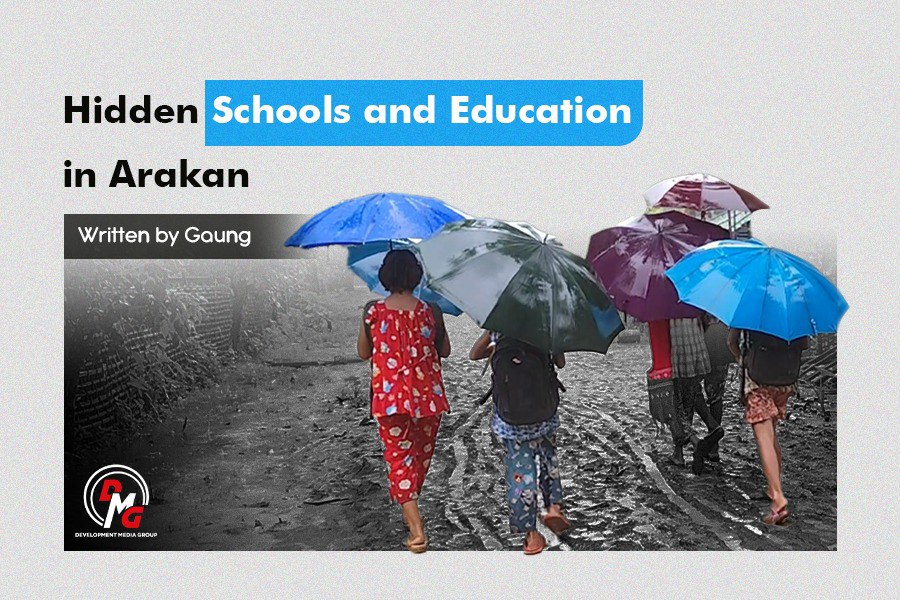
In an ordinary November, during the cool dry season, school classrooms in Arakan State, Western Myanmar, should be alive with chatter and the sound of lessons. But in recent days, the classrooms in Kyauktaw Township have fallen silent.
This is not a normal weekend closure.
“They said it was an emergency and closed the school for three days. We don’t know exactly why. I think it’s because there was information that there might be airstrikes and bombing,” said 18-year-old Grade 11 student Ma Soe Nandar.
Ma Soe Nandar is a high school student from a village in Kyauktaw Township now under the control of the Arakan Army (AA).
Sudden school closures are no longer unusual. In previous months, schools frequently shut without warning, forcing students to flee mid-lesson and hide in nearby trenches, fields, and irrigation canals when aircraft were heard overhead.
“It’s not a formal directive from the authorities. But November 13 is the second anniversary of the renewed Arakan war, so people fear airstrikes. The junta has been targeting schools,” explained a 40-year-old high school teacher from Kyauktaw Township.
Ma Soe Nandar described her own experience: “We’ve had fighter jets bomb us while we were in class. When that happens, our hearts shake with fear and we just run. There’s no room left in our minds for lessons. The school closes, and class time disappears.”
Her school is located not far from Kyauktaw town. Kyauktaw Township is one of the most heavily targeted areas in Arakan State. According to DMG records, since the AA took control, there have been 16 air attacks on Kyauktaw between January 2024 and today.
On September 12, a private high school called Pyinya Pan Khin in Thayet Ta Pin Village, Kyauktaw Township, was bombed from the air. Twenty-one students were killed, and at least 20 others were injured.
In the aftermath of that attack, schools in Kyauktaw Township lost permanent premises, moving repeatedly from one location to another, and closing frequently to avoid strikes.
According to data from the United League of Arakan (ULA) Humanitarian and Development Cooperation Office (HDCO), between November 2023 and August 2025, 184 children under the age of 18 were killed and 474 injured by junta attacks. Of these, 102 children were killed and 213 injured by airstrikes alone.
HDCO also reports that 37 schools have been damaged by airstrikes and 10 by artillery fire—a total of 47 education buildings destroyed or damaged in Arakan State.
Arakkha National Education
The Arakan Army now controls more than 90 percent of Arakan State (14 out of 17 townships). In parallel, the Arakkha People’s Government has been established, administering governance, justice mechanisms, public services, and departmental functions.
In the education sector, the ULA began reopening schools in September 2024 to prevent a complete collapse in children’s learning.
The Arakkha National Education Department is structured at multiple levels—Central, District, Township, and Ward/Village Education Leading Committees. It also includes a Central Examination Supervisory Committee, an Examination Department Office, Township Examination Committees, and a Department for Research and Curriculum Development.
Departments responsible for Basic Education, Higher Education, Teacher Training, and Central Examinations are functioning as well. Among these, Ward and Village Education Committees manage day-to-day school operations, teacher accommodation, teaching locations, and financial needs.
At present, the teaching system is implemented under a “Public-Based Education Program.”
A member familiar with the Township Education Committee said: “We consult with village elders. The priority is making sure children don’t lose their education, even in emergencies. With fighting ongoing, we have to adapt constantly.”
The long-term vision is to provide free or affordable education for all through cooperation between the community, the Arakkha administration, and relevant ministries, alongside civil society.
But under the current conditions, education has largely moved underground: classes are held in private houses or safe places, divided into shifts and small groups.
A teacher from Mrauk-U explained: “Right now it’s home-based learning—a kind of ‘public home-based’ system. Under emergency conditions, we can’t rely on formal schools, so we do what we can.”
He added: “This system helps avoid large gatherings. Since the junta bombs schools without distinction, we have to teach in places where children can keep learning, even if buildings are gone.”
Today, nearly 60 percent of the teaching staff are former government schoolteachers. Volunteers fill the remaining gaps, often teaching levels above their qualifications.
The department is also recruiting teacher-training candidates for high-school level teaching. Young graduates of any ethnicity or religion, as well as teachers under 40 with at least 12 years’ service, are eligible.
For now, the Arakkha administration cannot pay salaries. Parents cover teacher costs through school fees:
• 20,000 kyats per month for primary students
• 40,000 kyats and above for middle school
• 60,000–70,000 kyats or more for high school
Arakkha National University
Students who passed matriculation face deep uncertainty. Those who started university before the conflict—distance learners, day students, and graduates—remain in academic limbo.
ULA/AA spokesperson U Khaing Thukha said the Education Department is developing short- and long-term policies and modern curricula that meet national needs.
In the 2023–2024 academic year, more than 7,800 Grade 12 students sat for the Arakkha National Examination.
One student, Ma May Myat Nyo, said: “I passed, but I’m not happy. My marks are high and I wanted to study computer science. But there are no universities anymore. I can’t pursue my dreams.”
Examinations are set entirely by the Arakkha National Examination Committee, which uses an eight-tier grading system with no formal failing grade.
Meanwhile, many young people have had their academic lives disrupted first by COVID-19 and then by war.
Ma Phyu Phyu Win, a 25-year-old IDP from Sittwe, said: “I joined university in 2019. COVID closed it for two years. When classes resumed, war broke out and I fled here. My third-year geography degree is frozen.”
Because of this gap, youth groups are calling for specialized academies as a temporary solution.
Curriculum and Teaching System
The Arakkha Curriculum Department has completed an Arakan-language curriculum up to Grade 7 and is expanding it with expert input.
Most subjects still follow Myanmar’s national textbooks, but history has been replaced with Arakan history, covering periods such as:
• Dwarawaddy
• Danyawaddy
• Vesali
• Laymro (Four Cities)
• Mrauk-U
Teachers report changes in language, terminology, and cultural emphasis.
Children Outside the Classroom
Poverty and conflict are pushing children out of school.
Seventeen-year-old Maung Zaw Myo Tun said: “I want to study, but we don’t even have money for rice. I quit school and now herd cows.”
Textbook sets are increasingly unaffordable:
• KG: 25,000–35,000 kyats
• Primary: up to 65,000 kyats
• Middle: up to 70,000 kyats
• High school: 80,000 kyats into six-figure costs
As a result, thousands of children cannot continue their education.
Nationwide, ISP Myanmar reports school enrollment dropping from 9.7 million before the coup to 6.1 million today.
University entrance exam candidates dropped from 900,000 in 2020 to about 200,000 in 2025.
Classrooms Under the Shadow of the Sky
Since November 2023, airstrikes have turned classrooms into targets. Safe learning is now a privilege many children do not have.
An IDP mother in Rathedaung said: “My son goes to school, but I’m terrified every day. I can’t relax.”
Under international law—including the Geneva Conventions—schools must not be attacked. Yet children in Arakan are learning in fear.
Seventeen-year-old Maung Zaw Myo Naing expressed what many feel: “I just want the war to end. I don’t want to hear airplanes anymore. I want to study in peace.”

Top News
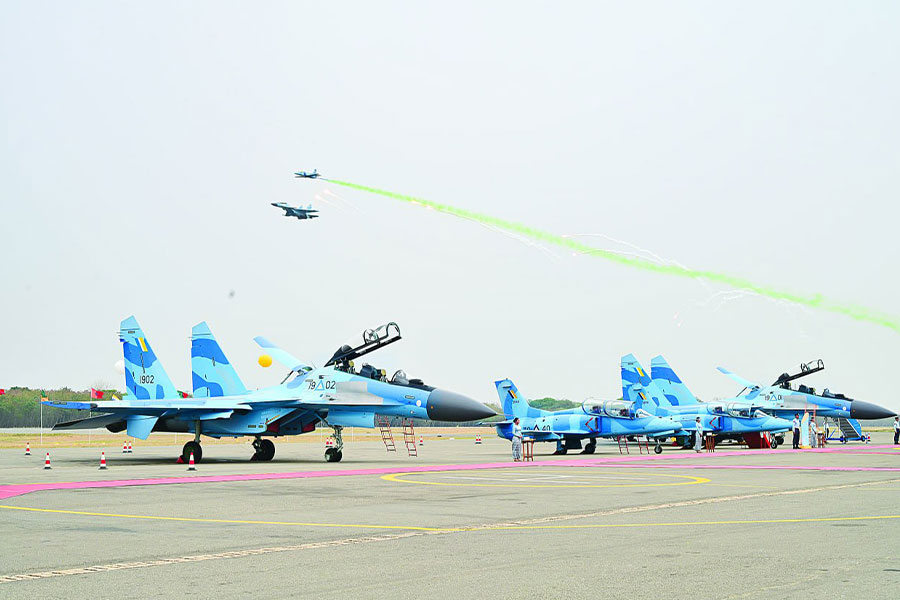
Magway records most airstrikes since new military chief took command: ISP-Myanmar
By Admin 17 Sep 2026
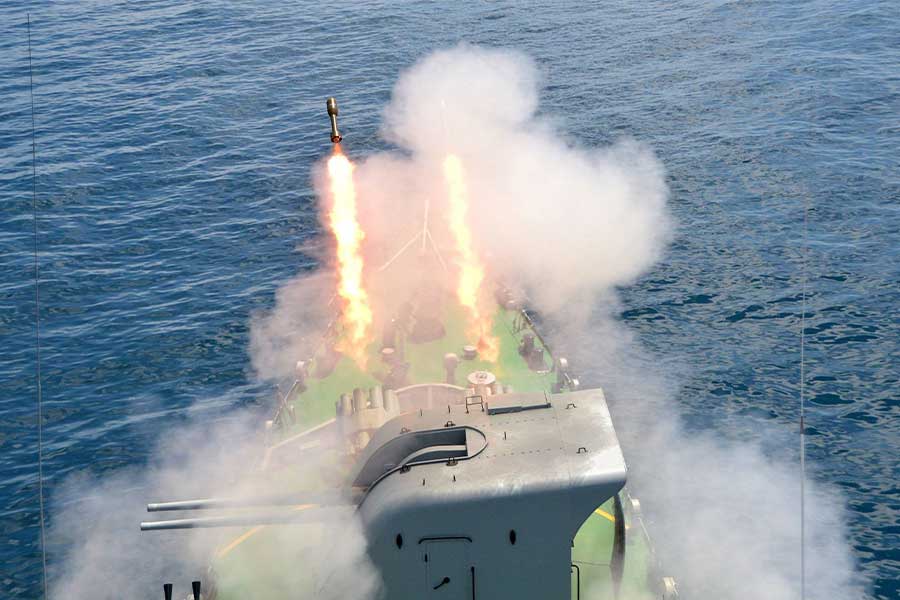
Junta warship destroys two fishing boats, seizes another off Werathani
By Admin 17 Sep 2026
Junta jet fighters drop 500-pound bombs on former junta battalions in Mrauk-U
By Admin 17 Sep 2026
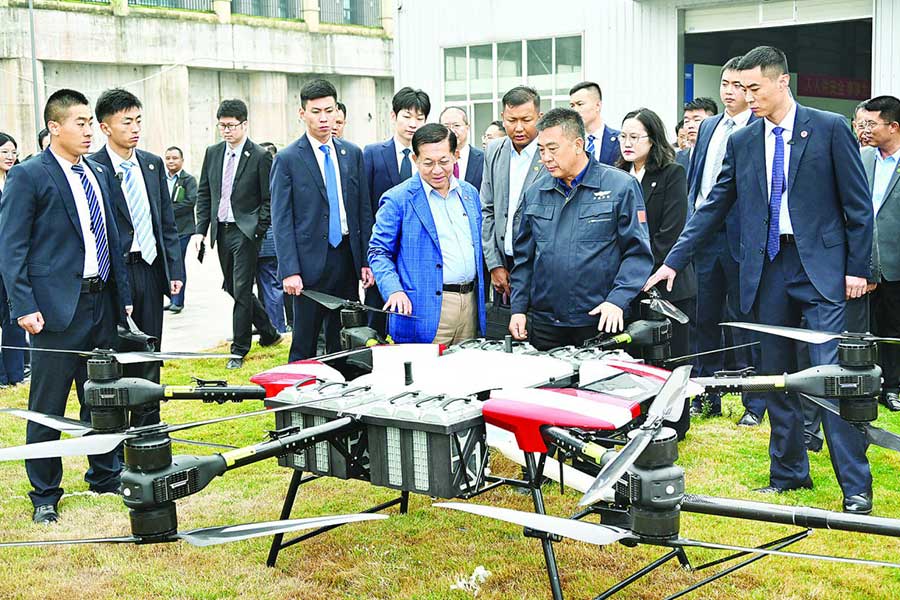
JFM calls for Myanmar military to be barred from ARF drone workshop
By Admin 17 Sep 2026
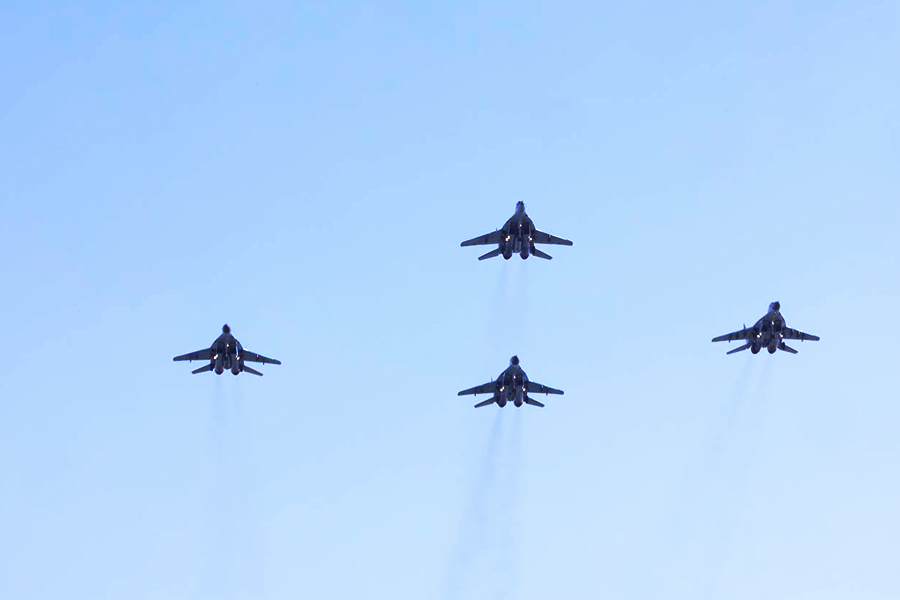
Junta deploys fighter jets to bomb Ponnagyun
By Admin 17 Sep 2026