

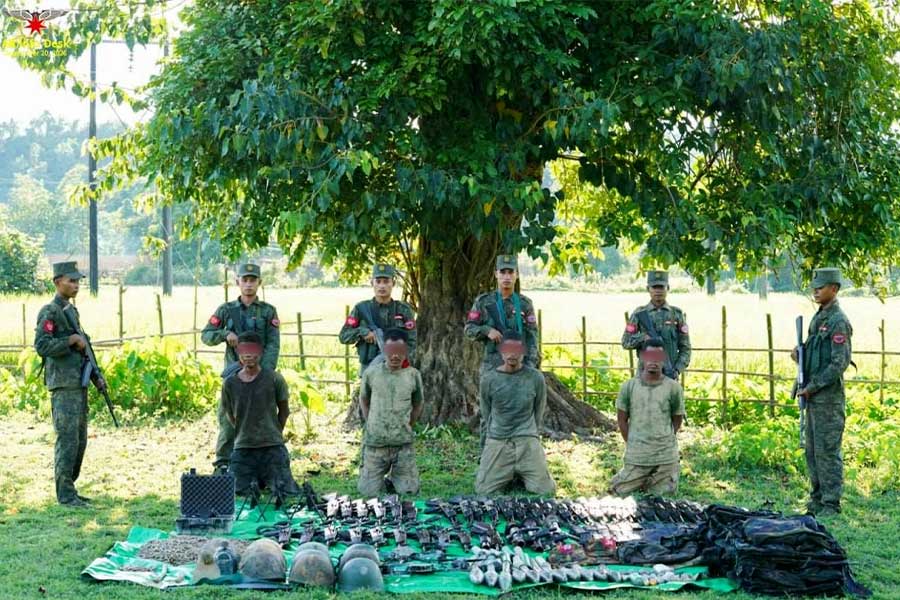
- POWs say junta orders troops to fight without retreat in Arakan counteroffensive
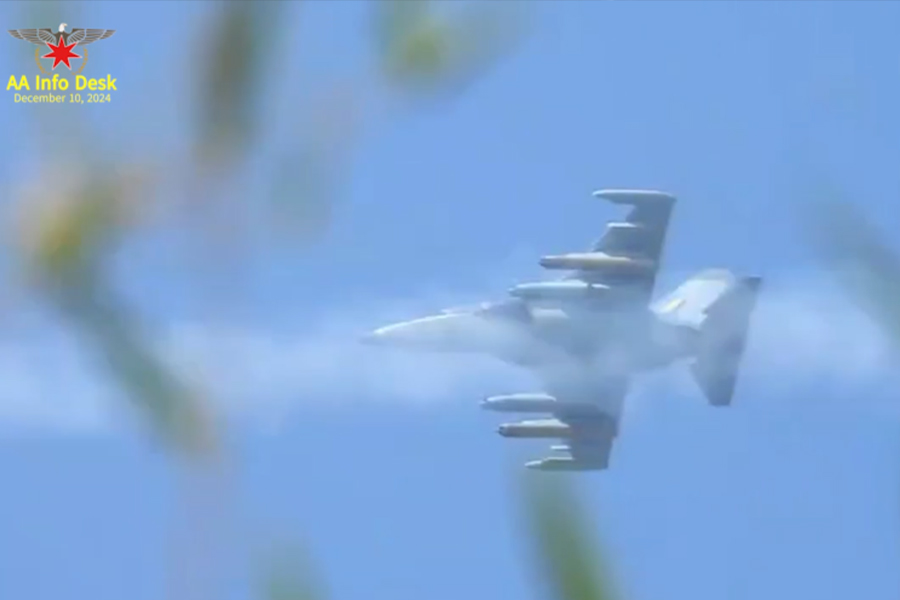
- Junta airstrike hits Anjanapura Twsp village, forcing residents to flee
- Junta airstrike kills woman, injures another in Werathani
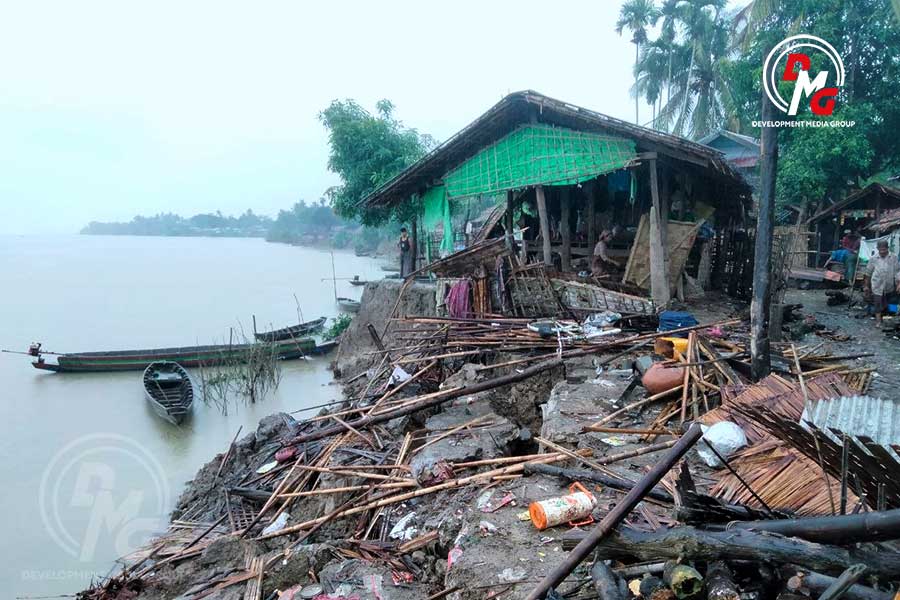
- Over 150 Kyauktaw villagers face displacement as Kaladan River erodes banks
- Malaria cases surge across Ann Twsp as residents struggle to access healthcare
Intensified airstrikes raise concerns over military outlook in Arakan State
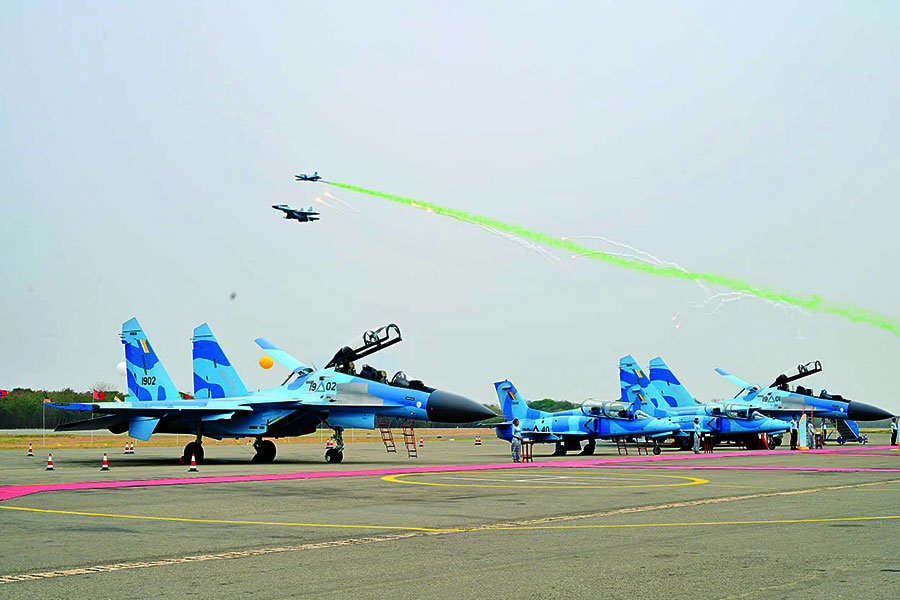
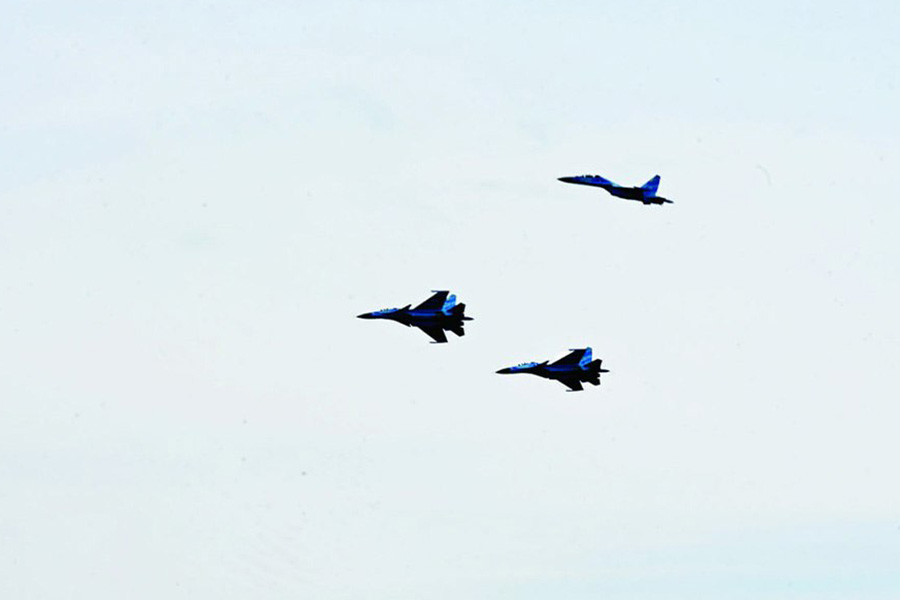
The Myanmar military regime has intensified aerial bombardments across various parts of Arakan State currently under the control of the Arakan Army (AA), carrying out strikes around the clock.
14 Mar 2026
DMG Newsroom
14 March 2026, Ann
The Myanmar military regime has intensified aerial bombardments across various parts of Arakan State currently under the control of the Arakan Army (AA), carrying out strikes around the clock.
In March, the regime targeted the Darlatchaung area in Ann Township and Kyauktaw Town. These strikes reportedly killed hundreds of prisoners of war (POWs) held by the Arakan Army and caused significant damage to the Kisspanadi Bridge.
Earlier in February, a similar airstrike in Ponnagyun Township resulted in mass casualties among civilians, including children and the elderly.
Military analysts say the regime is employing a strategy in Arakan State similar to that used in attempts to reclaim territories from the Ta’ang National Liberation Army (TNLA) and the Myanmar National Democratic Alliance Army (MNDAA).
“The Myanmar military previously targeted the TNLA and MNDAA from the air. However, the intensity of strikes in Arakan State now surpasses what was seen in northern Shan State. The regime’s primary targets for aerial operations are now focused on Sagaing Region and Arakan State. Consequently, the Arakanese people are likely to continue bearing the brunt of these airstrikes,” analyzed Captain Zin Yaw, a participant in the Civil Disobedience Movement (CDM).
He further suggested that following reports of India’s interest in resuming foreign investment projects such as the Kaladan Multi-Modal Transit Transport Project, the regime has continued bombing those areas to prevent the projects from becoming operational under Arakan Army control.
After regaining some territories across the country, the military regime is now attempting to reclaim areas controlled by the Arakan Army through coordinated air, sea and ground offensives.
Conversely, the Arakan Army is cooperating with allied revolutionary forces in Magway, Bago and Ayeyarwady regions, as well as southern Chin State, to resist regime offensives and carry out attacks on military outposts. The Arakan Army is also involved in military operations with the Spring Revolution Alliance (SRA), including providing training for the first batch of its forces.
Arakanese politicians say the military regime cannot pressure the Arakan Army by targeting civilians, arguing that such actions only deepen resentment and strengthen public support for the group.
“If the military regime thinks causing hardship for the people will lead to concessions, they are mistaken. The people will only become more bitter and hateful toward the regime. We are seeing the public support the Arakan Army even more fervently. For a regime that kills civilians daily, they are merely adding to their record of war crimes,” said a veteran Arakanese politician.
Observers also note that the Arakan Army differs from the TNLA and MNDAA in that it does not face direct pressure from China. The group controls significant sections of the borders with Bangladesh and India, as well as areas hosting several Chinese and Indian strategic projects.
Political observers say this geopolitical position may limit the ability of external powers to pressure the Arakan Army and suggest that the military regime is unlikely to defeat the group through continued aerial attacks.
“The Arakan Army holds significant political ‘cards’ involving both China and India. They have a distinct geopolitical advantage. China, which prioritizes its own interests, is unlikely to pressure the Arakan Army into a ceasefire. These advantages mean the regime cannot easily exert pressure. The current reliance on airstrikes likely stems from a flawed military strategy,” said a political science student based in Thailand.
Analysts also note that the Arakan Army is not heavily dependent on major powers such as China or India, nor on allied forces, allowing it to pursue its political objective of establishing a confederacy with autonomy.
Currently, the Arakan Army has captured most areas in Arakan State except for three major towns and is working to establish its own administrative and judicial structures.

Top News
POWs say junta orders troops to fight without retreat in Arakan counteroffensive
By Admin 21 Sep 2026
Junta airstrike hits Anjanapura Twsp village, forcing residents to flee
By Admin 21 Sep 2026
Junta airstrike kills woman, injures another in Werathani
By Admin 21 Sep 2026
Over 150 Kyauktaw villagers face displacement as Kaladan River erodes banks
By Admin 21 Sep 2026

Media outlets can verify Arakan State news through Justice For Arakan: ULA official
By Admin 20 Sep 2026


.jpg)