
- One killed, four injured as junta bombs Pannilar IDP camp, Aungphyupyin Village in Ponnagyun
- RICE report says Mon state faces deepening socioeconomic, security crisis
- IPCM offers emergency support to Myanmar journalists facing threats, exile
- Victims’ families demand justice over Kyauktaw airstrike massacre
- Arakanese political parties face criticism over silence on Kyauktaw mass killing
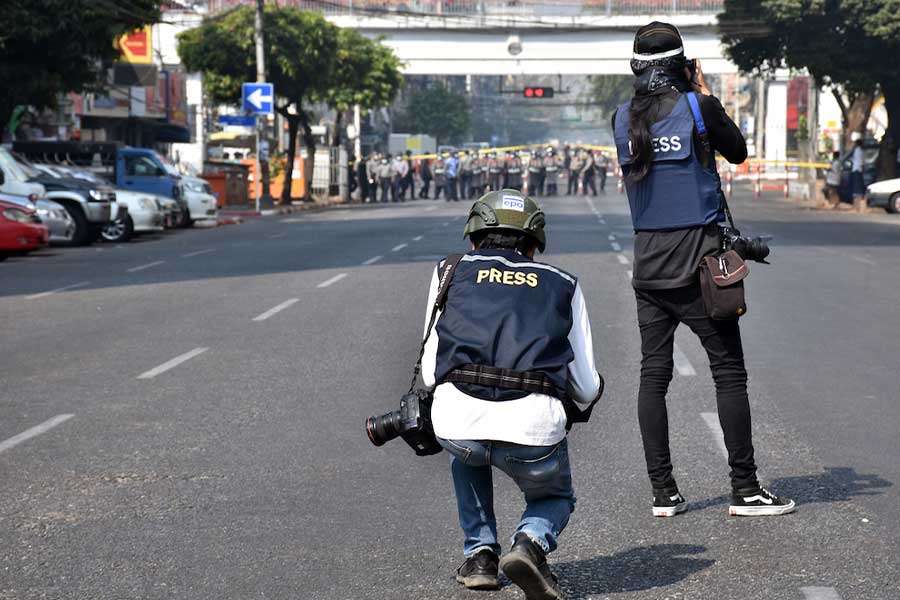
17 journalists still imprisoned as media crackdown continues: Athan report
Seventeen journalists remained behind bars in Myanmar as of the end of June 2026, despite the release of one media worker during the second quarter of the year, according to a new report released by the freedom of expression organization Athan.
21 Aug 2026
DMG Newsroom
21 August 2026, Yangon
Seventeen journalists remained behind bars in Myanmar as of the end of June 2026, despite the release of one media worker during the second quarter of the year, according to a new report released by the freedom of expression organization Athan.
The report, Update on Journalism and Media Safety in Myanmar: April to June 2026, provides an overview of the challenges, risks and security threats facing independent journalists and media workers across the country during the second quarter of 2026. Based on Athan's monitoring, it documents continuing media repression, legal action against journalists and growing concerns over press freedom.
According to the report, no new journalists were arrested or convicted between April and June. Since the military coup in February 2021, however, a total of 216 journalists and media workers have been arrested. Of those, 17 journalists: 15 men and two women remain imprisoned, while 11 journalists have died. Athan also documented 86 convictions of journalists and media workers since the coup, with most prosecuted under the Counter-Terrorism Law, Section 505A of the Penal Code and other security-related legislation.
The only journalist released during the reporting period was documentary filmmaker Shin Daewi, who was freed under a Myanmar New Year amnesty on April 17 after previously receiving a life sentence under Section 50(j) of the Counter-Terrorism Law.
The report says media repression continued despite what it described as efforts by the military authorities to project a more civilian image following recent elections.
According to Athan, the military authorities revoked the operating licenses of six independent media outlets during the quarter, bringing the total number of news organizations stripped of their licenses since the coup to 22. The affected outlets were Khonumthung Media Group, Chin World, Nowadays News, Myaelatt Athan, Red News Agency and Asia Citizens.
The report says the license revocations prohibit the media organizations from publishing or distributing news through any platform. It also notes that the authorities accused the outlets of violating the Printing and Publishing Enterprise Law by publishing content deemed harmful to national security and the rule of law.
Athan further reported that martial law remains in force across 60 townships, allowing military tribunals to prosecute journalists under media-related laws without access to legal representation.
The report also raises concerns over what it describes as the institutionalization of disinformation and psychological warfare. According to Athan, the authorities established an inter-ministerial "Information Sheet" team involving Military Intelligence, Psychological Warfare and Cyber Security units to intensify information campaigns and public intimidation.
It also says the authorities reconstituted the state-controlled Myanmar Media Development Group (MMDG) to project what the report describes as an image of cooperation with international organizations while expanding disinformation training through online platforms, including Telegram and TikTok.
The report also highlights developments in Arakan (Rakhine) State, where Salween Khet News field reporter Khin Tharaphi Oo was allegedly subjected to online sexual harassment, verbal abuse and physical threats following a disagreement on social media. According to the report, Salween Khet News requested that the United League of Arakan/Arakan Army (ULA/AA) investigate the incident and take action against the alleged perpetrator.
In another development, a group of independent Arakanese journalists established the Arakan Press Council (APC), an independent professional body aimed at promoting ethical journalism, strengthening media development, improving journalist safety and supporting fact-checking while remaining independent of governing authorities.
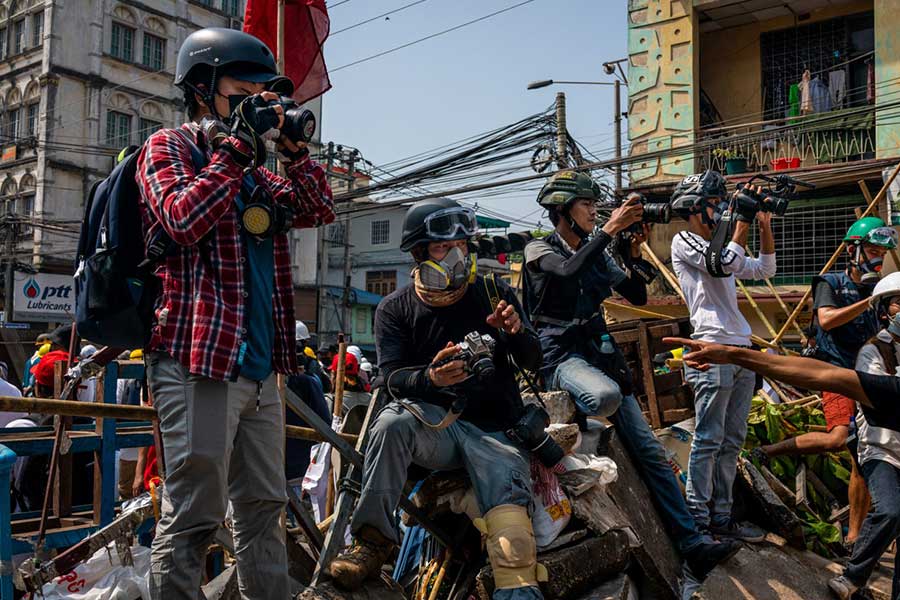
The report also notes that the Independent Press Council Myanmar (IPCM) launched a Media Safety and Protection Program in April to provide emergency relocation assistance and legal residency support for journalists facing long-term security threats and displacement.
As part of the report, Athan also published an in-depth interview with Han Thar Nyein, co-founder of Kamayut Media, reflecting on his four years of imprisonment, digital surveillance and his assessment that the military's political transition has not created meaningful space for independent journalism.
Athan concludes that press freedom in Myanmar remains under severe pressure more than five years after the military takeover, with journalists continuing to face imprisonment, criminal prosecution, license revocations, surveillance and growing security risks while carrying out their work.

Top News
RICE report says Mon state faces deepening socioeconomic, security crisis
By Admin 05 Oct 2026
IPCM offers emergency support to Myanmar journalists facing threats, exile
By Admin 05 Oct 2026
Victims’ families demand justice over Kyauktaw airstrike massacre
By Admin 03 Oct 2026
Arakanese political parties face criticism over silence on Kyauktaw mass killing
By Admin 03 Oct 2026