
- Myanmar airstrikes kill 14 civilians in Arakan: AA
- Junta airstrike destroys Yoe Creek Bridge, kills seven in Kyauktaw
- Over 8,600 killed, 32,000 arrested since Myanmar coup: AAPP
- Myanmar airstrikes kill 12 civilians, injure 32 across four Arakan townships: AA
- Arakan records highest civilian toll from junta airstrikes in three months: NLTA
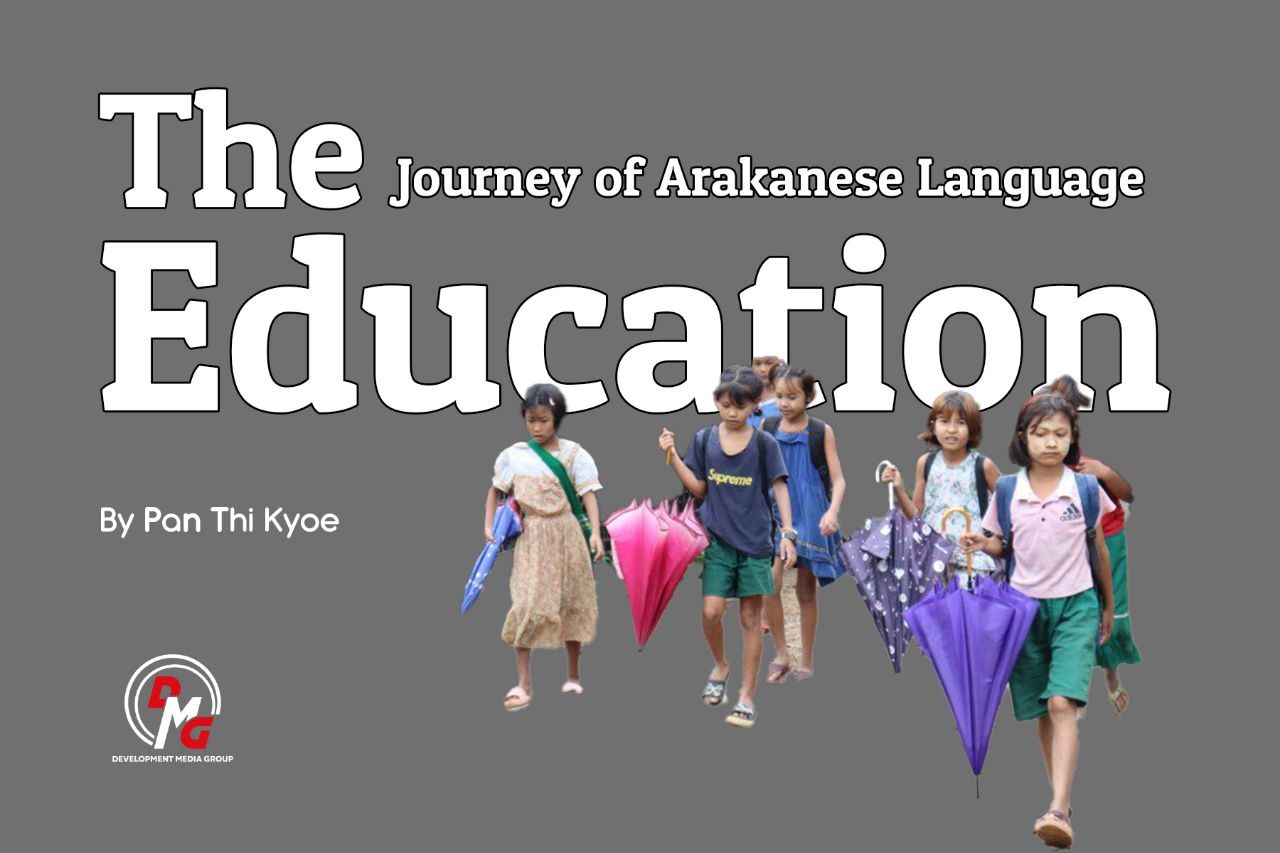
The Journey of Arakanese Language Education
The Arakan National Education Department has introduced a significant change for the 2026–2027 academic year by replacing the Grade 12 Burmese-language subject with an Arakanese (Rakhine)-language and literature curriculum.
03 Nov 2026
By Pan Thi Kyoe
The Arakan National Education Department has introduced a significant change for the 2026–2027 academic year by replacing the Grade 12 Burmese-language subject with an Arakanese (Rakhine)-language and literature curriculum.
The Arakanese curriculum development committee began working toward this change around 2024. In early June 2026, it held discussions with teachers from townships across Arakan (Rakhine) State, western Myanmar to review the proposed Grade 12 curriculum. These consultations eventually led to its adoption.
The decision has attracted considerable interest among students, parents, teachers and the wider Arakanese community. Some believe the change has come too soon, while others argue that it is long overdue.
Arakan is undergoing political and institutional transformation under the Arakan People's Revolutionary Government, the administration associated with the United League of Arakan and the Arakan Army (ULA/AA). While armed conflict continues, efforts are also underway to establish and strengthen public institutions.
In this context, the introduction of Arakanese literature into Grade 12 represents a historic step in the development of Arakan's education system.
However, this does not mean the transition is without shortcomings. Significant challenges remain.
Changing a school curriculum requires careful preparation, considerable resources and sustained effort. It would be unfair to assume that such a decision was made without serious consideration.
Even if the new curriculum is not yet perfect, its shortcomings should be approached with understanding and a commitment to improvement.
That does not mean accepting mistakes without question. Rather, it means identifying weaknesses and working constructively to correct them.
Instead of simply pointing out what is wrong, we should ask how the curriculum can be improved.
Shortcomings in the Current Curriculum
1. Inconsistent Spelling and Orthography
The Arakanese textbooks issued for the first two months of instruction contain inconsistencies in spelling.
Some observers attribute these problems to the absence of a published standard Arakanese spelling and orthography guide.
In my view, however, many of the inconsistencies result from typesetting mistakes and inadequate proofreading.
Although a comprehensive Arakanese orthography guide has yet to be published, plans for its publication exist. Its release has reportedly been delayed by the political situation.
Arakanese dictionaries are already available and could serve as useful references.
Official school textbooks carry considerable authority. Students and teachers naturally assume that the spelling conventions used in them are correct.
If mistakes are discovered, they should be corrected in subsequent editions.
The curriculum committee should therefore ensure consistent spelling and conduct thorough editorial reviews before publishing future textbooks.
2. Inadequate Explanations of Difficult Vocabulary
A glossary is intended to help students understand unfamiliar words and expressions.
However, several difficult expressions in the Grade 12 Arakanese lesson Anuthara Sondama, a text offering moral instruction, are not explained.
These include “ကျိုးလွင်သျှုတ်တတ်,” “စံလဲလိမ္မာ” and “မြဟဲနှုတ်ပြင်.”
The absence of definitions makes it more difficult for students to understand the material.
Providing clear explanations would improve comprehension and help teachers deliver lessons more effectively.
3. Errors in Word Order and Text Arrangement
Another concern involves mistakes in the arrangement of words and passages.
These may be typesetting errors, but such mistakes should not be overlooked in officially prescribed school textbooks.
They also suggest weaknesses in the editorial review process.
My observations are based on the materials released for the first two months of instruction.
Because this is a new educational initiative, some mistakes are understandable. However, repeated errors should not become acceptable.
Those responsible for preparing the curriculum should exercise greater care in reviewing and finalising teaching materials.
These observations are intended as constructive criticism, not personal attacks.
The Importance of Qualified Teachers and Literary Scholars
The curriculum development committee should work closely with experienced teachers and specialists who possess a thorough understanding of Arakanese language and literature.
Arakan has literary scholars whose knowledge and experience could make valuable contributions to curriculum development.
Failing to draw on their expertise would make the task unnecessarily difficult.
It is important to appoint qualified individuals to positions where their abilities can be used effectively.
At the same time, curriculum developers should be cautious about individuals who present themselves as literary authorities without possessing the necessary knowledge.
Some may be more interested in demonstrating their supposed expertise than making meaningful contributions.
Genuine competence, rather than reputation or self-promotion, should guide the selection of those involved.
The same principle should apply when choosing literary works for textbooks.
In my opinion, the literary quality and educational value of a text should matter more than the reputation of its author.
A work should be selected because it meets appropriate standards, not simply because it was written by a prominent writer.
Preserving the Meaning of Literary Works
Another important issue concerns changes to spelling and wording when adapting existing literary works into contemporary Arakanese forms.
Such changes can sometimes alter the original meaning of a passage or disrupt the rhyme and rhythm of poetry.
If the original author is still alive, curriculum developers should consult them and, where possible, allow them to make the necessary revisions.
If the author is no longer alive, changes should be made in consultation with knowledgeable literary specialists.
School textbooks should be as free from errors as possible.
Although complete perfection may be difficult to achieve, careful editing and proofreading can prevent many mistakes.
Errors identified in one edition should be corrected rather than repeated in the next.
Is Arakanese Literature the Same as Burmese Literature?
The introduction of the new curriculum has also prompted debate about the relationship between Arakanese and Burmese language and literature.
Some people argue that the two are essentially identical. Others suggest that Arakanese writing is simply Burmese writing with minor spelling changes.
I believe such claims should not be made without a proper understanding of the subject.
Literary traditions are supported by historical evidence and established practices. They develop over generations and cannot be created overnight.
Every community has a responsibility to preserve and develop its own language and literary heritage.
The Arakanese people cannot expect another community to undertake that responsibility on their behalf.
Arakanese speakers have long read written Burmese using Arakanese pronunciation. This is not a recent practice.
However, it would be unreasonable to assume that Burmese writing was specifically developed to accommodate Arakanese pronunciation.
If a written text can be read naturally in Arakanese, should it automatically be excluded from the Arakanese literary tradition?
Why do inscriptions from the Bagan period contain expressions associated with Arakanese usage?
These are questions that deserve careful historical and linguistic examination.
Those who claim that Arakanese and Burmese literature are identical should consider the available evidence before drawing conclusions.
Arakanese literary scholars have written about the origins and historical development of Arakanese writing. Their work deserves serious consideration in discussions about the language's identity and literary heritage.
A detailed examination of that history is beyond the scope of this article.
My purpose is to discuss the present development of Arakanese-language education and the steps needed to strengthen it.
Moving Forward Together
The introduction of Arakanese reading and literature into the Grade 12 curriculum marks the beginning of a new educational journey.
For this initiative to succeed, constructive criticism, cooperation and collective effort will be essential.
Mistakes must be corrected. Weaknesses must be addressed. Gaps in teaching materials must be filled.
The knowledge and experience of qualified teachers, literary scholars and other specialists should be incorporated into the process.
Curriculum development should not become a competition between individuals seeking recognition or authority.
Instead, it should be a collective effort guided by educational quality, literary integrity and the interests of future generations.
The journey of Arakanese-language education has only just begun.
Mistakes and challenges are inevitable, particularly during the early stages of such a significant transition. What matters is the willingness to acknowledge them, make improvements and continue moving forward.
Only through sustained cooperation, careful planning and a commitment to quality can this new educational initiative achieve its intended goals.

Opinion
The Journey of Arakanese Language Education
By Admin 03 Nov 2026
Can the UN Restore Trust in a Fractured World?
By Admin 23 Oct 2026
Arakan Amid the Storm: From Survival to Rebuilding a People
By Admin 22 Oct 2026
Surviving Amid the Bombs: Arakan's Quiet Resistance
By Admin 19 Oct 2026
Shadows Over Childhood: Confronting the Reality of Missing Children
By Admin 16 Oct 2026
A City with Fresh Wounds (The Tragedy of Kyauktaw and the Kissapanadi Bridge)
By Admin 01 Oct 2026
POLITICS

BUSINESS
Industry to manufacture finished goods from coconut starting in early 2020
By Aung Kaung Zaw 20 Nov 2019