
- Junta aerial bombardment of Taungup leaves two residents dead, one injured
- Junta deploys 2,000 troops in major offensive against AA-held territory: ISP-Myanmar
- APHR opposes Min Aung Hlaing’s Malaysia visit, urges halt to Myanmar returns
- Myanmar military airstrikes kill eight in Ponnagyun as attacks escalate across Arakan
- One killed, four injured as junta bombs Pannilar IDP camp, Aungphyupyin Village in Ponnagyun
Freedom of expression curtailed in resistance-controlled areas, report finds
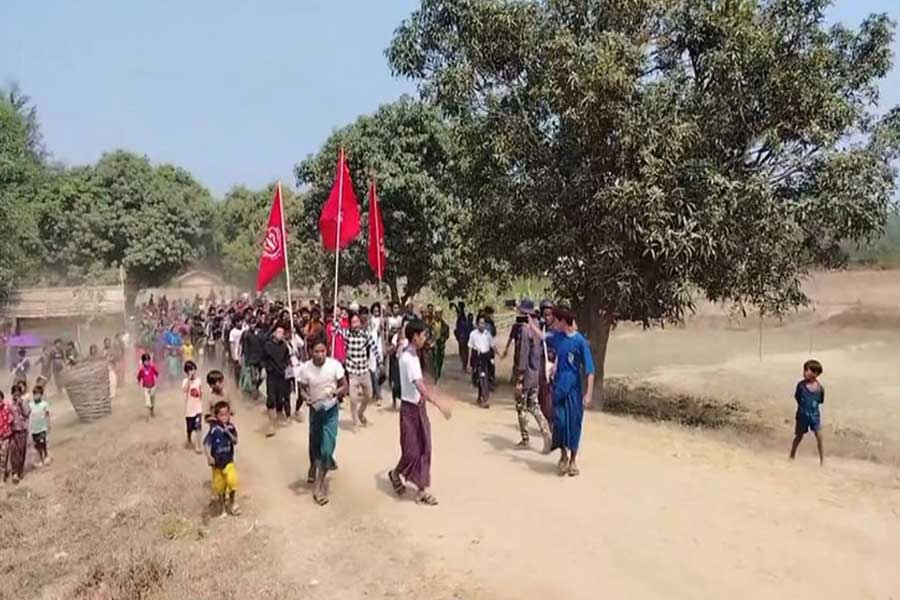
Freedom of expression and media rights are being restricted in areas controlled by revolutionary forces under security and military pretexts, according to a report released on Tuesday by Athan, a freedom of expression advocacy group.
18 Feb 2026
DMG Newsroom
18 February 2026, Kyauktaw
Freedom of expression and media rights are being restricted in areas controlled by revolutionary forces under security and military pretexts, according to a report released on Tuesday by Athan, a freedom of expression advocacy group.
The report, titled “Freedom of Expression in Myanmar’s Revolutionary Period: Legal Provisions and Practical Gaps,” states that restrictions include limits on free speech, denial of media access, bans on news gathering, and controls on internet use, often justified as military necessities.
It notes that many civilians are resorting to self-censorship, refraining from exercising their right to free expression out of concern for their personal safety.
“Even though these are liberated areas, there are many different organizations and ethnic groups. If I want to share my thoughts or opinions, I worry about potential threats from those who disagree with me,” a Karenni-based journalist was quoted as saying in the report.
The report also states that, in addition to prohibiting news reporting and information gathering, authorities in some areas frequently restrict Starlink internet access, a key source of information for local residents.
While such measures are often justified as strategic requirements to prevent airstrikes, they have directly impeded the flow of information and limited public discourse, the report said.
“Freedom of expression and the right to information that do not harm public safety should not be restricted anywhere, at any time. It is a fundamental right,” a human rights activist told DMG. “At the same time, authorities must systematically prevent the dissemination of information that truly endangers public security.”
According to Athan, although revolutionary forces are drafting local constitutional frameworks to replace the 2008 Constitution, a significant gap remains between legal provisions and their implementation on the ground.
The report adds that while stated rights appear to align with international standards, vague terminology and a lack of precise definitions in local regulations create confusion and leave room for overreach.
“Local residents and grieving families need to be able to accurately report on conflicts, landmine explosions and the impacts of airstrikes. Currently, people are only saying as much as they are permitted to, rather than what they truly want to express,” said a woman from a civil society organization in a resistance-controlled area.
In response, Athan called for the establishment of unified policy standards to safeguard freedom of expression, media rights and the public’s right to information across all liberated territories.

Top News
Junta aerial bombardment of Taungup leaves two residents dead, one injured
By Admin 06 Oct 2026
Junta deploys 2,000 troops in major offensive against AA-held territory: ISP-Myanmar
By Admin 06 Oct 2026
APHR opposes Min Aung Hlaing’s Malaysia visit, urges halt to Myanmar returns
By Admin 06 Oct 2026

Junta navy detains, severely beats three fishermen in Myebon Twsp
By Admin 05 Oct 2026