

- ISP-Myanmar reports at least 115 mass civilian killing incidents across Myanmar
- Junta airstrikes on Ponnagyun, Rathedaung villages kill one, injure three
- UN High Commissioner, UK condemn Kyauktaw airstrike killing at least 50 civilians
- ULA/AA faces governance challenges as it consolidates control in Arakan: ISP-Myanmar
- Death toll from Kyauktaw airstrike rises to 50
ISP-Myanmar reports at least 115 mass civilian killing incidents across Myanmar
Mass civilian killing incidents nationwide have risen to at least 115, including the recent bombing of India Market in Kyauktaw Town, according to data released by the Institute for Strategy and Policy – Myanmar (ISP-Myanmar).
01 Oct 2026
DMG Newsroom
1 October 2026, Kyauktaw
Mass civilian killing incidents nationwide have risen to at least 115, including the recent bombing of India Market in Kyauktaw Town, according to data released by the Institute for Strategy and Policy – Myanmar (ISP-Myanmar).
The research group reported that over the five years since the military coup, mass killing incidents involving 10 or more civilian deaths have claimed a total of 2,324 lives, with approximately 65 percent of the fatalities caused directly by military regime airstrikes.
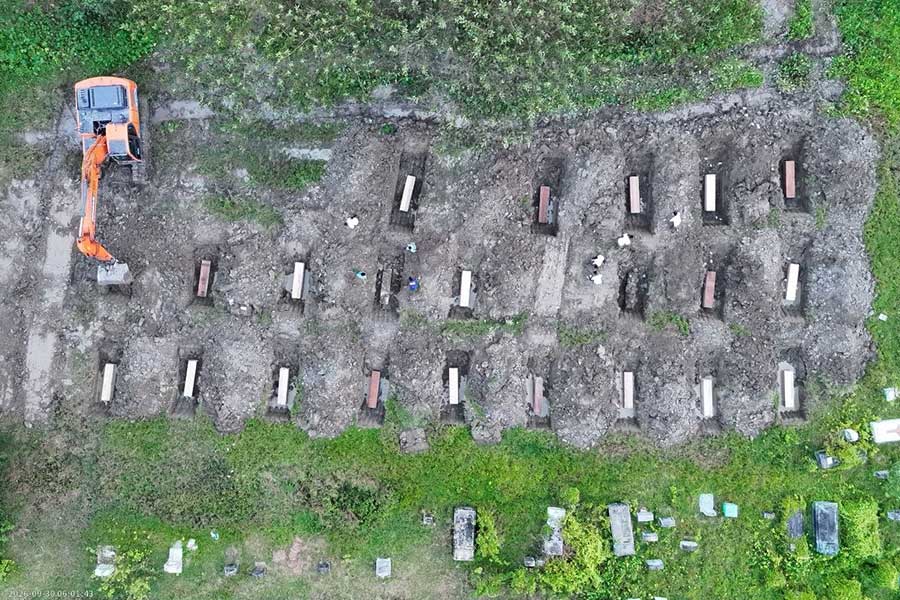
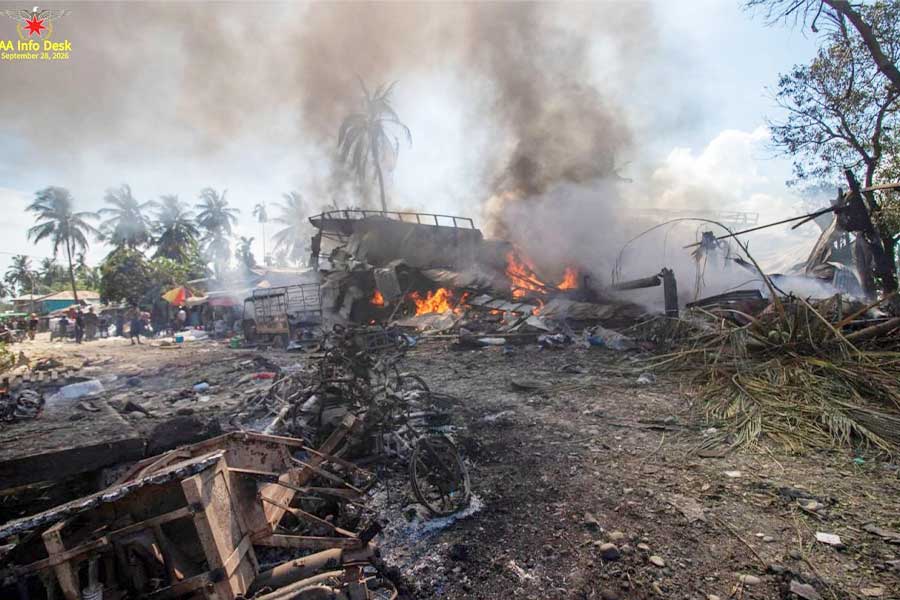
The September 28 airstrike on India Market and the Kissapanadi Bridge in Kyauktaw Town killed 50 civilians and injured at least 57 others, according to ISP-Myanmar. The attack stands as the single largest mass casualty event recorded in Arakan State, the group said.
"The military is slaughtering everyone they encounter, aiming to eradicate the Arakanese population entirely, sparing neither children nor the elderly," said Daw Nwe Nwe Yi from Phayarpaung Village in Kyauktaw Township, whose husband was killed in the India Market bombing. "Whether people stay at home, in their villages, or travel on the road, they are being targeted and killed wherever they are."
ISP-Myanmar reported that since General Ye Win Oo assumed the position of Myanmar's military chief, large-scale military offensives have expanded across the Kachin, Arakan, and Kayin battlefronts. The group said increased reliance on aerial bombardments and drone strikes has led to continued mass civilian killings.
Civilians residing in territories controlled by resistance forces and areas experiencing heightened military tensions face the highest risk of attack, according to ISP-Myanmar.
With the military regime targeting civilian homes, religious buildings, hospitals, and schools, protective safeguards for non-combatants during conflict have fallen to extremely low levels, ISP-Myanmar stated.
"The military possesses formal war crimes standards and military law," social aid worker and writer Wai Hun Aung said. "Military law explicitly forbids attacking civilian areas or executing captured, unarmed individuals. Intentionally slaughtering civilians despite these strict regulations constitutes a blatant violation of international law."
ISP-Myanmar emphasized that pursuing military victory by intentionally targeting civilians in non-military locations harms both the victims and the perpetrators.
Facing widespread battlefield defeats nationwide, the military regime is attempting to regain lost territory, escalating airstrikes and committing what ISP-Myanmar describes as war crimes without distinguishing between military and civilian targets, leaving the public without adequate safety.

Top News
ISP-Myanmar reports at least 115 mass civilian killing incidents across Myanmar
By Admin 01 Oct 2026
Junta airstrikes on Ponnagyun, Rathedaung villages kill one, injure three
By Admin 01 Oct 2026
Fighting intensifies along Sittwe-Ponnagyun border following Kyauktaw airstrike
By Admin 30 Sep 2026
UN High Commissioner, UK condemn Kyauktaw airstrike killing at least 50 civilians
By Admin 30 Sep 2026
ULA/AA faces governance challenges as it consolidates control in Arakan: ISP-Myanmar
By Admin 30 Sep 2026