

- Junta column heading toward Kyindwe suffers heavy casualties in resistance ambushes
- Junta replaces Arakan State security minister amid escalating battles near Sittwe
- Junta Y-12 bombing raid injures two women in Anjanapura
- Two junta defectors urge conscripts to surrender to AA to save their lives
- NGO, INGO staff relocate to Yangon as fighting nears Sittwe
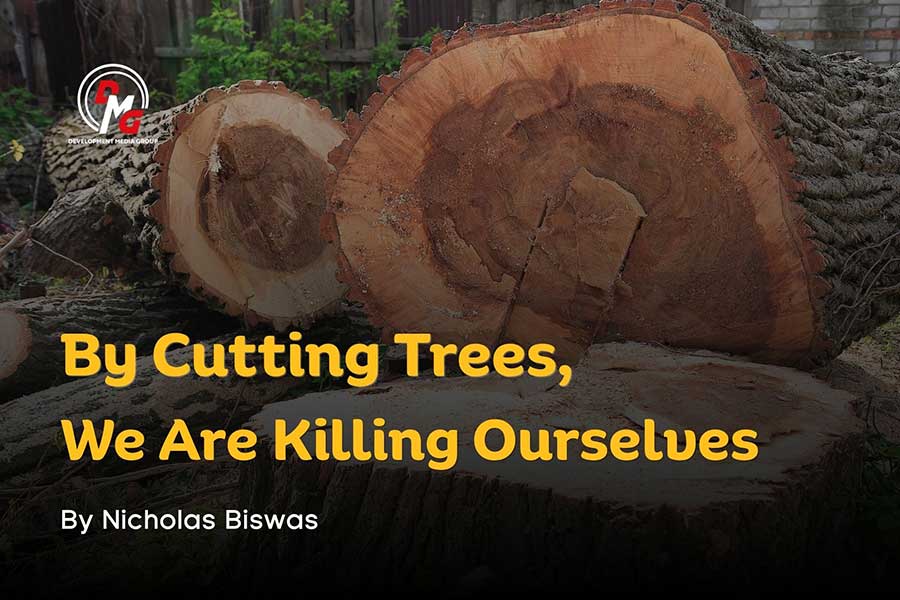
By Cutting Trees, We Are Killing Ourselves
Trees do all of this without electricity, fuel or a maintenance contract, and they never send us a bill. Perhaps that is part of the problem: because many of these services come free, we have become accustomed to treating them as if they have little value.
06 Sep 2026
By Nicholas Biswas
Picture a factory that runs twenty-four hours a day, never asks for a paycheck, never needs a repair crew and quietly helps keep the planet livable. That factory already exists. It is called a forest, and every day, we tear another piece of it down in the name of progress.
Roads, buildings, industrial zones and housing developments continue to eat into forests and tree cover, and we often applaud the resulting “development” without asking what it actually costs us.
Trees are not just scenery. They are living systems that perform work essential to human well-being and survival. They absorb carbon dioxide and store carbon, helping regulate the climate. They filter pollutants from the air, cool the places where we live, protect soil and sustain the biodiversity that keeps ecosystems functioning.
Trees do all of this without electricity, fuel or a maintenance contract, and they never send us a bill. Perhaps that is part of the problem: because many of these services come free, we have become accustomed to treating them as if they have little value.
The Message from Nepal’s Recent Floods
On August 26, 2026, a catastrophic debris flow and flash flood struck the Himalayan region along the Nepal-China border, causing extensive loss of life and widespread destruction. Rasuwa district and communities farther downstream were among the areas severely affected, with homes, roads, bridges and other infrastructure damaged or destroyed.
Preliminary scientific assessments indicate that the disaster was likely triggered by the collapse of glacial ice high in the Himalayas, producing a fast-moving avalanche of ice and rock and a destructive surge of water and debris downstream. Scientists and authorities continue to investigate the precise sequence of events and contributing factors.
The tragedy is another reminder of how vulnerable communities can be to extreme natural hazards, particularly in fragile mountain environments. A changing climate is adding further pressure to many natural systems, making adaptation and disaster preparedness increasingly important.
The Nepal disaster should not be attributed simply to deforestation or the loss of trees. But it reinforces a broader lesson: societies must better understand, protect and adapt to the natural systems on which they depend. Forest protection, responsible land use, climate adaptation, early-warning systems and resilient infrastructure all have important roles to play in reducing environmental and disaster risks.
Trees Are Infrastructure, Too
When we talk about infrastructure, we usually picture highways, power grids, water systems and telecommunications networks. Trees rarely make that list, even though they perform many functions essential to healthy and resilient communities.
They help filter pollutants from the air, cool overheated cities, manage stormwater, hold soil in place and provide habitat for countless species. As communities face increasing pressures from extreme heat, flooding and drought, destroying forests and tree cover can weaken important natural defenses at precisely the time we need them most.
Trees and forests should therefore be understood not simply as environmental assets, but also as a form of natural infrastructure.
The Hidden Price of “Development”
None of this makes development the villain. People need homes, schools, hospitals, roads and jobs. The trouble begins when we build without accounting for what nature was already providing.
A mature tree can take decades to grow, and minutes to remove. Planting a sapling in its place does not immediately undo the loss. A young tree needs years before it can approach the shade, carbon storage and habitat value of the mature tree that was cut down.
That gap creates a debt we may not immediately notice. Over time, communities can experience hotter streets, dirtier air, greater flooding, degraded soil and declining wildlife populations. These environmental losses can eventually translate into economic and social costs, including higher energy expenses, health problems and costly infrastructure repairs.
Growing Cities Need More Trees, Not Fewer
Across rapidly growing cities, green spaces are increasingly being replaced by concrete, asphalt and glass: materials that absorb and retain heat and intensify the urban heat-island effect.
Trees offer one of the simplest natural responses. Their shade reduces direct exposure to sunlight, while vegetation can help moderate local temperatures. Tree-lined streets and green public spaces can also make neighborhoods more comfortable and livable.
A city can be filled with impressive buildings, highways and commercial centers and still be dangerously exposed to extreme heat and flooding if it loses its trees, parks and natural drainage systems.
Urban development and environmental protection should therefore not be treated as opposing goals. Well-planned cities can accommodate growth while preserving mature trees, expanding green spaces and incorporating natural infrastructure into development.
A Forest Is More Than a Group of Trees
A forest is an interconnected system: trees, plants, animals, insects, microorganisms, soil and water all interacting with and depending on one another.
When we clear a forest, we do not simply lose timber. Wildlife loses nesting grounds, food sources and shelter. Soil becomes more vulnerable to erosion, water cycles can be disrupted and biodiversity declines.
Some ecosystems take decades or centuries to develop. Once severely degraded, they can be extremely difficult—and in some cases impossible—to restore fully.
Protecting forests therefore means protecting the complex web of life that depends on them, including human communities.
Why the “Oxygen Factory” Metaphor Still Matters
Forests are sometimes described as the planet’s “oxygen factories.” Scientifically, that description is an oversimplification because the global oxygen cycle involves many natural systems, including the oceans.
But the metaphor points to an important truth: human life depends on natural systems that we did not create and cannot easily replace.
Forests do far more than participate in the oxygen cycle. They store carbon, influence local climates, regulate water systems, support biodiversity and protect soil.
There is no quick substitute for a mature natural forest once it has been destroyed.
Nature Isn’t Optional
Too much of modern development treats nature as a nice-to-have—something addressed only after economic and construction priorities have been considered.
That approach gets the relationship backward. The economy does not operate separately from nature; it depends on it.
Agriculture requires healthy soil, water and pollinators. Cities need effective drainage and manageable temperatures. Communities need clean air and reliable water. Businesses and infrastructure need resilience against floods, storms, erosion and extreme heat.
Natural systems are not luxuries added to economic development. They are part of the foundation on which economies and societies depend.
Planting Trees Isn’t Enough — We Have to Protect Them
Tree-planting campaigns have become increasingly popular, and that is a positive development. But planting new trees alone will not solve the problem.
We must also protect the mature trees and forests that already exist. A mature tree represents decades of biological growth and accumulated ecological value. It cannot simply be replaced overnight by planting a seedling somewhere else.
Success should therefore not be measured only by how many seedlings are planted. It should also be measured by how many survive, grow and remain healthy years later.
Protection and restoration must go together.
Redefining What “Progress” Means
Perhaps it is time to rethink what counts as development.
A skyline full of concrete is not necessarily a success story if people living beneath it have no shade or green space. A neighborhood that floods during heavy rains because its natural drainage has been paved over is not resilient. An economy that grows while the ecosystems supporting it collapse is effectively borrowing against the future.
Real progress recognizes forests, wetlands, parks, rivers and trees as natural infrastructure that can be just as important to society’s long-term well-being as roads and bridges.
Development should work with nature rather than continually replacing it.
Every Tree Tells a Story
The next time you see a tree being planted, protected or cut down, think beyond the shade it casts.
Think about the carbon it stores, the air it helps clean, the heat it offsets, the soil it protects and the birds, insects and other species that depend on it. Think also about the children who may one day sit beneath its branches.
A tree is not wasted space standing in the way of development. It is an investment in the future.
We Cannot Keep Demolishing Our Life Support
We cannot continue tearing down natural infrastructure and then spend enormous sums trying to engineer replacements for the environmental services we have destroyed. That equation does not work.
Governments need to strengthen protections for existing forests and urban tree cover. City planners should incorporate green infrastructure into development from the beginning rather than treating it as an afterthought. Developers should properly consider environmental costs before clearing mature vegetation.
Individuals and communities also have a role to play by protecting existing trees, supporting responsible restoration and demanding development policies that recognize the long-term value of nature.
Planting and protecting trees is not simply about beautification. It is about building healthier, safer and more resilient communities.
Trees perform essential work every day, mostly out of sight. Their value cannot be measured by timber value or land prices alone. They are part of our climate defense, an anchor for biodiversity and an essential component of healthy and livable communities.
Once we understand that, cutting down a tree no longer looks like a routine consequence of development.
Instead, it leaves us with a question we cannot afford to ignore: If we keep demolishing the natural systems that sustain us, what will be left for future generations to live on?
Nicholas Biswas is a media freelancer, columnist, translator and development professional, and a recipient of the United Nations Population Fund (UNFPA) Media Award. He can be reached at gonomaddyom@gmail.com.

Opinion
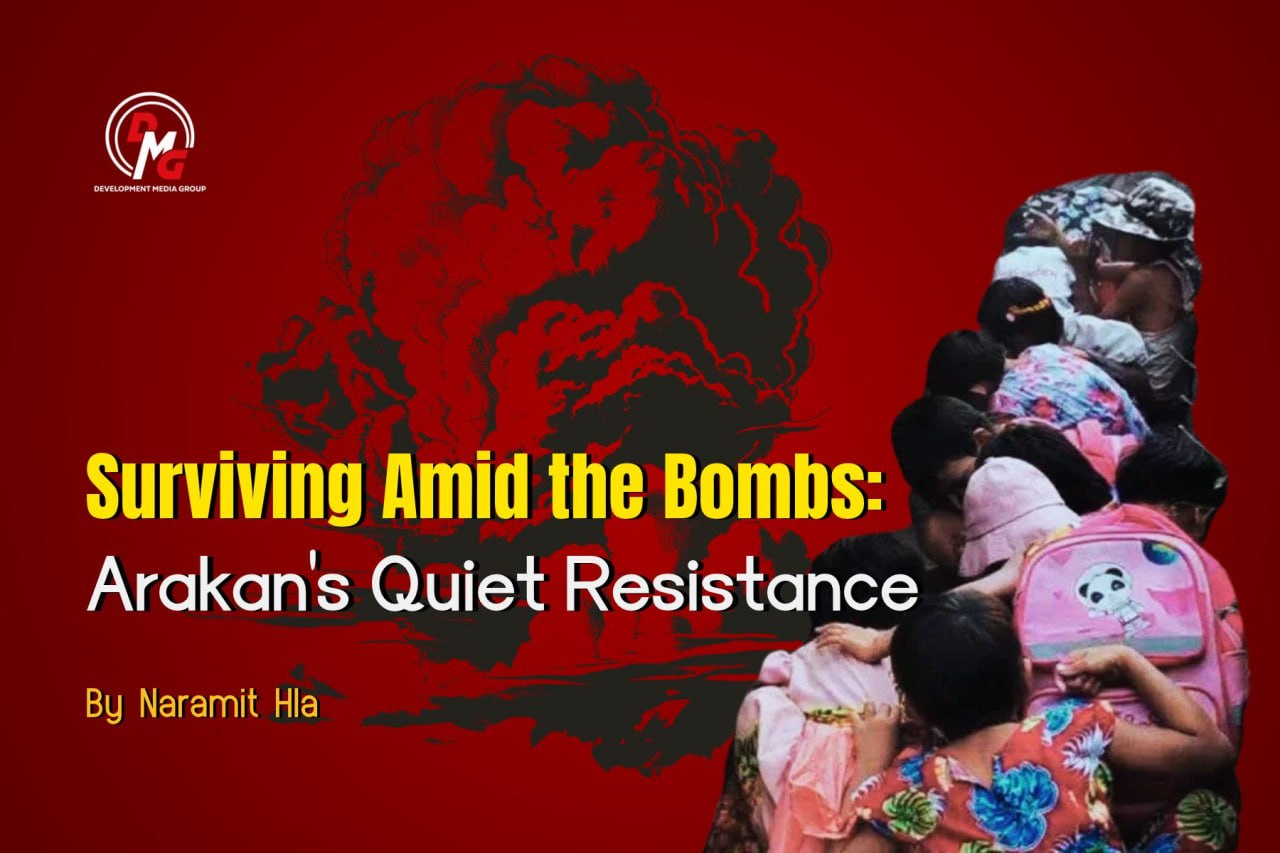
Surviving Amid the Bombs: Arakan's Quiet Resistance
By Admin 19 Oct 2026
Shadows Over Childhood: Confronting the Reality of Missing Children
By Admin 16 Oct 2026
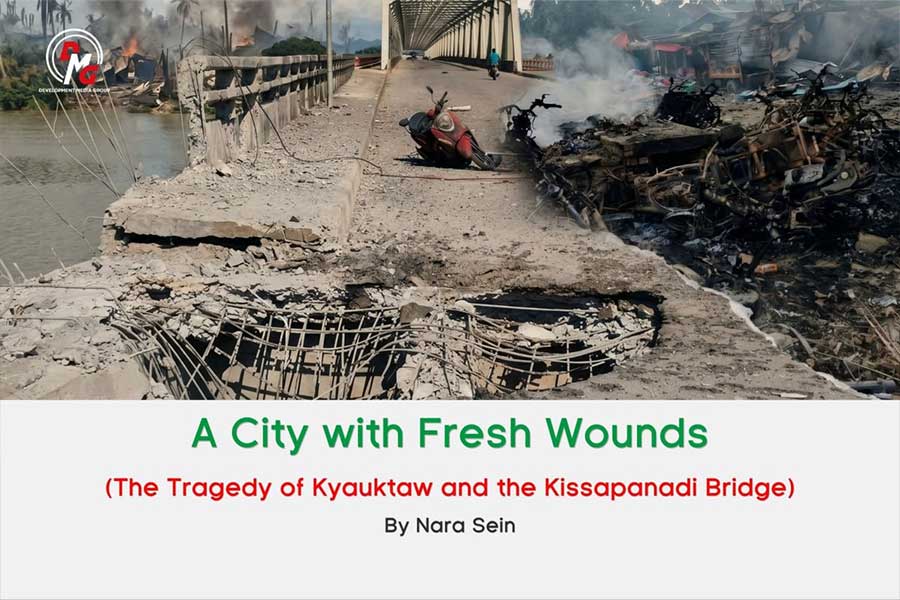
A City with Fresh Wounds (The Tragedy of Kyauktaw and the Kissapanadi Bridge)
By Admin 01 Oct 2026

Arakan Army’s Gains and the Changing Geopolitics of Arakan
By Admin 29 Sep 2026

Beyond Military Victory: What Is Myanmar’s Ultimate Political Objective?
By Admin 26 Sep 2026

UN at a Crossroads: Six Priorities for a Shared Future
By Admin 23 Sep 2026
POLITICS



BUSINESS
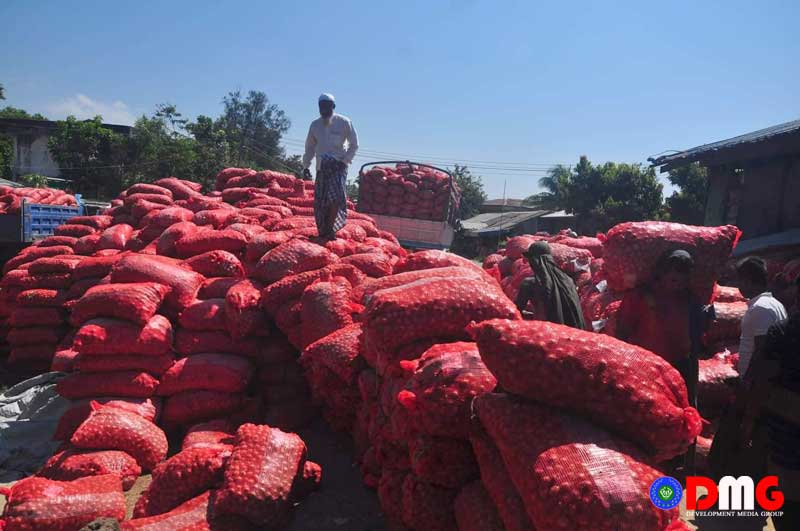
Industry to manufacture finished goods from coconut starting in early 2020
By Aung Kaung Zaw 20 Nov 2019