

- Junta column heading toward Kyindwe suffers heavy casualties in resistance ambushes
- Junta replaces Arakan State security minister amid escalating battles near Sittwe
- Junta Y-12 bombing raid injures two women in Anjanapura
- Two junta defectors urge conscripts to surrender to AA to save their lives
- NGO, INGO staff relocate to Yangon as fighting nears Sittwe
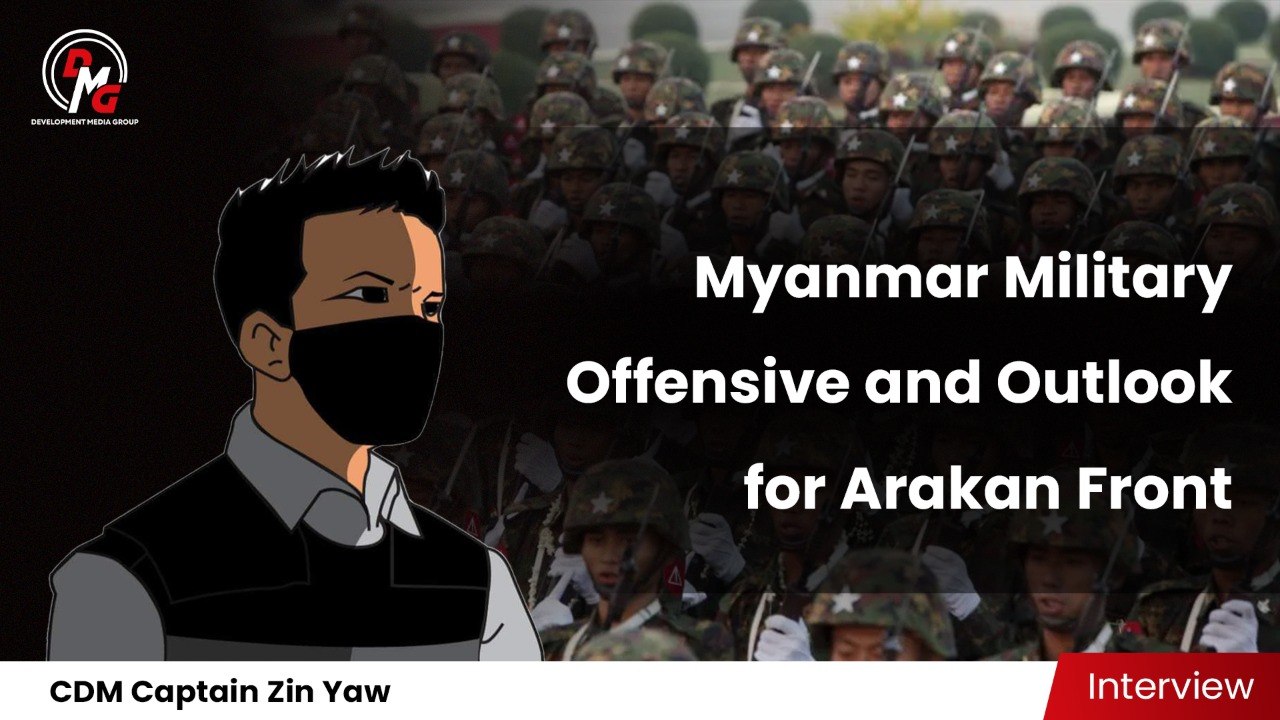
DMG Interview: Myanmar Military Offensive and Outlook for Arakan Front
DMG spoke with CDM Captain Zin Yaw about the current fighting, the military’s offensives, the AA’s response and the possible outlook for the Arakan front.
07 Sep 2026
Fighting between the Myanmar military and the Arakan Army (AA) has intensified in Arakan, with military activity increasing around Sittwe and Ponnagyun townships and the Gwa area in southern Arakan.
The Myanmar military has stepped up operations by land, air and sea, deploying significant forces across several fronts.
Military activity has increased particularly around Sittwe, Ponnagyun, Kyaukphyu and Gwa, while the Arakan Army has warned residents to remain alert to the threat of air and naval attacks.
DMG spoke with CDM Captain Zin Yaw about the current fighting, the military’s offensives, the AA’s response and the possible outlook for the Arakan front.
DMG: Fighting has intensified in Sittwe Township amid Myanmar military offensives, while military activity has also increased around Gwa and Thandwe townships. How do you assess the current situation?
Zin Yaw: At present, the main offensive pressure appears to be focused on Ponnagyun and Gwa townships.
On the Gwa front, columns from Light Infantry Division 101 have begun deploying from the Shwethaungyan area of Thabaung Township. We have also seen naval vessels carrying out what appear to be preparatory operations around Gwa, Kyeintali and Thandwe.
In Sittwe, armored vehicles are also being deployed. The main focus appears to be Min Chaung Bridge. After crossing the bridge, the military appears intent on advancing toward Kwan Taung, which it has been targeting.
From Kwan Taung, the military appears to want to secure the road junction linking Ponnagyun and Rathedaung.
Brigadier-General Kyaw Zaw, a graduate of the 43rd intake of the Defence Services Academy, was rapidly appointed as regional commander. He previously served as commander of Military Operations Command No. 7.
Normally, officers pass through other senior appointments before becoming regional commanders, but he has risen unusually quickly and at a relatively young age. In my view, this suggests he is trusted by Min Aung Hlaing and the military leadership. His appointment also appears closely connected with preparations for operations toward Ponnagyun.
DMG: On the Sittwe front, the Myanmar military has reportedly been providing artillery support from eight fixed positions, as well as fire support from the sea. How do you assess its military operations?
Zin Yaw: On September 5, we also saw naval vessels firing toward the Angumaw area of Rathedaung Township amid what appeared to be attempts to establish a foothold from the coast.
In Arakan, the military is now using forces equivalent to around 11 divisions. Previously, it was around 10. It is trying to establish a foothold in the Arakan theatre with this level of force.
We have not seen the military deploy forces on this scale in Arakan before. It is using ground, naval and air power extensively.
Its main objective appears to be Gwa. I think the military wants gradually to retake southern Arakan, one town at a time.
At the same time, it is trying to create more fronts for the Arakan Army. Some operations from the Sittwe side could be viewed as feints or diversionary attacks. If the military makes gains there, it will take advantage of them. At the same time, it is applying pressure toward Rathedaung.
The idea appears to be to attack simultaneously from different directions and identify where a breakthrough can be achieved. Wherever it can gain a foothold, it will try to consolidate it.
We are also seeing air attacks at an intensity the Arakan Army has rarely faced before. That is why the AA has issued warnings in Arakanese, English and Chinese, urging the public to remain particularly alert to air and naval threats.
DMG: Fighting has also intensified around Sane in Kyaukphyu Township as the Myanmar military launches ground operations. How do you assess the Kyaukphyu front?
Zin Yaw: There are Chinese economic interests in Kyaukphyu, so the Arakan Army has to conduct its operations there within certain limitations.
From a military perspective, the side operating under restrictions can be at a disadvantage.
The Myanmar military is trying to exploit this situation. Similar to what it has done against the TNLA [Ta'ang National Liberation Army] and MNDAA [Myanmar National Democratic Alliance Army], it appears to be relying heavily on air power to pressure its opponent.
But the Arakan Army has shown no indication that it will submit to the military. That is why we are now seeing the military commit substantial forces to offensive operations.
In terms of ground offensives, the military has only two significant footholds from which it can attempt to expand: Sittwe and Kyaukphyu.
I believe it may launch some of its most intensive operations from these two positions in an effort to achieve further gains.
DMG: Do you think the Myanmar military’s offensives in Arakan can succeed?
Zin Yaw: Whether the military’s offensives succeed will depend largely on the Arakan Army’s defensive capability.
The AA is not facing only the Myanmar military. In Buthidaung and Maungdaw, it also continues to face security pressures involving ARSA [Arakan Rohingya Savlation Army], meaning it has multiple fronts to deal with.
By creating multiple fronts around Arakan, the Myanmar military is trying to stretch the AA. Although the AA has previously been able to overcome military forces, we are now seeing the military deploy greater numerical strength.
At the same time, however, the Arakan Army has strong strategic and tactical capabilities.
I therefore expect ground fighting to intensify, but I do not think the Myanmar military will be able to fully achieve its strategic objectives.
DMG: The AA commander-in-chief has said the remaining towns would be captured before 2027. Do you think we could see major changes before then?
Zin Yaw: The AA commander-in-chief has spoken about dealing with the remaining towns before 2027. Those are essentially Sittwe and Kyaukphyu.
As for Manaung Island, there is a traditional belief that bloodshed there would be inauspicious, and the Arakan Army has so far refrained from launching an offensive there.
There is also the reality that even if an area is captured, it could subsequently face heavy air attacks. That appears to be another reason the AA has avoided opening a front there.
I think significant developments before 2027 are possible. But if that happens, the people of Arakan may have to endure considerable sacrifices and hardship.
DMG: Thank you for speaking with us.

Opinion
Surviving Amid the Bombs: Arakan's Quiet Resistance
By Admin 19 Oct 2026

Shadows Over Childhood: Confronting the Reality of Missing Children
By Admin 16 Oct 2026
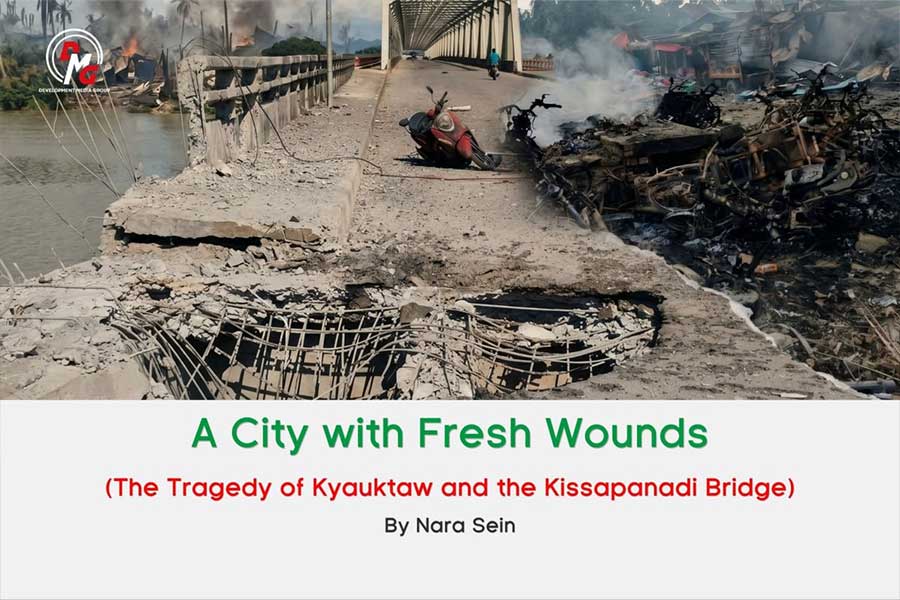
A City with Fresh Wounds (The Tragedy of Kyauktaw and the Kissapanadi Bridge)
By Admin 01 Oct 2026
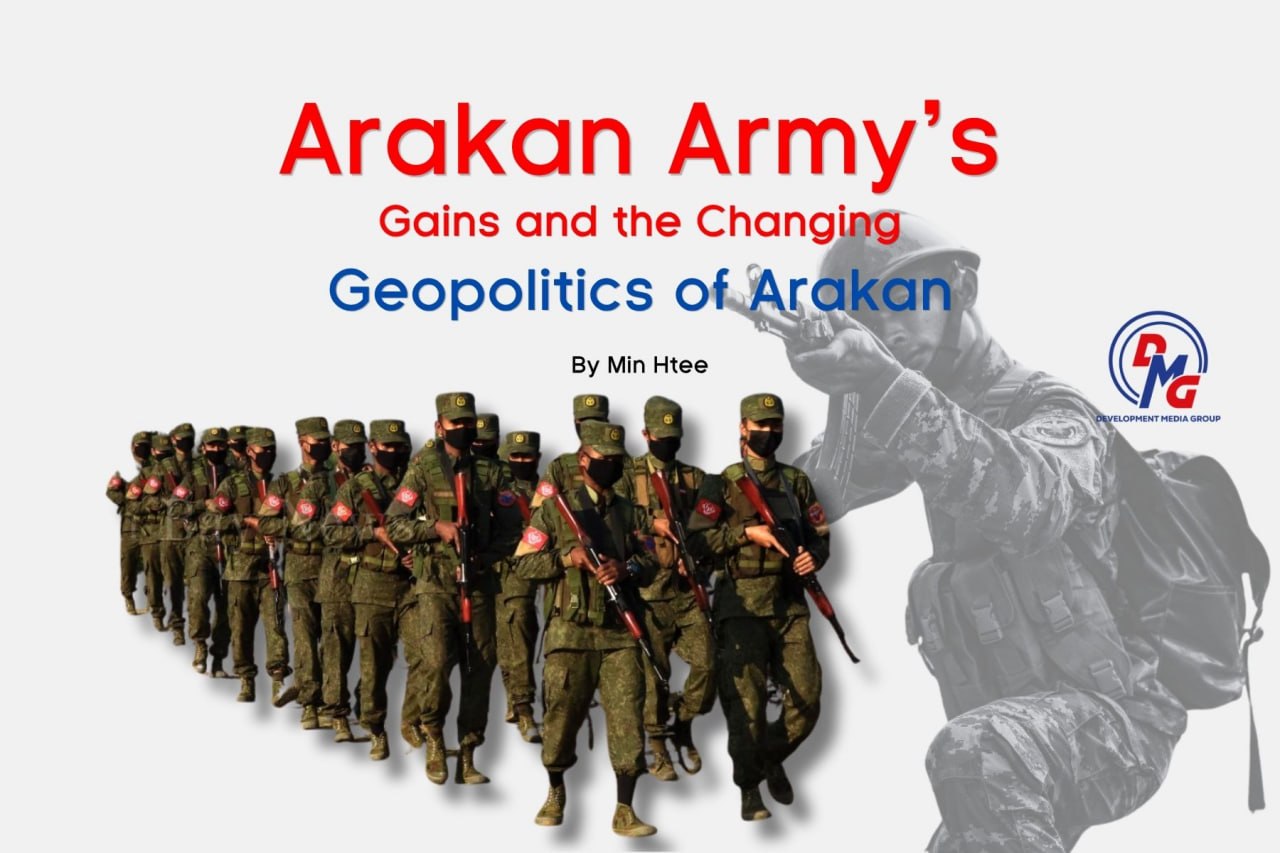
Arakan Army’s Gains and the Changing Geopolitics of Arakan
By Admin 29 Sep 2026

Beyond Military Victory: What Is Myanmar’s Ultimate Political Objective?
By Admin 26 Sep 2026

UN at a Crossroads: Six Priorities for a Shared Future
By Admin 23 Sep 2026
POLITICS


BUSINESS
Industry to manufacture finished goods from coconut starting in early 2020
By Aung Kaung Zaw 20 Nov 2019