


- Nay Pyi Taw talks between junta, MNDAA halt over special region demand
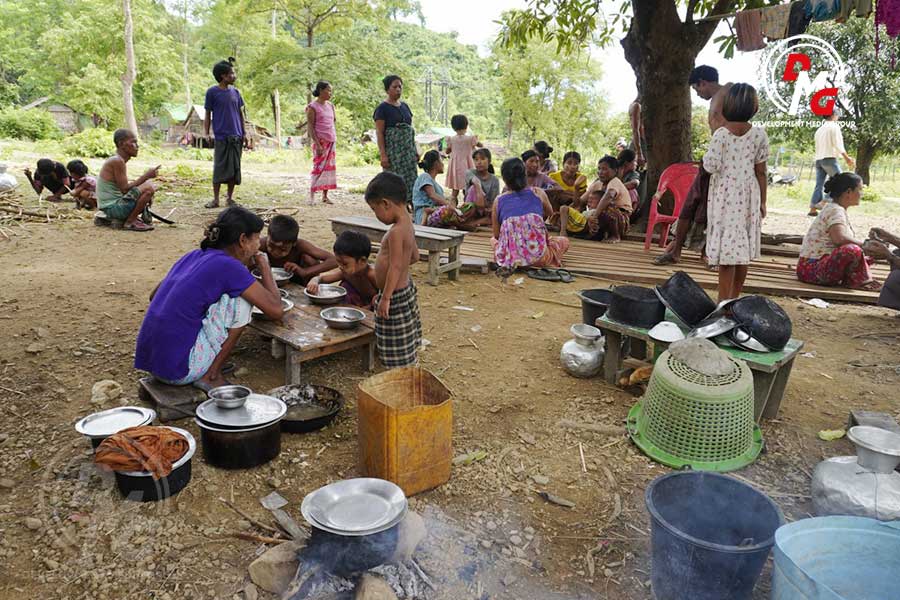
- Arakanese civilians face widespread violence, humanitarian aid blockades, UN mechanism warns
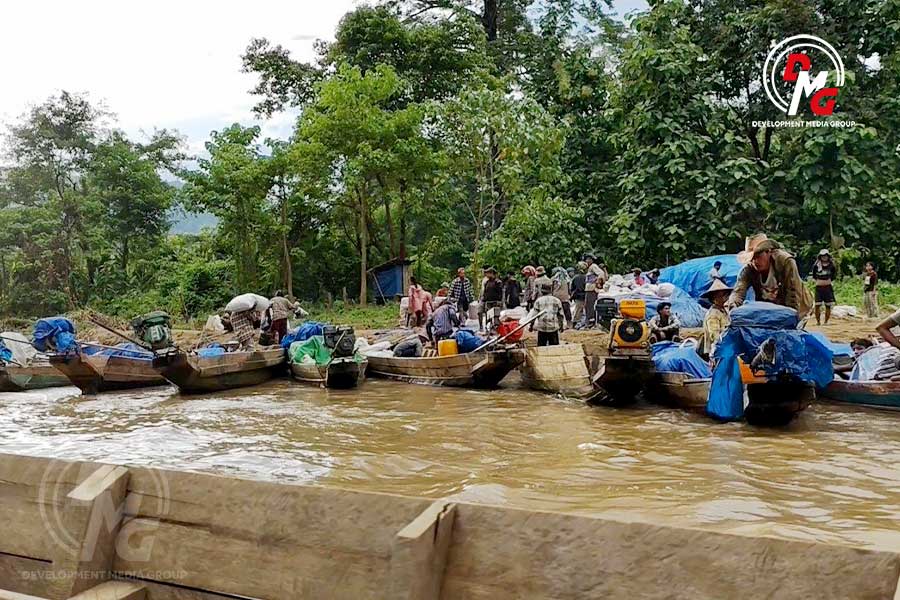
- India-Arakan trade route reopens after eight-day closure
- Clashes intensify along Sittwe-Ponnagyun border as Arakan Army captures military outposts
- Heavy fighting erupts in Laymyethna as junta launches offensive against Arakan Army-held territory
Arakan–Bangladesh border trade slumps amid tightened security
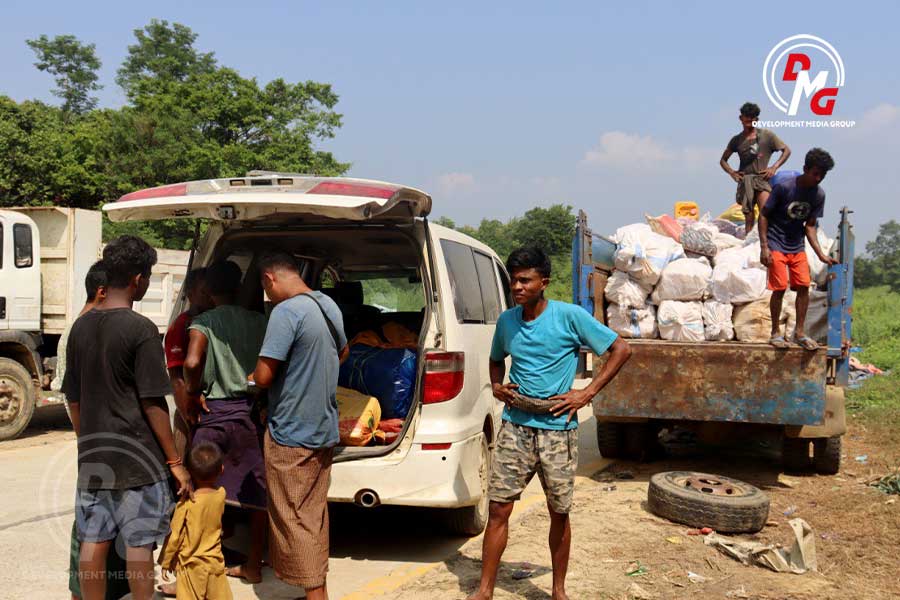
Border trade in Maungdaw Township, Arakan State, has sharply declined due to tightened security measures imposed by both Bangladeshi authorities and the Arakan Army (AA), according to local sources.
10 Feb 2026
DMG Newsroom
10 February 2026, Maungdaw
Border trade in Maungdaw Township, Arakan State, has sharply declined due to tightened security measures imposed by both Bangladeshi authorities and the Arakan Army (AA), according to local sources.
Bangladesh has reinforced its border security ahead of upcoming elections, while the Arakan Army has increased security on the Arakan side to counter threats from Muslim armed groups, including the Arakan Rohingya Salvation Army (ARSA) and the Rohingya Solidarity Organization (RSO).
“The flow of goods has nearly come to a standstill. On the Bangladesh side, the military is strictly monitoring the border to prevent people and goods from entering or leaving because of the elections,” said a merchant in Maungdaw.
After the Arakan Army seized control of Maungdaw Township, trade routes were reopened through the Kanyin Chaung Economic Zone, as well as Taungpyo Letwe, Bandoola, and Nanthataung.
However, relations between the two sides have deteriorated since mid-2025, following the Arakan Army’s seizure of Bangladeshi fishing boats that entered Arakanese waters illegally and Bangladesh’s subsequent confiscation of goods destined for the Arakanese ethnic armed group.
These tensions, combined with a clash between the Arakan Army and ARSA in northern Maungdaw in January, have resulted in cross-border travel bans and heightened security restrictions on traders.
“Bangladeshi naval vessels are intercepting goods from Arakan State. At the same time, Muslim armed groups are harassing and extorting money from traders, making the movement of goods extremely difficult,” said an Arakanese resident living in Bangladesh.
Although the trade is not conducted through formal government channels, it remains vital to the local economy. Arakan State exports crabs, prawns, rice, betel nuts, dried fish, and timber to Bangladesh, while importing palm oil, fuel, fertilizer, and basic consumer goods.
Business owners warn that the disruption will exacerbate the economic crisis in Arakan State, which is already struggling under a blockade imposed by Myanmar’s military regime on goods from mainland Myanmar.
“Border trade is the lifeline for food security and the economy in Arakan right now,” said a businessman from Kyauktaw. “If these routes remain closed for a long time, we will face severe shortages. The India route is still an option, but it is not sufficient.”
Local residents are urging the Bangladeshi government to allow the flow of goods on humanitarian grounds and expressing hope that relations between Bangladesh and the United League of Arakan (ULA) will improve after the elections.
Since the latest fighting erupted, the military regime has cut off all supply routes from mainland Myanmar, leaving residents of Arakan State facing shortages of food and medicine, as well as limited employment opportunities.
The ULA has sought to bypass the regime’s blockade by developing trade routes with Bangladesh and India’s Mizoram State. However, merchants say the Bangladesh route remains more efficient due to shorter travel times and better accessibility.

Top News
Nay Pyi Taw talks between junta, MNDAA halt over special region demand
By Admin 25 Sep 2026
India-Arakan trade route reopens after eight-day closure
By Admin 25 Sep 2026




.jpg)