
- High airfares leave low-income families stranded in blockaded Sittwe
- MSF rrges civilian protection after Sittwe shelling kills two, injures 17
- ULA warns Arakan residents of airstrike risks during Thadingyut festival
- Months-long internet blackout drives up costs for residents of Thandwe and Gwa
- At least five injured in junta Y-12 airstrikes on Werathani villages
MDSI calls for stronger civilian protection as junta alters airstrike tactics
Myanmar’s military regime is changing its airstrike tactics, deploying different types of air weapons depending on local conditions and target types, according to a recent airstrike study by the Myanmar Defense & Security Institute (MDSI).
23 Jan 2026
DMG Newsroom
23 January 2026, Mrauk-U
Myanmar’s military regime is changing its airstrike tactics, deploying different types of air weapons depending on local conditions and target types, according to a recent airstrike study by the Myanmar Defense & Security Institute (MDSI).
The study found that 70 percent of air attacks targeted populated villages, including schools, religious buildings, and displacement camps.
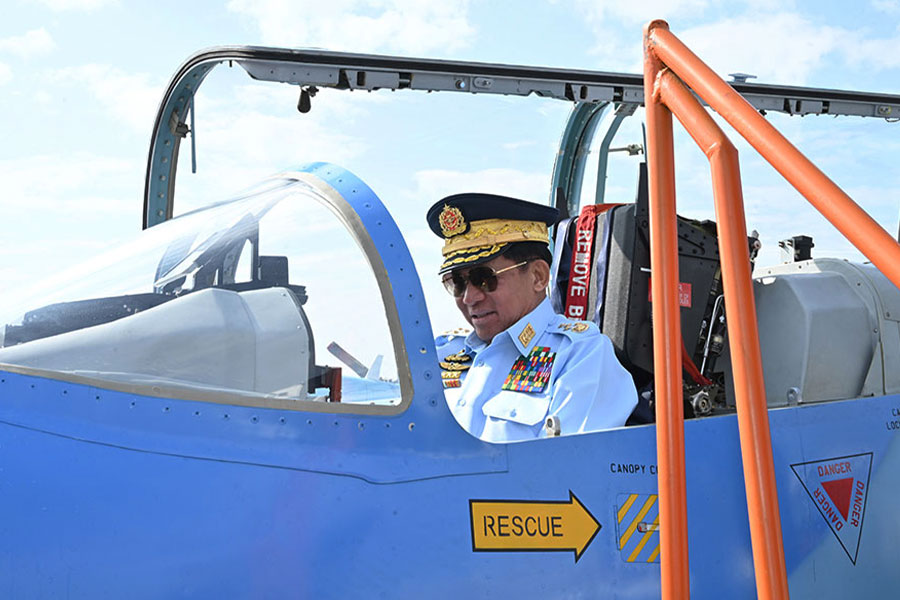
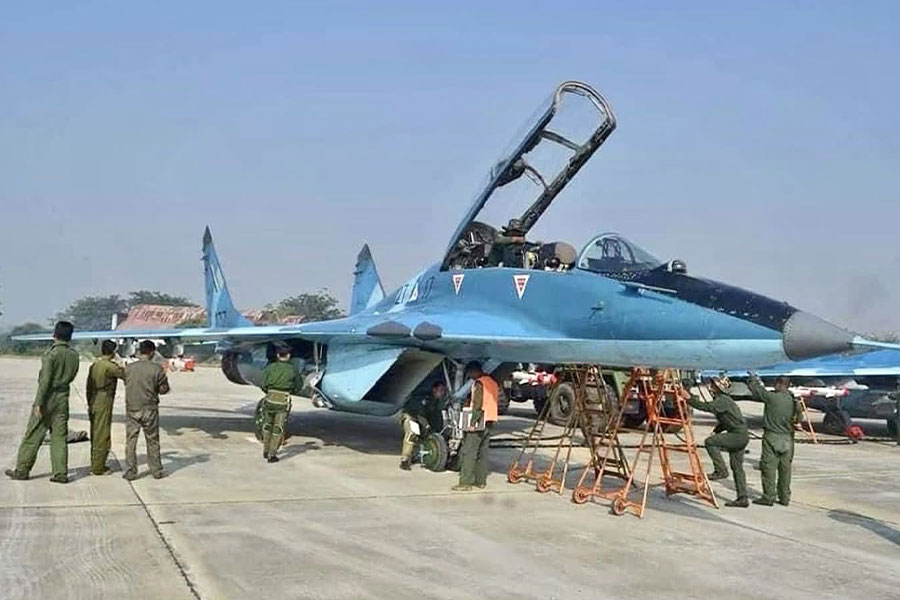
According to the report, the military regime uses modern fighter jets such as Su-30s, MiG-29s, Yak-130s, JF-17s, FTC-2000s and K-8s for precision strikes, Y-12 aircraft for area bombing, and Mi-35 helicopters for close air support. Tada-U, Meiktila and Nay Pyi Taw air bases are identified as the main bases used for airstrike operations nationwide.
MDSI said the regime is also deploying jet fighters, Y-12 aircraft, paramotors and gyrocopters depending on terrain and target types.
“Paramotors are easier to use because they don’t need an airfield or runway like fighter jets. They can operate with minimal support and drop terror bombs on civilian targets at a low cost,” said an official from Tactical Raptor.
The study analyzed the regime’s regional air campaign strategy, finding that military pressure has been concentrated in mainland Myanmar where resistance is strong. The strategy includes psychological warfare aimed at increasing civilian casualties and weakening public support for the revolution, while adapting airstrike patterns by region and target.
The report said the military’s use of air power as a strategic weapon targeting civilians in 2025 was most severe in the central plains of the country.
Political analyst U Kyee Myint said the regime has expanded air operations into central Myanmar as well as Arakan and Kachin states following ceasefires in northern Shan State with the Ta’ang National Liberation Army and the Myanmar National Democratic Alliance Army under Chinese pressure.
“From a military perspective, it is visible that the regime has shifted its focus into the heartlands and ethnic states through various means, including airstrikes,” he said.
A BNI report released on January 19 noted that as various armed groups emerged during the Spring Revolution by the end of 2025, regional offensives against the military regime may intensify in the coming period. The report added that there have been no significant changes in the political or military landscape, and the regime’s violent repression of opponents is likely to continue.
As the military regime prepares to hold a third round of elections on January 25, war crimes have increased alongside the excessive use of ground forces and air power to reclaim lost territory.
With airstrikes intensifying, MDSI urged the systematic and widespread implementation of civil defence early warning systems and public awareness programmes on bomb shelters.
“Now we rarely hear the sound of jet fighters. We don’t know where they come from or how they operate. We only know that bombings are happening here and there,” said a resident of Arakan State. “People are living in fear, constantly looking up at the sky.”
Since the end of 2025, the military regime has intensified airstrikes nationwide, with casualties rising daily and insecurity spreading across the country.
The Ministry of Defence under the National Unity Government (NUG) said in a statement on January 22 that 2,326 civilians were killed and 4,146 others injured by airstrikes carried out by the military regime in 2025.

Top News
High airfares leave low-income families stranded in blockaded Sittwe
By Admin 25 Oct 2026
MSF rrges civilian protection after Sittwe shelling kills two, injures 17
By Admin 25 Oct 2026
ULA warns Arakan residents of airstrike risks during Thadingyut festival
By Admin 24 Oct 2026
Months-long internet blackout drives up costs for residents of Thandwe and Gwa
By Admin 24 Oct 2026
At least five injured in junta Y-12 airstrikes on Werathani villages
By Admin 24 Oct 2026