
- Junta sends reinforcements to fiercely contested Sittwe-Ponnagyun front
- India's Kaladan project faces uncertain future amid Arakan conflict: CAS
- Myanmar records more than five landmine, ERW casualties daily
- Injured IDPs in Ponnagyun face mounting medical costs, seek financial aid
- Children's handling of abandoned ammunition in Arakan raises safety concerns
ULA health department plans cholera vaccination campaign in seven townships
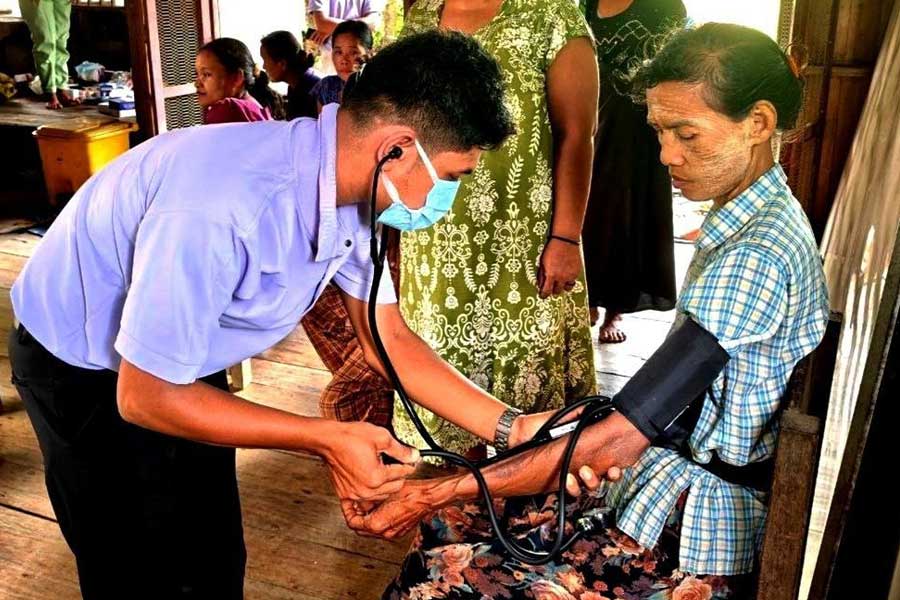
The Department of Public Health under the United League of Arakan (ULA) announced on November 24 that it will conduct a door-to-door oral cholera vaccine (OCV) campaign for children aged one and older and adults in seven townships controlled by the Arakan Army (AA): Maungdaw, Buthidaung, Ponnagyun, Kyauktaw, Werathani, Ann and Paletwa.
25 Nov 2026
DMG Newsroom
25 November 2026, Maungdaw
The Department of Public Health under the United League of Arakan (ULA) announced on November 24 that it will conduct a door-to-door oral cholera vaccine (OCV) campaign for children aged one and older and adults in seven townships controlled by the Arakan Army (AA): Maungdaw, Buthidaung, Ponnagyun, Kyauktaw, Werathani, Ann and Paletwa.
The campaign is scheduled to begin toward the end of 2026, with specific dates and locations to be announced later, according to the department's statement.
The ULA Public Health Department said severe cholera outbreaks occurred in several townships across Arakan State between 2024 and 2026, resulting in some patient deaths.
The department said rapid diagnostic tests conducted on stool samples indicated cases of severe cholera.
The ULA Public Health Department warned that the risk of cholera transmission in the region is rising due to the growing number of internally displaced people fleeing conflict, limited access to clean drinking water and inadequate use of latrines.
Local residents said cholera cases continue to occur regularly as Arakan State faces severe challenges from armed conflict and natural disasters.
"In this village, there are almost no hygienic latrines. Then there is the drinking water issue. Saltwater has entered the drinking water ponds. That is why people get diarrhea. Health departments rarely visit, and since it is far from hospitals and clinics, people have to rely on traditional healers," said a displaced person from Werathani Township.
Local residents welcomed the Arakan health department's plan to provide vaccines free of charge.
"As we have not been able to get vaccinated like before, people suffer health problems every year. In our area, health services rarely come, and there are no hospitals or clinics. Since vaccines will be provided like this now, I am very glad. Most young children here are children who have never been vaccinated," said Ko Hla Maung from Theintaungpyin Village in Buthidaung Township.
The ULA Public Health Department urged all children aged one and older and adults to willingly receive the OCV vaccine. It also warned that acute diarrhea currently occurring in Arakan State can cause severe dehydration and even death if timely treatment is not received.
Under the department's vaccination plan, priority will be given to residents of areas that have experienced cholera outbreaks or are at risk of outbreaks, as well as temporarily displaced households, flood-affected areas and densely populated areas lacking adequate supplies of clean drinking water and latrines.
Vaccinations will also be provided in crowded locations with poor sanitation, including monastic education schools, prisons, student boarding houses, temporary relief camps, roadside markets and food stalls, according to the department.
The ULA Public Health Department warned that severe cholera can spread through consuming contaminated food and water, or through contact with an infected person's feces or vomit. Key symptoms include severe diarrhea, vomiting, leg cramps and extreme weakness.

Top News
ULA health department plans cholera vaccination campaign in seven townships
By Admin 25 Nov 2026
Junta sends reinforcements to fiercely contested Sittwe-Ponnagyun front
By Admin 25 Nov 2026
India's Kaladan project faces uncertain future amid Arakan conflict: CAS
By Admin 25 Nov 2026
Myanmar records more than five landmine, ERW casualties daily
By Admin 25 Nov 2026
Four civilians, including infant, killed in junta airstrikes in Arakan: AA
By Admin 23 Nov 2026