
- Arakan Army captures junta outposts as fighting intensifies near Sittwe
- Pro-junta ALP chair says NCA can shape Arakan’s future
- Extreme heat drives rise in clinic visits across Arakan
- Junta airstrikes on Ponnagyun IDP camps kill 15 civilians, injure 30: AAPP
- Myanmar junta airstrikes kill 163 civilians in September, Arakan hardest hit: MDSI
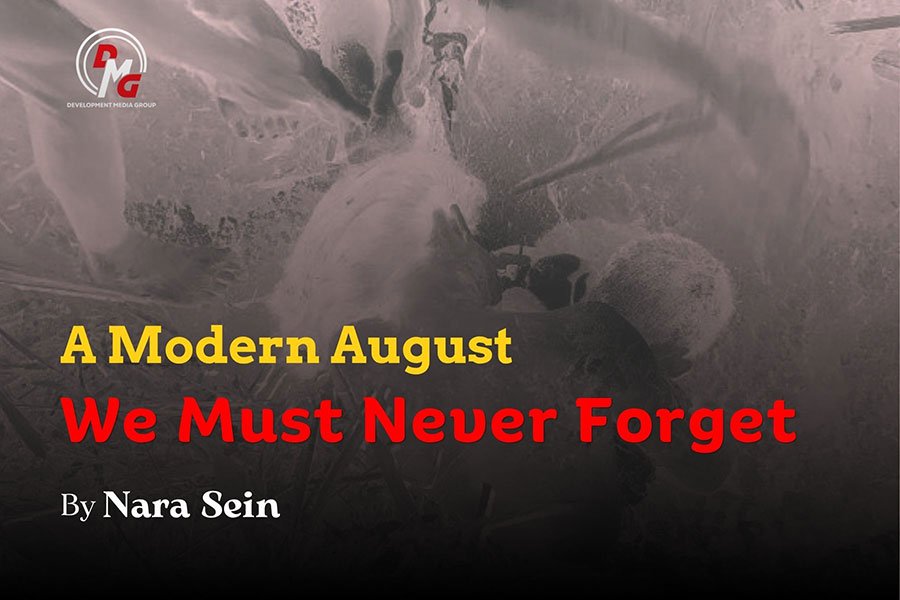
A Modern August We Must Never Forget
If we count the years on our fingers, 59 years have already passed. It was August 13, 1967. Yet whenever I try to picture that day, the pain only deepens.
31 Aug 2026
By Nara Sein
If we count the years on our fingers, 59 years have already passed. It was August 13, 1967. Yet whenever I try to picture that day, the pain only deepens. Are the bloodstains that once marked the brick platform at Kathae village still there today? The traces may long since have faded under the weather and the passage of time. But the stains left in our hearts have never truly disappeared.
I have passed by the brick platform at Kathae village many times over the years. I have also seen the old rice warehouses nearby. By the time I saw them, there was no rice left inside. Their walls were cracked and broken. What remained were raised brick foundations and old, sturdy buildings beneath tiled roofs.
Yet the area holds a piece of history that the Arakanese people cannot forget—a frightening and bloodstained chapter from the past.
It may be difficult to believe that Arakan, one of Myanmar’s major rice-producing regions, once suffered a severe food crisis. Along the banks of Sat Yoe Kya Creek in Sittwe, smoke rose from rice mills and warehouses were packed with rice. Yet the authoritarian government failed to provide the people with sufficient supplies.
The remark, “If there is no rice, why don’t you eat mont di [Arakan traditional noodle]?” was like a bayonet driven into the hearts of the Arakanese people.
During July and August 1967, rice prices in Arakan rose dramatically. Local restrictions were imposed to prevent rice and paddy from being transported out of neighborhoods and villages. At a time when one tical of gold cost around 300 kyats, the price of a sack of rice reportedly surged from around 20 kyats to as much as 200 kyats.
The authorities of the Burma Socialist Programme Party, or BSPP, distributed rice under a rationing system. Families that normally cooked four condensed-milk tins of rice, a common household measure at the time, found themselves reducing that amount first to two tins and then to one. Poor families and daily wage laborers began to go hungry.
Hunger then turned into public protest.
People took to the streets demanding a solution to the rice crisis, chanting slogans such as “Arakanese will not eat parboiled rice” and “Arakanese will not eat rationed rice.”
As the procession moved through the town and reached the small bridge near the Kathae village brick platform, it was violently dispersed. An angry and hungry crowd came face to face with agents of an authoritarian system, and unarmed civilians were met with rifle fire. People fled in panic, and many were killed or wounded.
The military later removed and buried the bodies of those who had been killed. Some accounts have alleged that people who were still alive were also buried.
The BSPP government officially announced that 17 people were killed in the crackdown, but other accounts have claimed that the true death toll may have reached into the hundreds.
Nearly six decades ago, our parents and grandparents gave their lives simply for the right to have enough rice to eat. Their blood was shed for the most basic necessity of life.
How could we ever forget the sacrifices made by people who lived under such a cruel era and oppressive system?
Every year when August 13 comes around, I remember them with sorrow.
That August 13 occurred before I was born. As I grew older, however, I came to know about commemorations of what became known as “Rice Crisis Day”.
Whenever I crossed the small bridge near Kathae village, I would wonder how the people of Sittwe must have run for their lives that day, how desperately they must have struggled, and how much pain they must have endured.
Another August 13, 59 Years Later
Then, 59 years after that August 13, another deadly event took place on August 13, 2026.
At around 11:30 p.m., a time when people would normally be sleeping, bombs were dropped from the air on civilians already struggling to survive amid the hardships of war.
Kyeintali is a small town. How could a seven-year-old child have known that life could end that night? How could a 12-year-old child have imagined such a fate?
The bombing killed eight civilians from local families. The scene left behind was devastating.
When I think of a mother holding her child amid the destruction, I wonder what those responsible for the attack would feel if they were forced to look at that scene.
Would they feel satisfaction? Or would they ask themselves, as U.S. co-pilot Robert Lewis reportedly did after witnessing the atomic bombing of Hiroshima: “My God, what have we done?”
And what if those victims had been their own wives and children?
For us, August, 59 years after the events of 1967 has now become another month that cannot be forgotten in modern history.
During the first half of August 2026 alone, nearly 30 Arakanese civilians were reportedly killed in aerial bombings, while almost another 30 were wounded.
These deaths will remain part of the painful history of this modern August.
Bombing Does Not Guarantee Victory
There is something I want those who rely on airpower to understand: dropping bombs does not automatically win a war.
During the Vietnam War, the United States dropped more than 7.5 million tonnes of bombs across the Indochina peninsula, including Vietnam, Laos and Cambodia. Historical records indicate that more than 5 million tonnes fell on Vietnam alone.
It has also been widely noted that the total amount of ordnance dropped during the conflict exceeded the tonnage used during the Second World War by several times.
The United States also sprayed chemical defoliants, including Agent Orange, over forests and other areas.
Despite its enormous use of bombs and military technology, the United States suffered heavy military losses during the conflict. As the war dragged on, public opposition inside the United States grew, with widespread anti-war protests adding political pressure for an end to the war.
No matter how many bombs were dropped, the United States did not achieve its desired military outcome in Vietnam.
The U.S.-led war in Afghanistan, which began under President George W. Bush, continued through four U.S. presidencies. During that conflict, American and NATO forces employed advanced drones and extensive airpower against the Taliban.
Among the weapons used was the GBU-43/B Massive Ordnance Air Blast bomb, commonly known as the MOAB, or “Mother of All Bombs.”
Yet when the United States ultimately ended its military presence and withdrew under President Joe Biden, the Taliban returned to power and again took control of Afghanistan.
The continuing Russia-Ukraine war offers another illustration of the limits of military superiority.
Ukraine has a population of around 40 million, while Russia’s population is close to 140 million. Russia also possesses considerably greater military resources.
Yet despite those advantages, Russia has still not achieved a decisive military victory over Ukraine.
The Same Lesson Applies in Arakan
The same principle applies today.
The military led by Min Aung Hlaing has suffered repeated setbacks on the ground and has increasingly relied on airstrikes. Yet if the question is whether bombing civilians produces military victory, the answer is no.
Instead, civilians are killed and wounded.
Such attacks can also deepen public anger and strengthen resistance rather than weaken it. They can reinforce the determination of communities already opposed to military rule.
War should be fought between armed forces. Targeting civilians does not demonstrate strength. It demonstrates a failure to distinguish military objectives from civilian life.
There is an Arakanese expression, “su kya wet,” referring to a wounded wild boar that lashes out desperately in its final struggle.
When a force reaches a point where children, elderly people, monks, schools, homes and religious buildings are no longer spared from attack, it raises a grave question about what remains of military discipline and purpose.
The consequences of such actions should never be forgotten.
For us, August 2026 will always remain a modern August that must never be forgotten.
And we will always bow our heads in remembrance of those who gave their lives during the month of August.
References:
- Record of the Rice Crisis — Kyaw Zaw Oo
- Wikipedia

Opinion
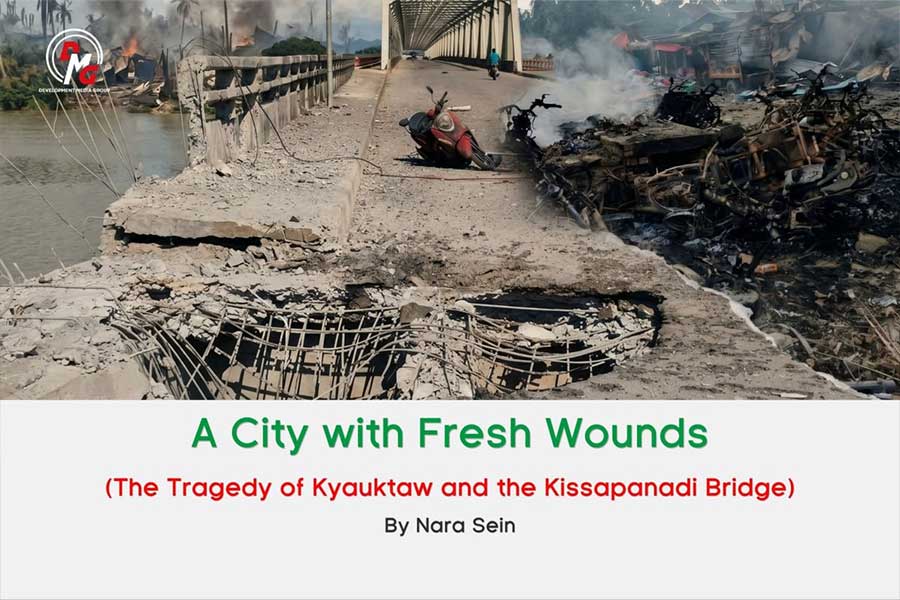
A City with Fresh Wounds (The Tragedy of Kyauktaw and the Kissapanadi Bridge)
By Admin 01 Oct 2026
Arakan Army’s Gains and the Changing Geopolitics of Arakan
By Admin 29 Sep 2026
Beyond Military Victory: What Is Myanmar’s Ultimate Political Objective?
By Admin 26 Sep 2026
UN at a Crossroads: Six Priorities for a Shared Future
By Admin 23 Sep 2026
.jpg)
How Can Myanmar’s Political Crisis Be Brought to an End?
By Admin 13 Sep 2026
POLITICS
BUSINESS
Industry to manufacture finished goods from coconut starting in early 2020
By Aung Kaung Zaw 20 Nov 2019