

- Malaria cases surge across Ann Twsp as residents struggle to access healthcare
- Arakan’s elderly face deepening crisis amid war: CAS study
- ULA detains Arakanese merchants over Khaikhy dispute, moves to resolve issue
- Arakan Army captures four junta outposts on Sittwe-Ponnagyun front
- Magway records most airstrikes since new military chief took command: ISP-Myanmar
Is the AA Ready to Take Control of All of Arakan? Potential Implications for China, India and Myanmar’s Revolution
If the AA wins these battles, another question attracting considerable public interest is how its relations with major powers such as China and India might change.
20 Sep 2026
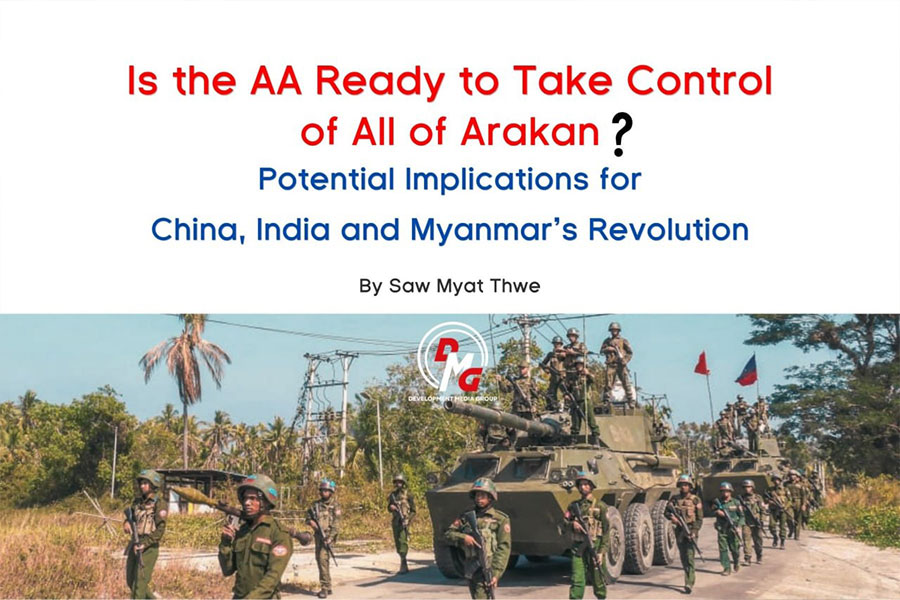
By Saw Myat Thwe
Introduction
The military and political strategy of the Arakan Army (AA), which aims to take control of all of Arakan, has reached a point where its impact on Myanmar’s revolution is becoming increasingly significant. At present, the military regime has launched renewed offensives in Arakan, while on the other hand the junta’s proxy government has been making peace overtures to other revolutionary armed groups.
Pressuring one side while giving another side some breathing room is a familiar strategy of the military regime. Against this backdrop, the question of how the AA will fight to secure victory has become increasingly important. At the same time, Nippon Foundation Chairman Yohei Sasakawa has been trying to mediate talks between the AA and the military.
The AA also appears to have strategies aimed at taking full control of Arakan around 2027, while fighting in Sittwe and Kyaukphyu: two potentially decisive fronts for the future of Arakan is becoming increasingly intense.
If the AA wins these battles, another question attracting considerable public interest is how its relations with major powers such as China and India might change. The political and strategic landscape under the AA’s current level of territorial control would not necessarily be the same as one in which it controlled all of Arakan.
Current Military Situation and Possible Outcomes
The AA’s offensive began in November 2023, and it has since captured 14 townships in Arakan as well as Paletwa Township in Chin State. In addition, along the Arakan-Burma frontier bordering Ayeyarwady, Bago and Magway regions, the AA and allied forces continue fighting to prevent opposing forces from advancing into areas they control.
At present, the AA has encircled Sittwe and Kyaukphyu, while the military regime is conducting a national-level military operation involving ground, naval and air forces against the AA. The military has launched an offensive from the Sittwe-Ponnagyun border area, while in Kyaukphyu it has reportedly deployed significant forces advancing toward Sane from the Taung Maw Gyi naval base.
On September 4, the military regime launched what it called an “operation,” mounting simultaneous offensives on the Sittwe and Kyaukphyu fronts. According to sources, however, most of the advancing columns were forced to retreat within days. Sources on the ground also said the AA’s drones and artillery were effective in intercepting the advancing forces.
According to a study by ISP-Myanmar, the AA controls 92.6 percent of Arakan and is simultaneously building administrative mechanisms in the areas under its control.
Although it may be difficult for the AA to launch a direct assault inside Sittwe, encircling the city could allow it to cut supply and weapons routes. The presence of Chinese projects in Kyaukphyu could also make the situation there more complicated.
Even so, the AA has maintained its encirclement and has repeatedly been able to repel military offensives. Whether AA commander-in-chief General Twan Mrat Naing’s plans to capture the remaining towns by 2027 will prove decisive from this point onward remains to be seen.
Alongside the military situation, another development unfolding at the same time is the proxy government’s peace process. With China’s mediation, the military regime was able to bring the situation in northern Shan State under greater control, while channels for talks were established in Naypyidaw.
The ceasefires involving the Myanmar National Democratic Alliance Army (MNDAA) and Ta’ang National Liberation Army (TNLA) helped calm fighting in northern Shan State and related military operations, allowing the military regime to reposition some of its forces for defensive operations in central Myanmar. Although the military has reinforced areas controlled by the Kachin Independence Army (KIA) and Karen National Union (KNU), there have not yet been major reciprocal offensives in those areas.
So is the military regime planning to pursue its peace process with other ethnic armed organisations while excluding the AA? Or will it continue putting military pressure on the AA on one side while trying, through Sasakawa, to draw it into the proxy government’s negotiating track on the other?
That is something we will have to keep watching.
Sasakawa’s Mediation and What It Could Mean
Sasakawa has spent many years involved in humanitarian work in Myanmar and has repeatedly acted as an intermediary between ethnic armed organisations and the military.
There appear to be two important possibilities behind his latest mediation effort.
The first possibility is that the proxy government may have come to realise that retaking Arakan by military means is no longer feasible and has therefore begun considering a political approach.
The second possibility is that, knowing the AA is unlikely to come to the negotiating table, the proxy government may have deliberately asked Sasakawa to intervene so that it could portray the AA as the side that does not want peace.
But from the AA’s perspective, although it currently holds the military advantage, there is no guarantee that it will always remain in that position. Another consideration is that if the AA wants international recognition, economic development and the reconstruction of the territories it controls, it will have to embrace diplomacy as well.
There are many examples in domestic and international politics in which outside mediation has helped opposing sides reach an accommodation.
Sasakawa’s involvement may also be connected to the interests of China and India. China has major projects in Kyaukphyu and would prefer an environment without fighting between the two sides. India, likewise, would prefer conditions conducive to the Kaladan project.
So if the two sides can meet in the interests of peace, the situation could move in a positive direction. But this is far more difficult than it might appear.
The AA has firmly demanded self-determination and a confederate system, which could be difficult for the proxy government to accept. There also remain differences between the two sides over the Muslim issue.
Therefore, although Sasakawa may be approaching the situation from a humanitarian perspective, significant political differences remain.
How Does the International Community View the AA?
At this point, it is also worth looking at some international perspectives on the AA. As the AA’s profile has grown, so too has its influence.
International actors increasingly view the AA not simply as another armed organisation, but as a force that has grown considerably in strength and become a significant threat to the Myanmar military.
But the “international community” is not a single actor. China, India, Western countries and Bangladesh have different perspectives depending on their respective interests.
For China, Kyaukphyu is an important part of the Belt and Road Initiative. The deep-sea port, special economic zone, and oil and gas pipelines are strategically important to China’s access to the Indian Ocean.
China maintains official relations with the proxy government, while there may also be unofficial channels of communication with the AA. Because the AA has publicly said it will protect foreign investment projects, China may no longer see it simply as an adversary, but potentially as “a force that needs to be managed.”
For India, Sittwe Port and the Kaladan Multi-Modal Transit Transport Project are important for connecting its northeastern states to the sea.
Paletwa and much of the Kaladan route are now under AA control. There have consequently been reports of unofficial contacts between India and the AA.
India also sees Arakan as an important region in balancing China’s influence and may therefore increasingly seek pragmatic engagement with the AA.
Western countries and United Nations agencies, meanwhile, view the AA as an ethnic armed organisation, although concerns remain regarding the Muslim issue.
Bangladesh is also closely watching the AA because of border security and the issue of Muslim refugees. With the AA controlling most of the border area with Bangladesh, its position has become increasingly important to any future refugee repatriation process.
How Will the AA Play the Diplomatic Game?
The AA appears to be working to strengthen itself not only militarily but diplomatically as well. The United League of Arakan (ULA) operates as a political organisation and has established the Arakan People’s Revolutionary Government.
Its development of administrative, education, healthcare, judicial and taxation systems also serves to demonstrate to the international community that it has the capacity to govern.
One of the AA’s advantages is that it controls large areas where China and India have strategic interests. If it were to capture Kyaukphyu and Sittwe as well, the AA could find itself in a position requiring more direct negotiations with both countries.
This could further increase the AA’s political and diplomatic importance in the region. At that point, how the AA manages its relations with China and India would become particularly important.
But this will not be an easy game. The interests of China and India, their relationships with the Myanmar military, and their respective approaches to Arakan could all present challenges for the AA’s next phase of diplomacy.
The AA has also been building relationships with the National Unity Government (NUG) and other ethnic armed organisations. Its participation in the Federal Political Negotiation and Consultative Committee (FPNCC), as well as cooperation with Chin forces and People’s Defence Forces (PDFs), are also important aspects of its political and alliance relationships.
However, because the AA continues to prioritise its Arakan nationalist objectives, the extent to which it will integrate with the nationwide revolution remains something to watch.
Potential Impact on Myanmar’s Revolution
If the AA succeeds in taking control of all of Arakan, there could be a range of consequences for Myanmar’s revolution.
From a military perspective, the loss of the military’s remaining important bases in Arakan could represent a major shift for the junta. The AA’s success could also affect the military and political calculations of other revolutionary forces.
The military activities of the AA and allied forces in Ayeyarwady, Magway and Bago are also connected to the wider military landscape in central Myanmar.
So what role might the AA play in building a federal union?
At the same time, because the AA prioritises self-determination and its Arakan nationalist objectives, questions remain about what agreements it could reach with the NUG regarding the future of federal politics.
In particular, differences could emerge between the AA, parts of the international community and some revolutionary forces over its policies concerning Muslims.
Moreover, if the AA develops more direct relations with China and India, this could also bring changes to discussions among revolutionary forces over political influence and future power-sharing arrangements.
Conclusion and Future Prospects
Whether the AA can take control of all of Arakan is an important question under the current circumstances. But the challenges it would face after gaining such control could be even greater.
How would it manage the interests of China and India? What kind of policies would it adopt, and how would it deal with the Muslim issue?
And if Arakan is not going to separate, what role would it play within a federal union? If the AA takes control of all of Arakan, how would it rebuild the livelihoods and economy of people who have suffered through the war? What plans does the AA have, in other words, to “feed all of Arakan”?
These questions will become important tests of the AA’s political and administrative capacity.
If the AA can demonstrate its capabilities not only militarily but also diplomatically and administratively, its role and influence within Myanmar’s revolution could grow considerably.
But if it prioritises its nationalist objectives alone while disregarding the concerns of international actors and domestic allies, it could also find itself increasingly isolated.
The AA’s decisions are becoming increasingly important to Arakan’s future, but Arakan’s future can no longer be separated from the future of Myanmar as a whole.

Opinion
.jpg)
How Can Myanmar’s Political Crisis Be Brought to an End?
By Admin 13 Sep 2026

By Cutting Trees, We Are Killing Ourselves
By Admin 06 Sep 2026
A Modern August We Must Never Forget
By Admin 31 Aug 2026
Arakan’s Political Shifts and the Debate Over Rights and Governance
By Admin 27 Aug 2026
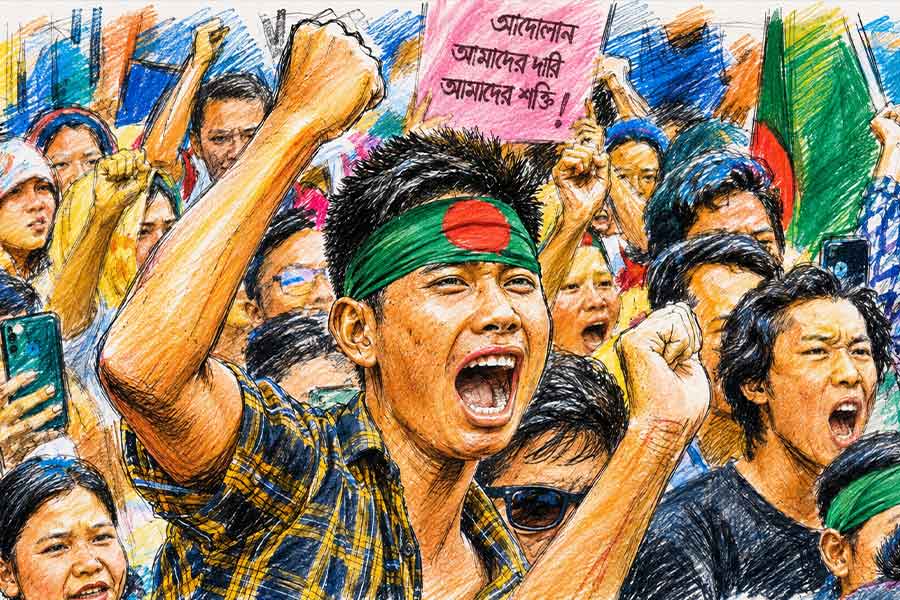
Securing Rights for Bangladesh's Indigenous Peoples is Indispensable
By Admin 09 Aug 2026
POLITICS

BUSINESS
Industry to manufacture finished goods from coconut starting in early 2020
By Aung Kaung Zaw 20 Nov 2019