
- Junta intensifies offensive against resistance-held territory in strategic Sagaing town
- Fighting escalates in Sittwe as Arakan Army captures junta outposts
- Survivors of deadly Kyauktaw airstrike urgently need medical, humanitarian aid
- Junta seeks foothold on strategic island in Kaladan River as Arakan Army counterattacks
- Begging nearly doubles amid livelihood crisis in southern Arakan
The Unsung Hero of Mahamuni Village
The promise he kept was not made to a person, a family, or an institution. It was made to the country. He did not swear an oath before witnesses. He carried it alone.
26 Dec 2025
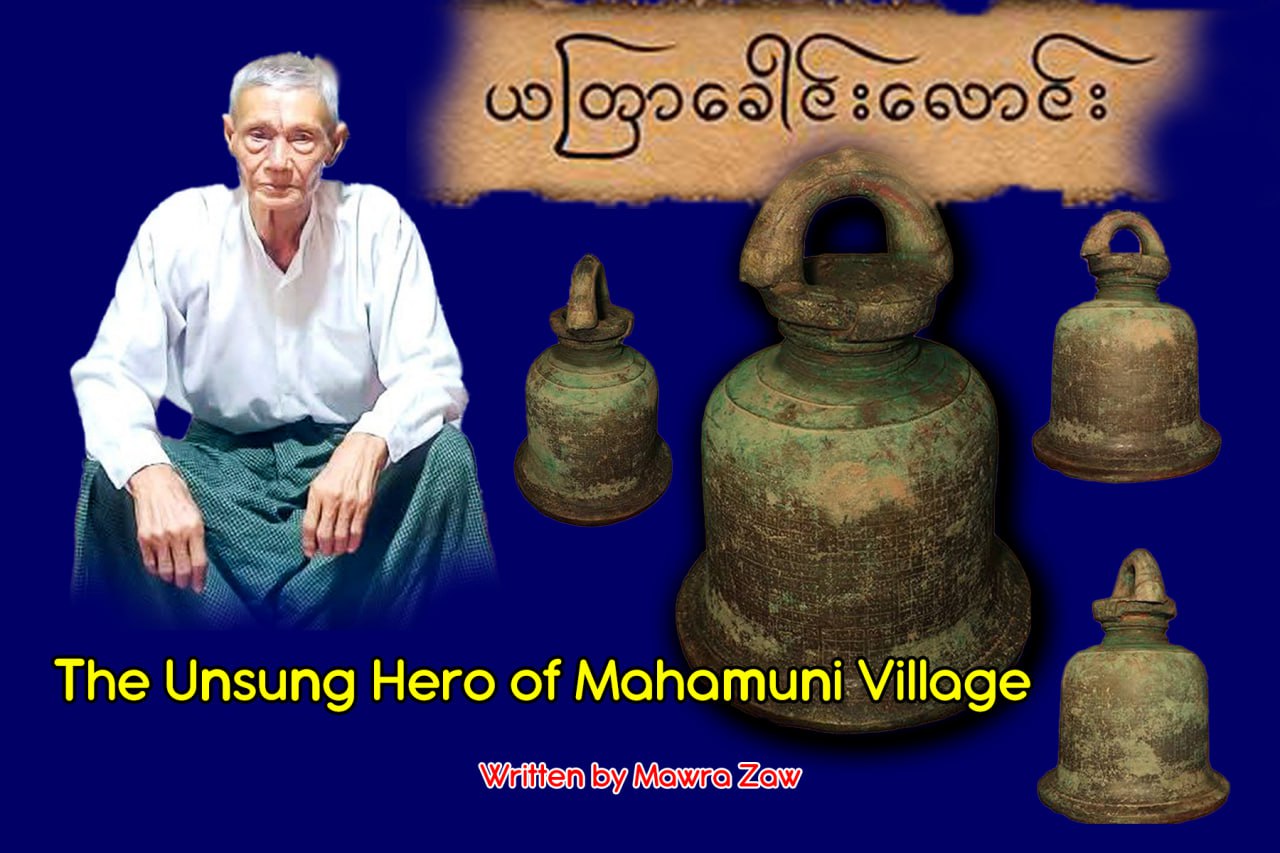
Written by Mawra Zaw
In recent months, news from Arakan (Rakhine State) has been dominated by war—airstrikes, battles, and shifting frontlines. Yet one story has unexpectedly eclipsed them all: the excavation of an ancient bell.
This is no ordinary artifact. The bell is widely regarded as one of the most remarkable relics of the Mrauk-U era, a period central to Arakanese history and identity. Its rediscovery has stirred something deeper than historical curiosity. It has reopened questions about memory, responsibility, and the quiet forms of patriotism that rarely make headlines.
For generations, the bell lived more as legend than fact. Many of us heard stories about it as children—folktales whispered at bedtime, fragments of history passed down by elders. These stories were often intertwined with dramatic palace intrigues from the Mrauk-U court: King Thiri Thudhamma Raza, Queen Nat Shin May, and King Nga Ku Thala (Narapati), whose rise to power was marked by conspiracies and assassinations. Over time, history blurred into myth, and myth into mystery.
What separated legend from scholarship was the work of the French historian Dr. Forchhammer, who documented the bell’s existence with historical evidence. Later accounts suggest that when the British relocated the Sittwe court, and when the Shan craftsman Maung Shwe Mun renovated the Mahamuni Buddha image, the bell was returned to the pagoda. After that, it vanished.
Rumors flourished. Some claimed it was taken by Khin Nyunt, then the intelligence chief of Myanmar’s military. Others said it was acquired during ritual practices at Mahamuni Pagoda. Historians searched for answers, but certainty remained elusive. The most common explanation—that elders hid the bell to protect it from predatory hands—was often repeated, though sometimes romanticized by those eager to portray themselves as patriots.
Arakan has seen this pattern before. The Sanda Muni Buddha image was once hidden behind brickwork and rediscovered only decades later. It did not reappear because someone claimed credit, but because the time was right. Today, it remains peacefully enshrined in Mrauk-U.
The bell’s rediscovery followed the same logic of timing—and trust. It came to light not through power or authority, but because an elderly villager finally spoke.
That man is U Htun Aung, a resident of Mahamuni Village, now in his mid-80s. Mahamuni is an unremarkable village by most measures—poor, small, and sustained largely by manual labor. Yet from this village came an act of integrity that puts many powerful figures to shame.
U Htun Aung knew the bell’s location for more than 60 years. He kept that knowledge to himself—through military rule, conflict, poverty, and personal hardship. At 25, he could have changed his life simply by revealing what he knew. According to public accounts, he was even offered a house and a car in Kyauktaw. Few would have judged him for accepting.
He refused.
The promise he kept was not made to a person, a family, or an institution. It was made to the country. He did not swear an oath before witnesses. He carried it alone.
In Arakan, this restraint is especially striking because the opposite behavior is so familiar. Antiquities have long been removed, sold, or traded under the pretext of “preservation.” We hear stories of genuine relics replaced with fakes, of Buddha images used as currency for promotion and privilege. Even monks and officials, across successive regimes, have participated in this quiet extraction of heritage.
Against this backdrop, U Htun Aung’s silence speaks loudly.
For six decades, he lived knowing he was guarding something of national importance. It is hard to imagine that he ever lived without anxiety. He reportedly opposed certain activities on Mahamuni hill and was expelled from the pagoda trustee committee as a result. The position itself might have brought prestige, but he accepted his removal without bitterness—and without breaking his promise.
U Htun Aung is not a soldier. He is not a public figure. He does not hold office or command followers. Yet he embodies something Myanmar—and Arakan in particular—desperately lacks: moral consistency.
We often define heroes by battlefield bravery or public sacrifice. But true loyalty to a nation is not always loud. Sometimes it is expressed through restraint, patience, and refusal—refusal to profit, refusal to speak, refusal to betray.
Today, when many chase power and wealth even as ordinary people suffer, U Htun Aung’s example is quietly devastating. Others may be more educated, more influential, and far wealthier. But in integrity and national conscience, they do not come close.
U Htun Aung is an “unsung hero” in the truest sense: someone who fulfilled his responsibility to his people without recognition, reward, or applause. By keeping one promise for 60 years, he preserved not only a bell, but a standard of dignity.
Now, with the truth revealed, he can finally live without the burden he carried alone for most of his life—listening peacefully to sermons at Mahamuni Pagoda, knowing he did not betray his country.
In a time when loyalty is often performative and patriotism loudly declared, U Htun Aung reminds us of a simpler, rarer truth: that sometimes the most heroic act is knowing when not to speak.
(Note: Some content has been drawn from a post by Sayar Wai Hun Aung.)

Opinion
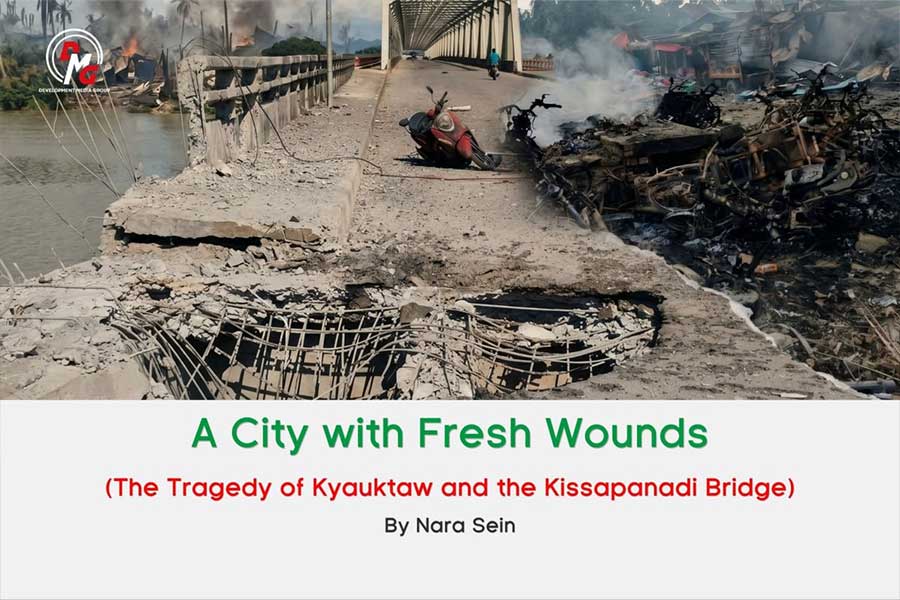
A City with Fresh Wounds (The Tragedy of Kyauktaw and the Kissapanadi Bridge)
By Admin 01 Oct 2026
Arakan Army’s Gains and the Changing Geopolitics of Arakan
By Admin 29 Sep 2026
Beyond Military Victory: What Is Myanmar’s Ultimate Political Objective?
By Admin 26 Sep 2026
UN at a Crossroads: Six Priorities for a Shared Future
By Admin 23 Sep 2026
.jpg)
How Can Myanmar’s Political Crisis Be Brought to an End?
By Admin 13 Sep 2026
POLITICS

BUSINESS
Industry to manufacture finished goods from coconut starting in early 2020
By Aung Kaung Zaw 20 Nov 2019