
- One killed, four injured as junta bombs Pannilar IDP camp, Aungphyupyin Village in Ponnagyun
- RICE report says Mon state faces deepening socioeconomic, security crisis
- IPCM offers emergency support to Myanmar journalists facing threats, exile
- Victims’ families demand justice over Kyauktaw airstrike massacre
- Arakanese political parties face criticism over silence on Kyauktaw mass killing
Female journalists in conflict zones face mental health threats
Female journalists operating in conflict-affected regions across Myanmar are facing long-term threats to their mental health due to airstrikes, heavy artillery fire, and other perilous conditions.
07 Apr 2026
DMG Newsroom
7 April 2026, Yangon
Female journalists operating in conflict-affected regions across Myanmar are facing long-term threats to their mental health due to airstrikes, heavy artillery fire, and other perilous conditions.
This was highlighted in a research paper titled "Voices of Women from the Frontlines," released by Myanmar Women in Media on April 6.
The report describes the situation of women living in current armed conflict areas as a complex interplay between physical safety, gender-based challenges, and physiological needs.
While journalists choose to document events amidst gunfire based on the principle that "where there is danger, there is news," the report states that underlying trauma and constant anxiety pose a long-term threat to their mental wellbeing.
A female journalist in Arakan State said, “When I hear the sound of jets while out reporting, I feel completely insecure. Furthermore, when covering airstrikes and seeing horrific scenes of severed limbs, my mind feels very disturbed. Having to see these things daily has led to many sleepless nights. Currently, the main insecurity is the danger from the air.”
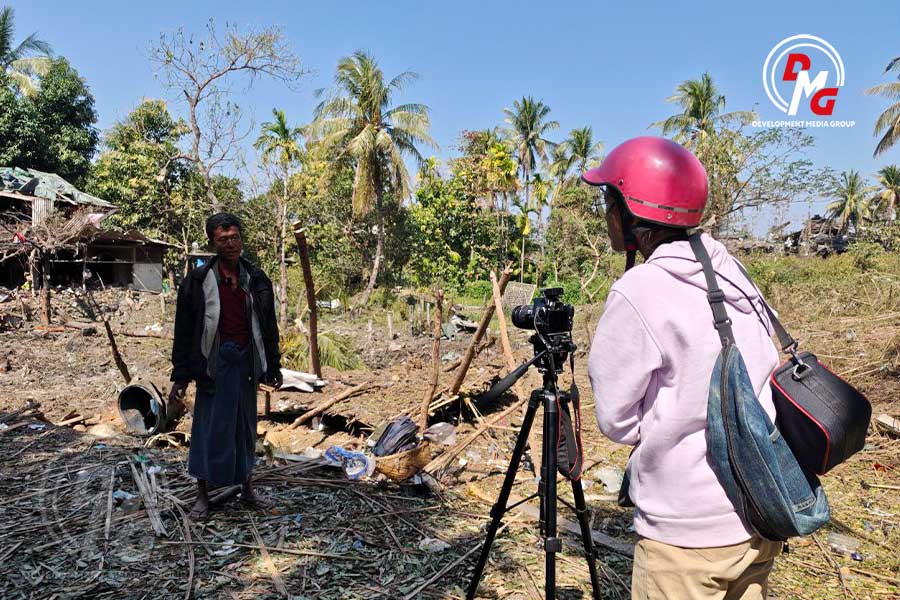
The report points out that in current conflict zones and areas controlled by revolutionary forces, incidents involving airstrikes, heavy weapons, drone strikes, landmines, unexploded ordnance, and other acts of violence have become like a part of daily life for journalists.
Furthermore, an analysis of the relationship between a journalist’s duty and the inherent dangers shows that traumatic violent incidents are, ironically, what drive them to continue their work.
An independent female journalist said, “Before I started this job, I couldn't even bear to look at blood. But now, after seeing and experiencing these things so often, I’ve become accustomed to the danger. The psychological impact is something that will last a lifetime. Even now, I can no longer distinguish between the sound of a plane and other noises. At the start of the war, I was afraid of dying from an airstrike. Now, because I do this job and frequently cover these events, I feel that if a bomb falls directly on me, it is just my fate, and that mindset is what gives me the courage to go out and work.”
The report states that as the entire country faces the threat of airstrikes from the regime, the trauma gained through the sights and sounds of these incidents has become a long-term burden for journalists.
On the other hand, for female journalists active in conflict zones, interacting with armed organizations is a situation that requires extremely careful handling. Within these relationships, journalists find themselves in a position where they must balance their reporting with the military security policies of local organizations rather than focusing solely on press freedom.
The report notes that when gathering news in conflict areas, female journalists face multifaceted threats, including physical danger to their lives as well as sexual and psychological threats.
Myanmar Women in Media suggested that instead of restricting female journalists from frontline reporting under the guise of safety, these challenges should be overcome by enhancing their capacities in digital security and survival techniques within danger zones.

Top News
RICE report says Mon state faces deepening socioeconomic, security crisis
By Admin 05 Oct 2026
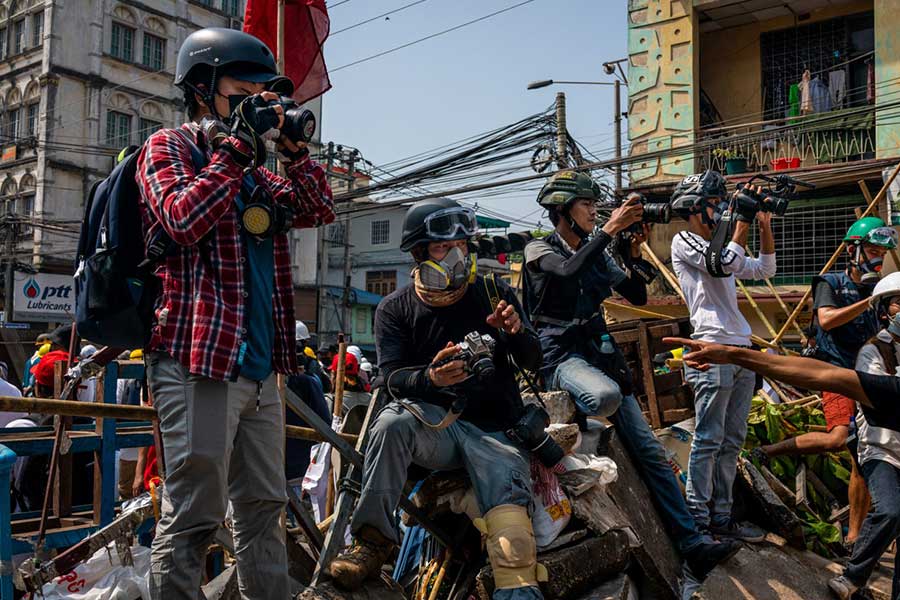
IPCM offers emergency support to Myanmar journalists facing threats, exile
By Admin 05 Oct 2026
Victims’ families demand justice over Kyauktaw airstrike massacre
By Admin 03 Oct 2026
Arakanese political parties face criticism over silence on Kyauktaw mass killing
By Admin 03 Oct 2026