

- CAS documents over 3,200 cases of civilian harm in Arakan conflict
- Myanmar Navy threats leave Arakan fishing industry on the brink of collapse
- ULA pledges greater support for ethnic communities in Arakan
- Junta sends reinforcements to fiercely contested Sittwe-Ponnagyun front
- India's Kaladan project faces uncertain future amid Arakan conflict: CAS
Myanmar plays key role in China’s critical mineral supply chains: report
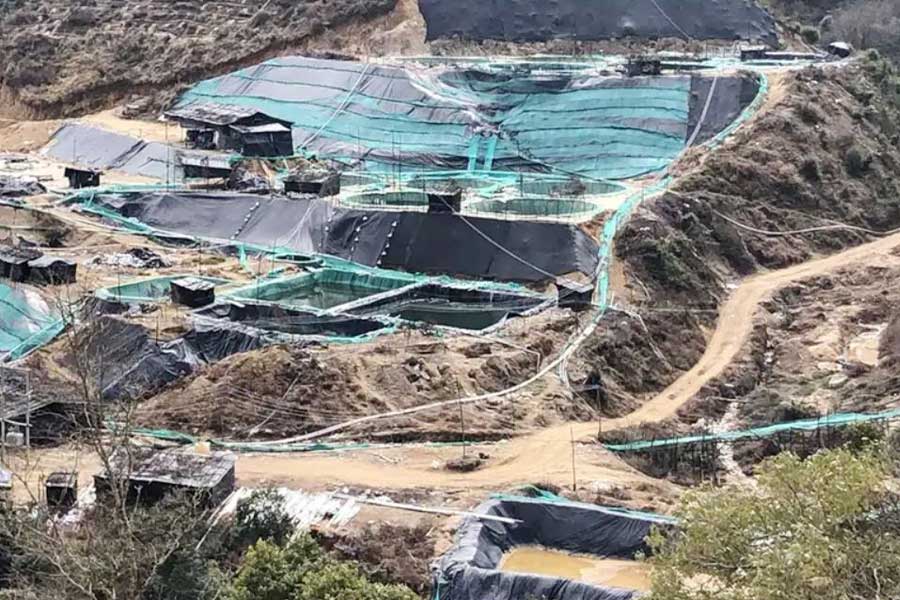
Myanmar has become a strategically important source of critical minerals for China, particularly heavy rare earths, amid intensifying global competition over resources essential to clean energy, advanced technology and defence industries, according to a new research paper.
27 Nov 2026
DMG Newsroom
27 November 2026, Yangon
Myanmar has become a strategically important source of critical minerals for China, particularly heavy rare earths, amid intensifying global competition over resources essential to clean energy, advanced technology and defence industries, according to a new research paper.
Titled “Chinese Involvement in Southeast Asia’s Critical Minerals,” the paper by Philip Andrews-Speed was published in November by the Singapore-based ISEAS – Yusof Ishak Institute.
The study examines Chinese involvement in the extraction and processing of five critical minerals: nickel, cobalt, copper, aluminium and rare earths across Myanmar, Indonesia, the Philippines, Laos and Vietnam.
Myanmar and Indonesia account for the most strategically significant Chinese involvement in the region’s critical mineral industries, although their investment models, corporate ownership structures and operating conditions differ considerably.
According to the report, Myanmar was the world’s fourth-largest producer of rare earth ores in 2025, accounting for just over 5 percent of global production. It is also China’s most important overseas source of heavy rare earths.
Heavy rare earths are crucial to the production of high-performance permanent magnets used in electric vehicles, wind turbines and advanced defence technologies.
All of Myanmar’s rare earth oxide exports go to China. Between 2017 and 2024, Myanmar’s share of China’s rare earth oxide imports ranged from 31 to 66 percent by weight.
Much of Myanmar’s rare earth mining takes place in conflict-affected areas of Kachin and Shan states, where small Chinese operators work through local armed groups with minimal regulatory oversight and largely without formal Chinese government backing.
The Kachin Independence Army (KIA) took control of major rare earth mining areas around Chipwe and Pangwa in October 2024, disrupting production and cross-border trade. Mining and trade resumed in late 2025, according to the report.
The expansion of poorly regulated mining has raised serious environmental and social concerns, including land and water pollution, occupational health risks and growing opposition from affected communities. Ongoing armed conflict and weak governance also pose risks to the stability of mineral supplies.
In contrast, large, predominantly privately owned Chinese companies, supported by state-backed financing and bilateral cooperation, have helped transform Indonesia into the world’s leading nickel producer.
While these investments have supported industrial development and employment, they have also generated significant environmental damage and workplace safety concerns.
Chinese involvement in the Philippines, Laos and Vietnam remains comparatively limited, encompassing mining, mineral processing, construction and equipment supply.
The study finds that much of the output from Chinese-linked mineral projects across Southeast Asia ultimately flows to Chinese processing and manufacturing facilities, reinforcing China’s position in global critical mineral supply chains.
It concludes that reducing dependence on China will require more than diversifying mining locations. Countries must also develop alternative processing capacities, technologies, logistics networks and long-term purchasing arrangements to build more resilient supply chains.

Top News
Myanmar plays key role in China’s critical mineral supply chains: report
By Admin 27 Nov 2026
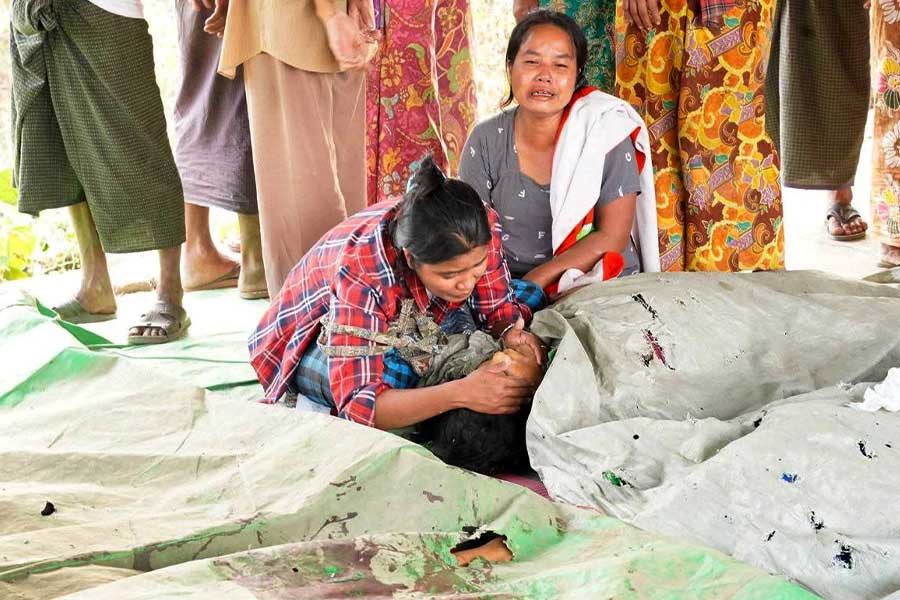
CAS documents over 3,200 cases of civilian harm in Arakan conflict
By Admin 27 Nov 2026
Arakan farmers risk their lives to harvest paddy amid airstrike fears
By Admin 26 Nov 2026
Myanmar Navy threats leave Arakan fishing industry on the brink of collapse
By Admin 26 Nov 2026

ULA pledges greater support for ethnic communities in Arakan
By Admin 26 Nov 2026