
- High airfares leave low-income families stranded in blockaded Sittwe
- MSF rrges civilian protection after Sittwe shelling kills two, injures 17
- ULA warns Arakan residents of airstrike risks during Thadingyut festival
- Months-long internet blackout drives up costs for residents of Thandwe and Gwa
- At least five injured in junta Y-12 airstrikes on Werathani villages
Only two Arakan political prisoners freed in junta’s Peasants’ Day amnesty
Only two political prisoners from jails in Arakan State were released under the military regime’s latest amnesty to mark Peasants’ Day, according to former political prisoners and rights groups.
06 Mar 2026
DMG Newsroom
6 March 2026, Sittwe
Only two political prisoners from jails in Arakan State were released under the military regime’s latest amnesty to mark Peasants’ Day, according to former political prisoners and rights groups.
The Political Prisoners Network–Myanmar (PPNM) reported on March 4 that out of the thousands released nationwide, only two individuals from Arakan State were included.
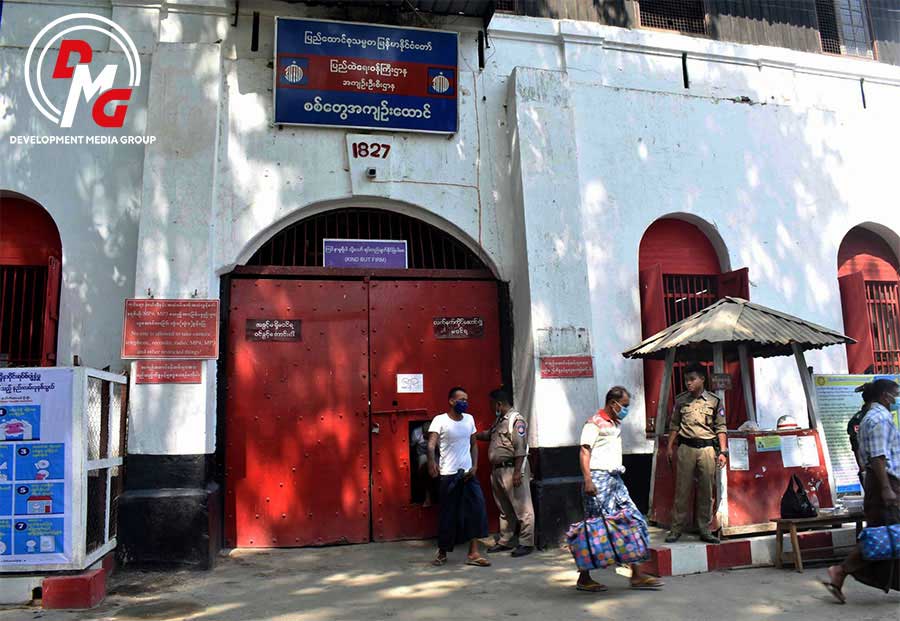
The release involved one male prisoner from Sittwe Prison and another from Kyaukphyu Prison. Details regarding their identities and the charges they faced remain unknown.
Former Arakanese political prisoners view the negligible number of releases as a deliberate act of oppression, suggesting the regime is intentionally targeting Arakanese detainees due to its ongoing military defeats in the region.
“We monitored the amnesty closely, and it is deeply disheartening to see only two political prisoners released from Arakan State,” said Daw Nyo Aye, a former political prisoner and chairwoman of the Rakhine Women’s Network. “The regime is losing ground militarily in Arakan State and facing constant clashes. It appears they are intentionally excluding political prisoners from this state to maintain pressure and suppression.”
The military regime originally announced it would grant amnesty to 7,337 political prisoners convicted under the Counterterrorism Law, while also dropping charges in 12,487 cases involving the Counterterrorism Law and Arms Act.
However, PPNM data from March 4 indicated that only 4,403 political prisoners were actually released across 33 prisons nationwide. Arakan and Kachin States, both hotspots of intense fighting, saw the fewest releases.
Maung Tamar, a former political prisoner, noted that the regime historically uses amnesties as a strategic tool to de-escalate one front while focusing on another.
“Before the coup, the regime released the younger brother of Arakan Army (AA) chief Maj-Gen Twan Mrat Naing and Dr. Aye Maung as a conciliatory gesture. Now, they may be trying to appease the ‘Spring Revolution’ forces in mainland Myanmar while continuing to suppress Arakanese prisoners to sustain their long-term military strategy against the Arakan Army,” he explained.
Observers believe the regime is using the detainees as political leverage.
“By withholding their release, the junta is likely trying to pressure the Arakan Army to reach a specific political outcome,” Daw Nyo Aye added.
In contrast to Arakan State, Mandalay’s Obo Prison saw the highest number of releases with 932 prisoners, followed by Yangon’s Insein Prison with 368 and Magway Prison with 339.
Rights advocates estimate there are nearly 400 political prisoners currently held in Sittwe and Kyaukphyu prisons, most of whom were arbitrarily arrested on suspicion of having ties to the Arakan Army.
U Myat Tun, director of the Arakan Human Rights Defenders and Promoters Association, criticized the lack of transparency.
“The regime fears these individuals will join the Arakan Army if released. Political prisoners deserve freedom under any genuine amnesty, but here, the junta is using it as a tool for systematic oppression. Many were jailed based on mere rumors rather than actual evidence,” he said.
Amid intensifying conflict, reports indicate that the regime has been transferring political prisoners from Sittwe and Kyaukphyu to prisons in mainland Myanmar, including Pathein Prison in Ayeyarwady Region.
Currently, the military regime maintains control over only three towns in Arakan State, Sittwe, Kyaukphyu, and Manaung, while the remaining 14 townships are under the control of the Arakan Army.

Top News
High airfares leave low-income families stranded in blockaded Sittwe
By Admin 25 Oct 2026
MSF rrges civilian protection after Sittwe shelling kills two, injures 17
By Admin 25 Oct 2026
ULA warns Arakan residents of airstrike risks during Thadingyut festival
By Admin 24 Oct 2026
Months-long internet blackout drives up costs for residents of Thandwe and Gwa
By Admin 24 Oct 2026
At least five injured in junta Y-12 airstrikes on Werathani villages
By Admin 24 Oct 2026