
- Arakan Army captures junta outposts as fighting intensifies near Sittwe
- Pro-junta ALP chair says NCA can shape Arakan’s future
- Extreme heat drives rise in clinic visits across Arakan
- Junta airstrikes on Ponnagyun IDP camps kill 15 civilians, injure 30: AAPP
- Myanmar junta airstrikes kill 163 civilians in September, Arakan hardest hit: MDSI
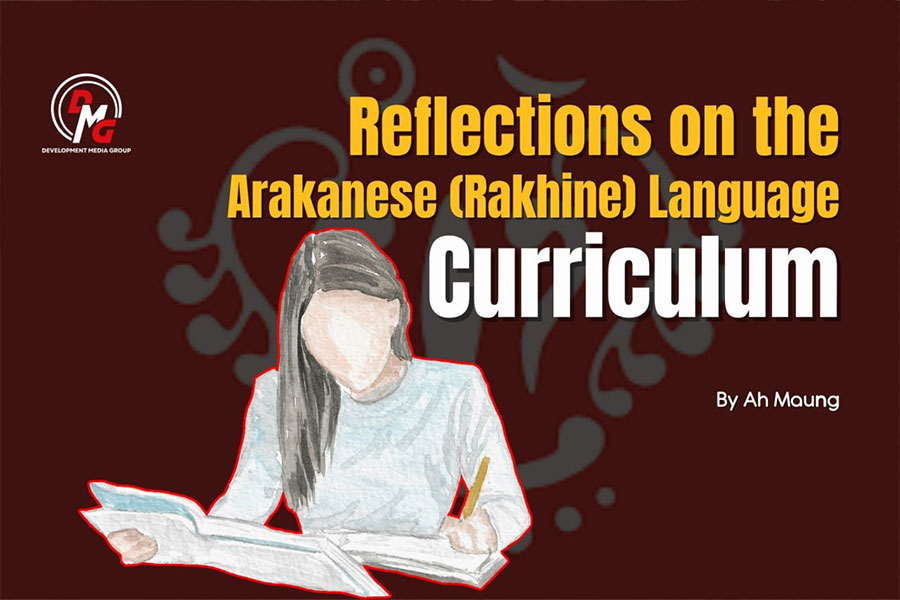
Reflections on the Arakanese (Rakhine) Language Curriculum
A few days ago, I met a high school Burmese language teacher. At his home, I noticed a thick photocopied manuscript. Curious, I asked about it and learned that it contained draft texts selected by the Curriculum Development Committee of the Arakan National Education Department for use in the Grade 12 curriculum.
14 Jul 2026
By Ah Maung
A few days ago, I met a high school Burmese language teacher. At his home, I noticed a thick photocopied manuscript. Curious, I asked about it and learned that it contained draft texts selected by the Curriculum Development Committee of the Arakan National Education Department for use in the Grade 12 curriculum.
Naturally, I became interested and began reading through it. I was not conducting a detailed academic review; rather, I was simply browsing through the material. After reading several pages, however, I found myself stopping at one particular section, unable to continue.
According to the teacher, it is still uncertain whether these draft materials will become the final curriculum. He explained that two teachers from each township had been invited to discuss the proposed curriculum, and during those meetings some participants reportedly pointed out that certain texts were not suitable for inclusion.
Soon afterward, reports about the new curriculum began to circulate.
According to those reports, in areas administered by the United League of Arakan (ULA) and the Arakan Army (AA), Grade 12 Burmese language will be replaced by instruction in the Arakanese (Rakhine) language beginning with the 2026–2027 academic year. Since the school year in Arakan officially begins on July 1, the consultation on the curriculum took place only one or two weeks before schools reopened. Even now, the new curriculum has reportedly not yet reached many schools.
This suggests that the curriculum may have been introduced prematurely for the current academic year.
I have also not heard of any broad consultations involving Arakanese (Rakhine) literary scholars, linguists, education specialists, or language experts from across Arakan before the curriculum was developed.
Another unusual aspect is that curriculum reform has begun with Grade 12, the highest level of basic education instead of starting from the lower grades and progressing upward.
Students who have studied Burmese from kindergarten onward may naturally encounter difficulties adapting to a curriculum taught in Arakanese. It should not simply be assumed that there will be no challenges because it is their own ethnic language. One major reason is that Arakanese orthography has yet to reach a standardized form.
For that reason, I believe establishing a standard Arakanese spelling and orthography dictionary accepted across Arakan should be a higher priority than drafting a new school curriculum.
Without an officially recognized spelling standard, teachers may write the same words differently, leaving students uncertain about which spelling is correct. If a curriculum is developed before such standards are established, it may eventually become an obstacle when efforts are made to build a unified standard language.
At present, some writers and literature enthusiasts in Arakan have already begun adopting the spellings used in announcements and publications issued by the Arakan People's Revolutionary Government. However, even those spellings have not yet become fully consistent.
Meanwhile, schoolchildren throughout Arakan have already been learning from Arakanese readers that have been published and taught since 2013 in schools and private tuition classes. The spellings used in those readers differ in several respects from those now appearing in official government publications.
For this reason, I believe the Arakan People's Revolutionary Government would be well advised to first approve and publish an official orthography dictionary before developing school curricula grade by grade.
International best practice in language education generally begins by establishing standard spelling, dictionaries, and grammatical rules. Only after these foundations are in place are readers, teaching materials, and curricula developed progressively.
Such an approach helps ensure consistency in classroom instruction, improves students' learning experiences, and strengthens the long-term stability of the language itself.
I believe Arakan's education system would benefit greatly if it followed this gradual and systematic process. Doing so would ultimately produce a stronger, more coherent, and academically sound Arakanese-language curriculum.
Returning to the draft manuscript I mentioned earlier, the reason I stopped reading was because I encountered a lesson entitled "Khauk Shwut Pa Li A Pha Thae."
Even for someone like myself, who has a close interest in literature, the title was difficult to understand. Only after mentally reading it as "Khwint Shwut Pa Li A Pha Thae" ("Forgiveness Is a Virtue") could I grasp its intended meaning.
Therefore, even if curriculum development proceeds before a standard orthography is officially established, the curriculum itself should consistently adopt a single spelling system that is widely accepted.
For example, if one lesson spells the word "forgiveness" as khauk shwut, then every lesson throughout the curriculum should use exactly the same spelling. That spelling would effectively serve as the accepted standard within the curriculum itself.
Only through such consistency can curriculum development simultaneously contribute to establishing standardized orthography.
The selection of literary works also deserves careful consideration.
Texts written in the Arakanese language throughout different historical periods should certainly be included. However, works written in Burmese by Arakanese writers should also be considered.
Historically, many of Arakan's most distinguished literary figures wrote primarily in Burmese rather than Arakanese. If those writings possess enduring literary or educational value, the curriculum committee should translate or adapt them into standardized Arakanese while preserving their original meaning and incorporating them into the curriculum.
As the Arakanese-language curriculum is developed grade by grade, it would also be beneficial to bring together linguists, literary scholars, teachers, education specialists, and knowledgeable individuals from different parts of Arakan.
Arakanese scholars living abroad should likewise be invited to participate through online consultations. Such broad consultation would almost certainly produce a more complete, balanced, and academically rigorous curriculum.
Language is more than a medium of instruction. It is a repository of history, identity, culture, and collective memory. Developing an Arakanese-language curriculum therefore represents not merely an educational reform but an important nation-building project. Precisely because of its long-term significance, the curriculum should be built upon broad scholarly consultation, linguistic consensus, and carefully established academic standards.
Regardless of the current debates, Grade 12 students in Arakan will soon begin studying literature and language subjects written in Arakanese instead of Burmese.
There may be initial challenges, but over time students are likely to adapt. Introducing the Arakanese language into the education system is, in my view, a positive and appropriate step.
However, for that step to achieve lasting success, it must rest upon a solid foundation of standardized spelling, comprehensive dictionaries, sound linguistic research, and broad scholarly consensus.
Only then can the development of an Arakanese-language education system truly succeed and provide future generations with an education that reflects both their linguistic heritage and the highest academic standards.

Opinion
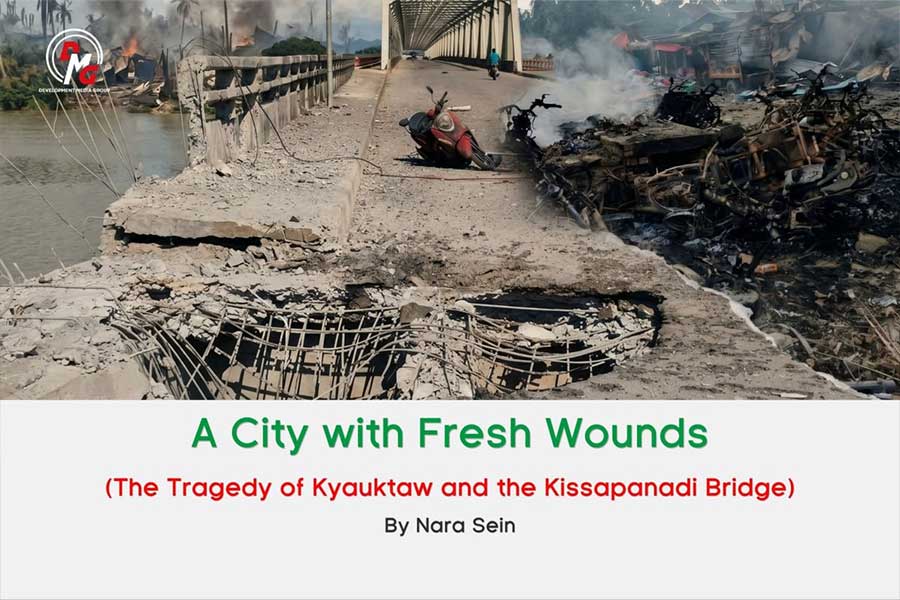
A City with Fresh Wounds (The Tragedy of Kyauktaw and the Kissapanadi Bridge)
By Admin 01 Oct 2026
Arakan Army’s Gains and the Changing Geopolitics of Arakan
By Admin 29 Sep 2026
Beyond Military Victory: What Is Myanmar’s Ultimate Political Objective?
By Admin 26 Sep 2026
UN at a Crossroads: Six Priorities for a Shared Future
By Admin 23 Sep 2026
.jpg)
How Can Myanmar’s Political Crisis Be Brought to an End?
By Admin 13 Sep 2026
POLITICS

BUSINESS
Industry to manufacture finished goods from coconut starting in early 2020
By Aung Kaung Zaw 20 Nov 2019