


- Deadly junta airstrike leaves Kyauktaw daily-wage earners jobless
- India pushes to accelerate work on Kaladan road project in 2027 working season
- Junta launches fresh multi-aircraft bombardment of Kyauktaw mountain ranges
- Fierce combat erupts in Kyindwe, southern Chin State as resistance forces capture junta troops
- Malaysian firms linked to Myanmar military aviation supply chain: JFM
The Invisible Consequences of Climate Change
Climate change is often understood through the dramatic images that dominate television screens, newspaper headlines and social media feeds. We see forests consumed by wildfires, communities devastated by floods, prolonged heatwaves breaking temperature records and droughts turning once-fertile land barren. These disasters are immediate, highly visible and impossible to ignore.
22 Aug 2026
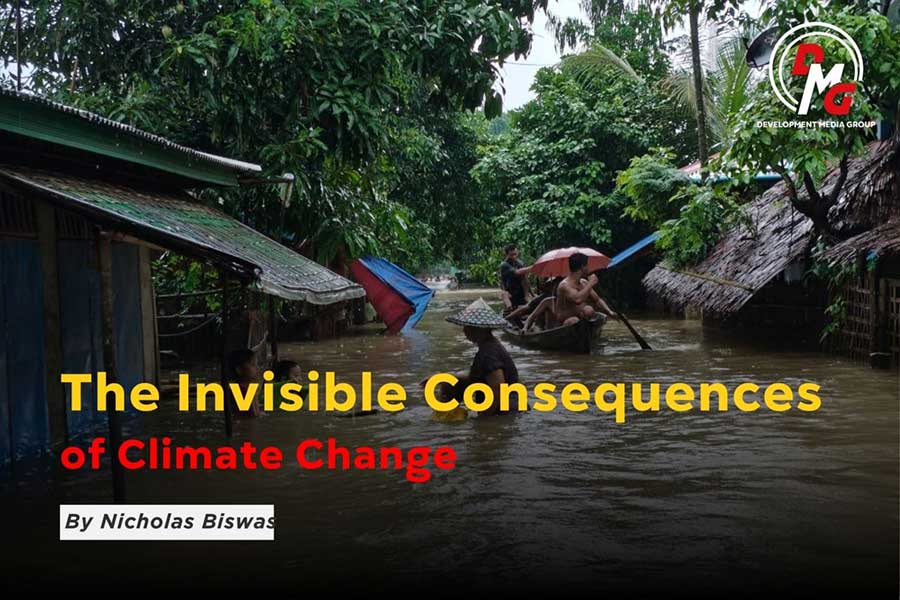
By Nicholas Biswas
Climate change is often understood through the dramatic images that dominate television screens, newspaper headlines and social media feeds. We see forests consumed by wildfires, communities devastated by floods, prolonged heatwaves breaking temperature records and droughts turning once-fertile land barren. These disasters are immediate, highly visible and impossible to ignore.
Yet they represent only the surface of the climate crisis. Like an iceberg, many of its most profound consequences remain hidden beneath the surface. Beyond damaged infrastructure and environmental destruction, climate change is reshaping food security, public health, economies, migration, social stability and human development. Unless these less visible impacts receive equal attention, the world risks responding only to the symptoms while neglecting the deeper causes of vulnerability.
The Visible Face of Climate Change
Climate-related disasters are becoming more frequent and more severe. Rising global temperatures have intensified floods, storms, droughts, heatwaves and wildfires across every continent. These disasters command public attention because they inflict immediate destruction, claim lives and cause enormous economic losses.
Governments respond with emergency relief, humanitarian organizations mobilize assistance and affected communities begin the difficult process of rebuilding. Such responses are indispensable, but they often address only the immediate consequences of a much larger crisis. Long after the headlines disappear and reconstruction begins, climate disasters continue to shape people's lives in ways that are far less visible but often equally devastating.
The Hidden Chain Reaction
Every climate disaster sets off a chain reaction whose effects can last for months—or even years.
When prolonged drought destroys crops, the damage extends well beyond agriculture. Failed harvests reduce food supplies, drive up prices and deepen poverty. Farmers lose their livelihoods, while entire communities become increasingly dependent on humanitarian assistance.
Similarly, when rivers, reservoirs and groundwater sources decline, water scarcity disrupts agriculture, sanitation, education and public health simultaneously. Women and children often bear the greatest burden, travelling longer distances to collect water and sacrificing time that could otherwise be spent in school or productive work.
These slower-moving consequences rarely attract the same attention as floods or wildfires, yet they gradually erode the social and economic resilience of entire communities.
Climate Change and Food Security
Food security has become one of the greatest hidden victims of climate change.
Changing rainfall patterns, rising temperatures, soil degradation, floods and prolonged droughts are reducing agricultural productivity while making farming increasingly unpredictable. Smallholder farmers, particularly in developing countries, struggle to determine when to plant and harvest as traditional seasonal patterns become less reliable.
When agricultural production declines, food prices inevitably rise. Poor households are often forced to reduce both the quantity and nutritional quality of their meals, increasing the risks of hunger and malnutrition, especially among children and pregnant women.
Hunger is therefore far more than a humanitarian concern. It undermines education, weakens public health, reduces labour productivity and slows economic growth. Without greater investment in climate-resilient agriculture and sustainable farming practices, food insecurity will continue to intensify across many vulnerable regions.
Climate Change as a Public Health Emergency
The climate crisis is also rapidly becoming a public health emergency.
Rising temperatures increase heat-related illnesses and deaths, particularly among older people, children and outdoor workers. Flooding contaminates drinking water and increases outbreaks of waterborne diseases such as cholera and diarrhoea. Meanwhile, changing weather patterns expand the habitat of mosquitoes carrying malaria, dengue and other vector-borne diseases.
Extreme weather events also place enormous strain on already fragile healthcare systems. Hospitals may lose electricity, medical supplies become difficult to transport and healthcare workers face overwhelming demand precisely when resources are most limited.
Protecting public health therefore requires more than emergency medical responses. Climate adaptation must go hand in hand with investment in resilient healthcare systems capable of functioning during climate-related emergencies.
Economic Losses That Deepen Inequality
Climate disasters destroy far more than buildings and infrastructure, they weaken entire economies.
Governments must divert significant financial resources toward emergency response and reconstruction. Businesses lose productivity, transport networks are disrupted and damaged infrastructure requires costly repairs.
For vulnerable families, however, recovery is often much slower. Many lose their savings, sell productive assets, withdraw children from school or fall into long-term debt simply to survive. Repeated disasters can trap households in cycles of poverty from which recovery becomes increasingly difficult.
This exposes one of the greatest injustices of the climate crisis. Communities that contribute least to global greenhouse gas emissions frequently bear some of the greatest consequences. Climate change therefore acts as a powerful multiplier of inequality, widening the gap between those who possess the resources to adapt and those who do not.
Displacement, Migration and Social Instability
As environmental conditions deteriorate, increasing numbers of people are being forced from their homes.
Floods, coastal erosion, sea-level rise, prolonged droughts and declining agricultural productivity are making many communities increasingly difficult to sustain. Climate-induced displacement is rapidly becoming one of the defining humanitarian challenges of the twenty-first century.
In 2022 alone, climate-related disasters triggered nearly 32 million new internal displacements worldwide. International organizations estimate that by 2050, between 25 million and more than one billion people could be displaced or forced to migrate because of climate and environmental pressures. South Asia is expected to remain one of the world's most vulnerable regions, with the World Bank projecting that tens of millions of people could become internal climate migrants, including nearly 20 million in Bangladesh alone.
Large-scale displacement also places enormous pressure on housing, employment, education and public services in receiving communities. Competition over shrinking resources such as land and water can heighten social tensions and contribute to conflict. Climate change is therefore no longer solely an environmental challenge, it has become a growing threat to human security, peace and social stability.
Climate Change Is a Development Challenge
The impacts of climate change extend into virtually every aspect of national development.
Education suffers when schools are damaged or children are forced out of classrooms. Infrastructure deteriorates under increasingly severe weather conditions. Economic growth slows as governments repeatedly divert resources from long-term development toward disaster recovery.
Countries experiencing recurrent climate disasters often struggle to achieve sustainable development because valuable investments are consumed by reconstruction rather than progress.
Climate resilience should therefore become a central pillar of national development planning rather than an afterthought following disasters.
Investing Before Disaster Strikes
Responding effectively to climate change requires much more than emergency relief after disasters occur.
Governments and development partners must invest proactively in resilient infrastructure capable of withstanding extreme weather. Climate-smart agriculture can help maintain food production despite changing environmental conditions. Sustainable water management, ecosystem restoration and clean energy investments strengthen long-term resilience while reducing greenhouse gas emissions.
Equally important are effective early warning systems that allow communities to prepare before disasters strike, thereby reducing casualties and economic losses.
Public policy must prioritize protecting vulnerable populations before disasters occur rather than responding only after lives and livelihoods have already been devastated.
Looking Beneath the Surface
The greatest dangers of climate change are often those that remain unseen until they fundamentally reshape people's lives.
Floods, droughts, wildfires and heatwaves represent only the visible face of a much larger crisis. Beneath them lie food insecurity, deteriorating public health, economic hardship, displacement, social instability and stalled development.
Understanding this chain of consequences enables governments, researchers, businesses and citizens to develop responses that address both immediate disasters and their underlying causes.
Climate resilience cannot be built by treating each disaster as an isolated event. It requires recognizing how a single climate shock can trigger a cascade of interconnected humanitarian, economic and social challenges.
The Crisis Beyond the Crisis
Climate change is far more than an environmental problem. It is a multidimensional crisis affecting human well-being, economic prosperity, social justice and sustainable development.
The world cannot afford to focus only on disasters that dominate headlines while overlooking the quieter consequences that gradually reshape lives, livelihoods and entire societies.
Building resilience requires more than emergency relief after catastrophe strikes. It demands sustained investment in climate-smart agriculture, resilient infrastructure, ecosystem restoration, clean energy, strong public institutions and meaningful protection for vulnerable communities.
Ultimately, the greatest danger of climate change is not only the disasters we witness, but also the invisible chain of consequences they leave behind. Looking beneath the surface, and acting before those hidden impacts become tomorrow's visible catastrophes, is one of the defining challenges of our time.
Nicholas Biswas is a media freelancer, columnist, translator and development professional, and a recipient of the United Nations Population Fund (UNFPA) Media Award. He can be reached at gonomaddyom@gmail.com.

Opinion
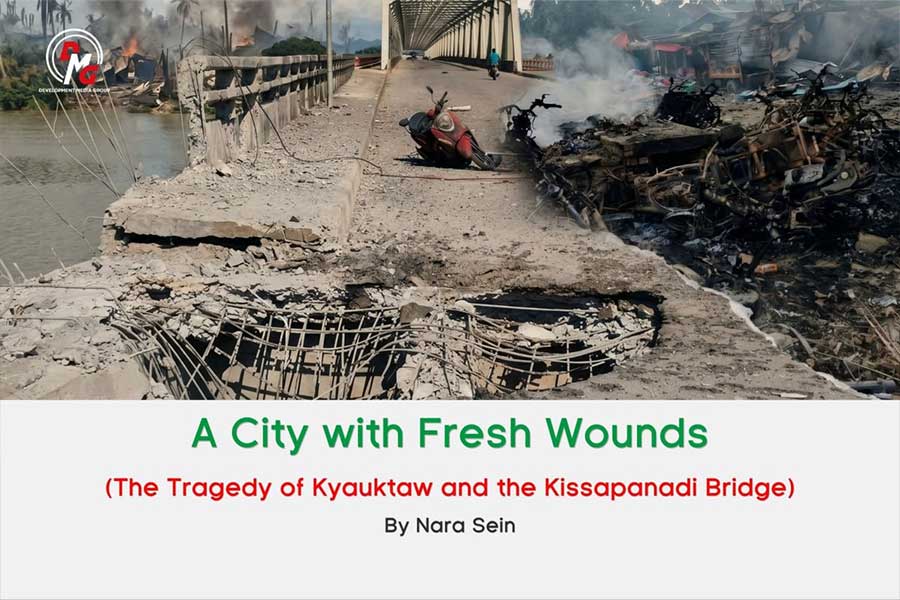
A City with Fresh Wounds (The Tragedy of Kyauktaw and the Kissapanadi Bridge)
By Admin 01 Oct 2026

Arakan Army’s Gains and the Changing Geopolitics of Arakan
By Admin 29 Sep 2026

Beyond Military Victory: What Is Myanmar’s Ultimate Political Objective?
By Admin 26 Sep 2026
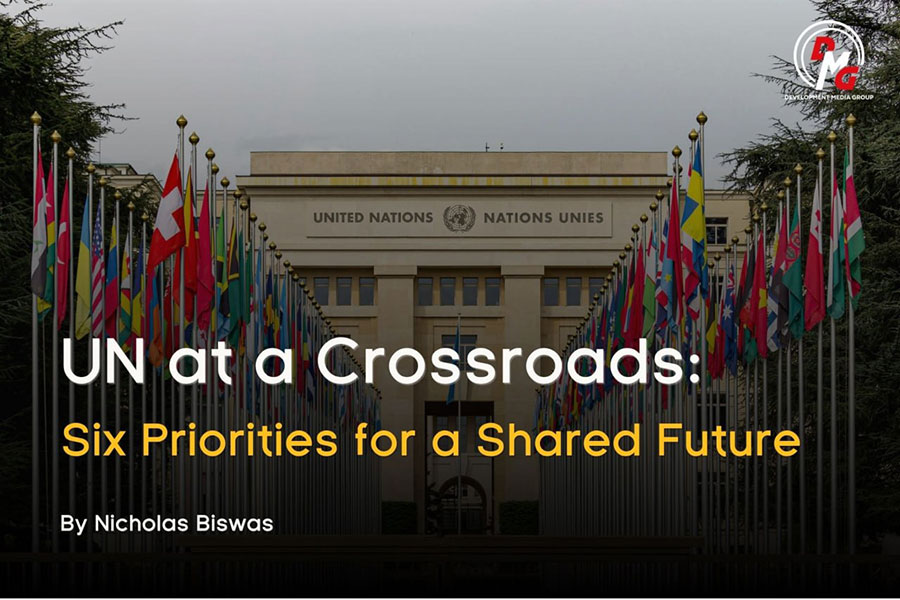
UN at a Crossroads: Six Priorities for a Shared Future
By Admin 23 Sep 2026
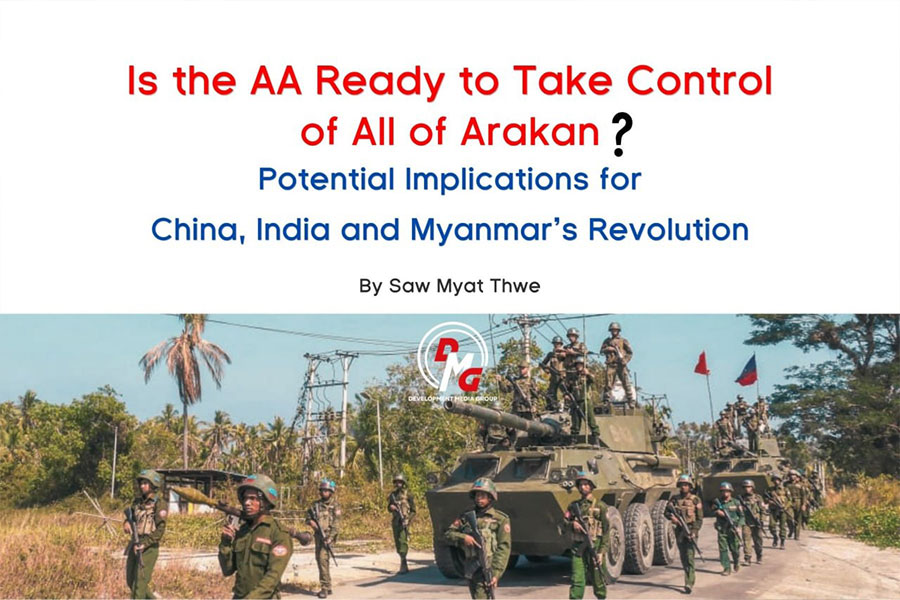
.jpg)
How Can Myanmar’s Political Crisis Be Brought to an End?
By Admin 13 Sep 2026
POLITICS

BUSINESS
Industry to manufacture finished goods from coconut starting in early 2020
By Aung Kaung Zaw 20 Nov 2019