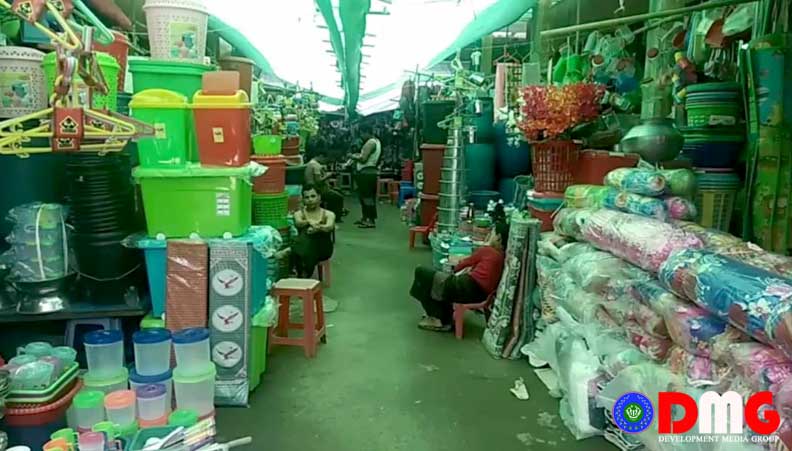

- Y-12 aircraft, drones circle over Sittwe as clashes intensify
- Panic grips Sittwe after deadly reported Y-12 airstrike
- At least six killed, 37 injured in reported Y-12 bombing of downtown Sittwe
- Junta column heading toward Kyindwe suffers heavy casualties in resistance ambushes
- Junta replaces Arakan State security minister amid escalating battles near Sittwe
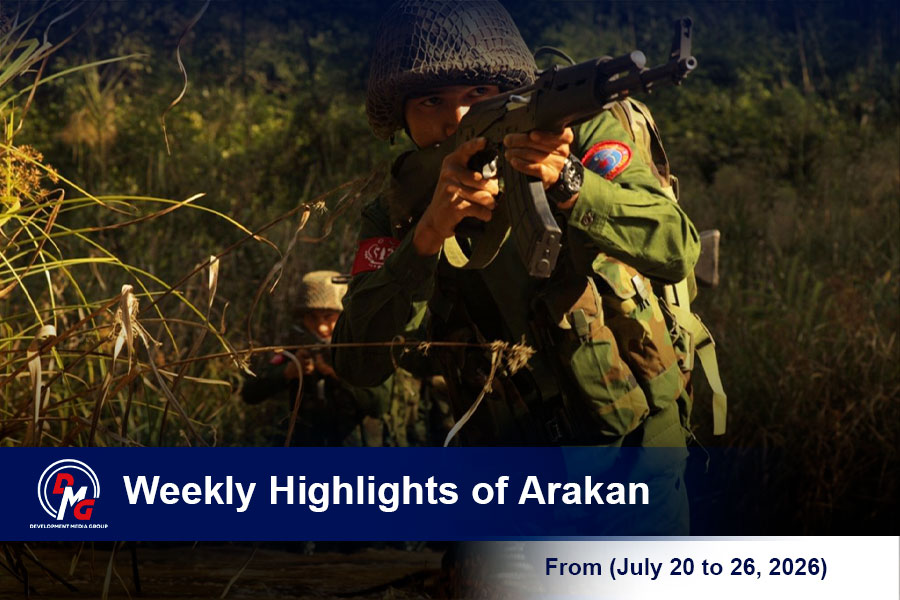
Weekly Highlights from Arakan (July 20 to 26, 2026)
In an era when daily news from Arakan is often fragmented and fast-changing, DMG's Weekly Highlights of Arakan brings clarity, depth, and context to the stories that matter most.
27 Jul 2026
In an era when daily news from Arakan is often fragmented and fast-changing, DMG's Weekly Highlights of Arakan brings clarity, depth, and context to the stories that matter most.
Each week, we round up key political, military, social, and humanitarian developments across Arakan State - connecting the dots between events and offering analysis to help audiences see the bigger picture.
This series is designed for readers and viewers seeking a concise yet comprehensive understanding of how ongoing conflict, governance shifts, and community issues continue to shape lives across Arakan.
Calls grow for swift justice in rape and murder of young woman in Ponnagyun
Residents and civil society groups are calling for a swift investigation and justice after a woman in her 20s was raped and murdered in Ponnagyun Township, an area controlled by the Arakan Army in Arakan State.
The victim, a resident of Autseik Village in Ponnagyun Township, was found dead near Taungpauk Village on July 23, according to local residents.
Authorities said the body showed signs of severe violence. The victim's hands were restrained, and investigators are treating the case as rape and murder.
According to local residents, the victim left home on July 18 to travel to Yoe Tayoke Myaung Village with friends. An unidentified man reportedly picked her up on a motorcycle before she disappeared.
After she went missing, family members, local residents, and relevant authorities searched for five days before her body was discovered on July 23.
The case has sparked widespread fear and outrage among local residents, who are urging the Arakan Army's judicial authorities and relevant officials to conduct a thorough investigation and bring those responsible to justice as quickly as possible.
Women's rights activists called on the United League of Arakan (ULA) to identify those responsible, prosecute them under the law, and ensure the case is handled transparently.
Residents also expressed concern that failure to impose effective punishments in serious crimes encourages further criminal activity. They called for sexual violence cases to be investigated thoroughly and prosecuted in accordance with the law.
Despite an increase in reports of sexual violence and child rape cases in Arakan State, many local women said they continue to feel unsafe and called for stronger law enforcement and more effective judicial action.
Women's rights activists also urged men to join efforts to demand justice for victims of sexual violence.
Local residents said the brutality of the crime has prompted widespread speculation about the circumstances surrounding the killing and called for investigators to establish the facts through a transparent inquiry.
The Department of Law Enforcement and Public Security (DLEPS) under the ULA is investigating the case.
Under DLEPS provisions, those convicted of murder under Section 302(1) of the Penal Code may face the death penalty or a fine, while Section 302(2) carries a sentence of 10 to 20 years' imprisonment in addition to a fine.
Arakan Army launches offensive near regime-held Sittwe
Clashes have erupted near Yaychanpyin Village in Sittwe Township, an area still controlled by the military regime, as the Arakan Army launches an offensive in the area, according to a military source.
Fighting in Sittwe is currently characterized by intermittent clashes rather than sustained heavy combat, with the military regime resisting through ground forces and air support.
The Arakan Army is targeting areas near Yaychanpyin Village as part of a gradual advance toward Sittwe.
In response to the Arakan Army's movements, the military has launched artillery and drone attacks on Wahbo and Khamaungdaw villages, located near the border between Sittwe and Ponnagyun townships.
During the third week of July, the Regional Operations Command (ROC) in Sittwe carried out consecutive days of heavy artillery bombardments. Junta jet fighters also conducted flights over areas surrounding the city as a show of military force.
The Arakan Army has encircled Sittwe, the last remaining military stronghold in northern Arakan State, while the military regime has strengthened its defences with bunkers and additional troops.
Daily junta airstrikes make Arakan State peace talks unlikely, analysts say
Political analysts say the military regime's peace overtures lack credibility, arguing that meaningful political dialogue remains unlikely as the junta continues daily airstrikes across Arakan State.
While representatives of the military regime met the Ta'ang National Liberation Army (TNLA), an ally of the Arakan Army, in Nay Pyi Taw on July 19, the junta simultaneously launched airstrikes on five townships in Arakan State over two consecutive days.
The regime carried out airstrikes on Taungup, Thandwe and Ponnagyun townships on July 19, followed by attacks on Mrauk-U and Minbya townships on July 20.
After self-appointed President Min Aung Hlaing announced a 100-day peace initiative running from April 21 to July 31, the regime held meetings with northern ethnic armed organizations along the China-Myanmar border, including the United Wa State Army (UWSA), the Myanmar National Democratic Alliance Army (MNDAA) and the Shan State Progress Party/Shan State Army (SSPP/SSA).
On July 19, the regime also held talks in Nay Pyi Taw with the TNLA, a member of the Three Brotherhood Alliance.
Arakanese political observers say the continued bombing of civilians demonstrates that the regime's peace overtures are inconsistent with genuine efforts to end the conflict and instead serve as a political strategy to gain leverage.
The Arakan Army has also questioned the sincerity of the regime's 100-day peace initiative, citing the contradiction between its calls for dialogue and its continued airstrikes on civilians in Arakan State.
The Arakan Army said it would respond to the military's offensives in cooperation with the people of Arakan State, allied organizations and individuals who support the Arakan Army, as well as partner organizations in neighbouring territories.
The military regime has extended martial law for 90 days in 58 townships across Myanmar, including areas controlled by revolutionary forces and no longer administered by the junta.
Residents in remote Kyauktaw area struggle to access healthcare without hospital
Residents in the Yoe Creek area of Kyauktaw Township, Arakan State, which is controlled by the Arakan Army, say they are facing severe healthcare hardships as there is not a single hospital serving more than 30 villages in the area.
Residents who fall ill must travel by boat to Kansauk Village before continuing to Apaukwa, Kyauktaw or Mrauk-U to receive medical treatment.
Because seeking medical care involves high costs, long travel times and hazardous journeys, residents are calling on the authorities to establish a hospital or healthcare clinic in the Yoe Creek area.
Flooding struck the Yoe Creek area last week. Daw Hla Nu said her daughter gave birth aboard a motorboat while travelling to Kyauktaw after going into labour during the journey.
Following complications, the mother and baby were taken to Kansauk Village before being transferred to Kyauktaw Township, where they are currently receiving treatment.
Residents said the upper reaches of the Yoe Creek area include more than 30 villages without a single hospital.
As a result, diseases such as malaria and influenza are common, creating serious difficulties for emergency patients.
Residents are appealing for a hospital or a fully functioning medical clinic to be established in either Kansauk or Thaluchaung villages.
Residents added that people die every year from malaria and influenza because they are unable to reach a hospital in time.
The Yoe Creek area is home to Arakanese, Mro and Khami communities, whose livelihoods depend mainly on farming, shifting cultivation, orchards and forest products.
APRG opens tender for foreign liquor import permits in Arakan State
The Arakan People’s Revolutionary Government (APRG) is inviting tenders from local businesspeople to obtain official permits to import foreign liquor into Arakan State, which is controlled by the Arakan Army.
The import permits will be valid for five months, from August 2026 through the end of December, according to the APRG’s Alcohol Control Board (ACB).
Applicants can purchase application forms for K30,000 at nearby administration offices starting July 20, with submissions due by August 20.
Current market prices for liquor and beer in Arakan State vary widely. A short can of ABC Beer sells for between K11,000 and K23,000; Tiger Beer for between K12,000 and K19,000; Chang Beer for between K10,000 and K16,000; Soju for between K20,000 and K25,000 per bottle; and Royal Stag imported from India for up to K100,000 per bottle.
The APRG banned liquor produced in mainland Myanmar and foreign countries across Arakan State in December 2024, restricting residents to locally produced spirits.
During the Thingyan period from April to May 31, 2026, foreign liquor and beer imports were temporarily permitted under a 50 percent tax rate.
Arakanese traders have continued bringing in supplies through illicit channels due to the ban on legal imports.
Financial hardships keep many children out of school in Arakan State
Although basic education schools have reopened for the 2026–2027 academic year in townships controlled by the Arakan Army in Arakan State, many children remain unable to attend due to financial difficulties faced by their families, according to local sources.
Amid ongoing conflict, residents across Arakan State are facing widespread unemployment and rising commodity prices. Struggling to secure daily necessities, many families are finding essential services such as healthcare and education increasingly difficult to afford.
In areas under Arakan Army control, basic education fees have been set at K10,000 for primary students and K20,000 for middle school students, although exact costs vary by township.
Due to worsening economic pressures, some children have been forced to leave school and enter the workforce to help support their families.
Currently, daily earnings average around K30,000 for men and K20,000 for women, while daily household expenses for a family of five are around K50,000, leaving many households struggling to cover their basic needs.
The Arakan Army, which controls most of the territory in Arakan State, has been establishing an administrative system and operating government departments.
While efforts are being made to reopen basic education schools and prevent children from losing educational opportunities, significant challenges remain, with many children continuing to face educational setbacks due to their families' economic hardships.

Opinion

Can the UN Restore Trust in a Fractured World?
By Admin 23 Oct 2026

Arakan Amid the Storm: From Survival to Rebuilding a People
By Admin 22 Oct 2026
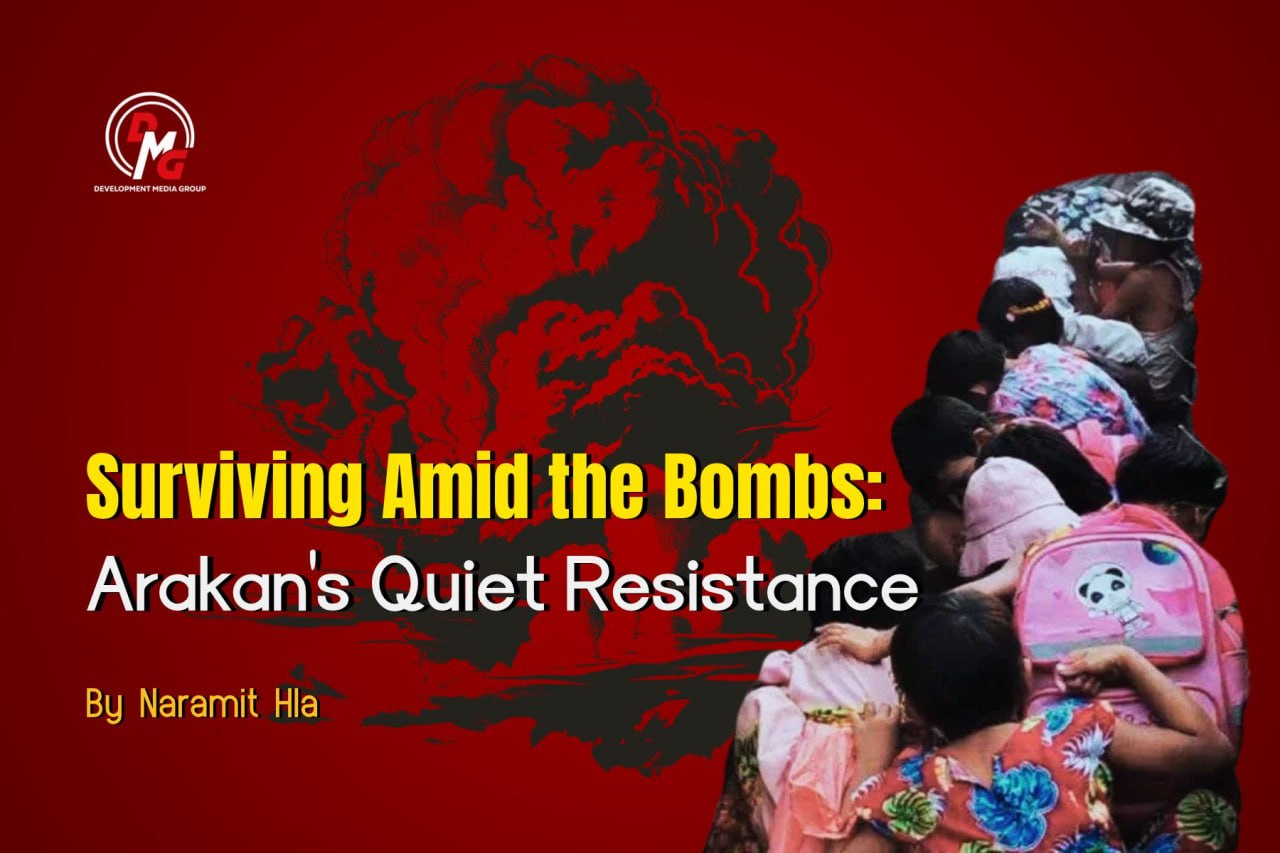
Surviving Amid the Bombs: Arakan's Quiet Resistance
By Admin 19 Oct 2026

Shadows Over Childhood: Confronting the Reality of Missing Children
By Admin 16 Oct 2026
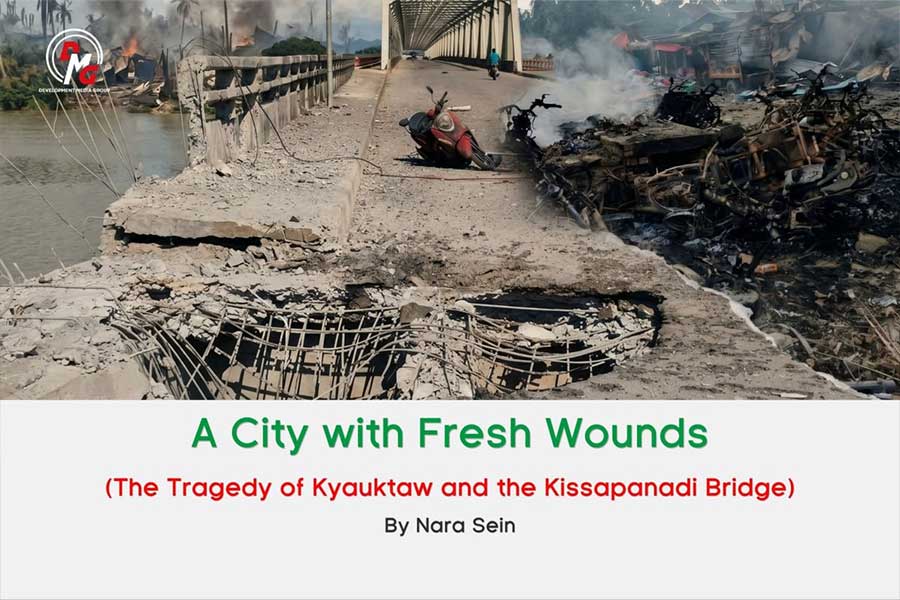
A City with Fresh Wounds (The Tragedy of Kyauktaw and the Kissapanadi Bridge)
By Admin 01 Oct 2026

Arakan Army’s Gains and the Changing Geopolitics of Arakan
By Admin 29 Sep 2026
POLITICS

BUSINESS
Industry to manufacture finished goods from coconut starting in early 2020
By Aung Kaung Zaw 20 Nov 2019