

- Junta shelling drives Mosel Island residents from homes in Rathedaung Twsp
- GSCN, SYCB urge revolutionary forces to end armed clashes, resolve disputes through dialogue
- POWs say junta orders troops to fight without retreat in Arakan counteroffensive
- Junta airstrike hits Anjanapura Twsp village, forcing residents to flee
- Junta airstrike kills woman, injures another in Werathani
DMG Editorial: Between War and Opportunity - A New Border Reality for Bangladesh and Arakan
A significant shift is occurring along the 271-kilometer frontier between Bangladesh and Arakan. Beyond the relentless airstrikes and humanitarian strain, a rare diplomatic gesture has emerged: a congratulatory letter from Major General Twan Mrat Naing of the United League of Arakan/Arakan Army (ULA/AA) to Bangladesh’s new Foreign Minister, Dr. Khalilur Rahman.
03 Mar 2026
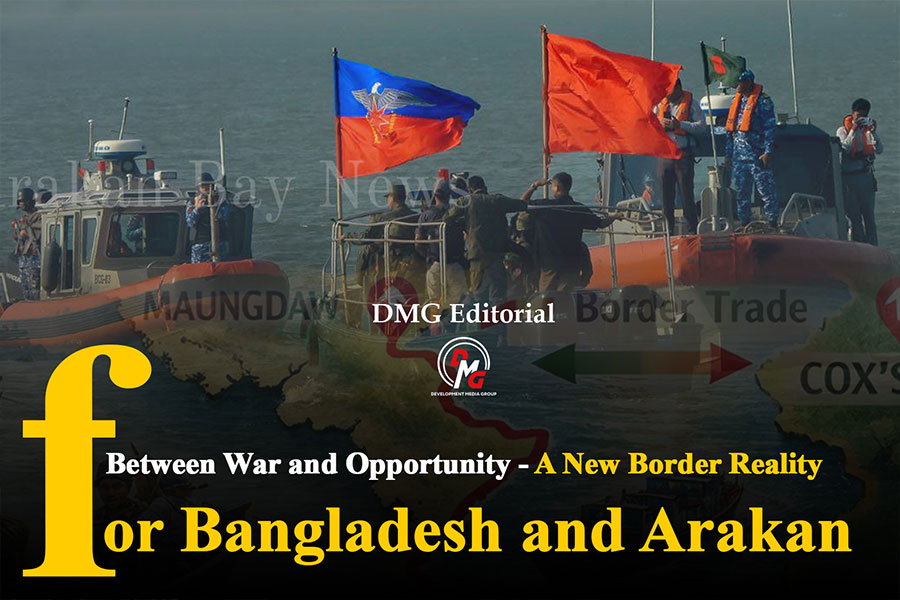
A significant shift is occurring along the 271-kilometer frontier between Bangladesh and Arakan. Beyond the relentless airstrikes and humanitarian strain, a rare diplomatic gesture has emerged: a congratulatory letter from Major General Twan Mrat Naing of the United League of Arakan/Arakan Army (ULA/AA) to Bangladesh’s new Foreign Minister, Dr. Khalilur Rahman. This message, the first of its kind signals that despite the ongoing war, a pragmatic engagement is taking root.
The Shift in Territorial Control
Since late 2023, the Arakan Army (AA) has fundamentally reshaped the border by seizing control of most frontier territories, including the strategic town of Maungdaw. In response, the Myanmar junta has intensified its reliance on airpower, targeting civilian infrastructure like the Mrauk-U General Hospital. In this volatile environment, border stability has moved from a diplomatic luxury to a necessity for civilian survival.
Dhaka’s Political Realism
For Bangladesh, engagement with the AA is a matter of strategic necessity rather than formal recognition. With over 1.3 million Muslim/Rohingya refugees in Cox’s Bazar, Dhaka cannot ignore the authority that exercises effective control on the ground. Recent actions suggest this "informal contact" is already yielding results:
• The Fishermen Handover: On February 16, the AA formally handed over 73 detained Bangladeshi fishermen to the Border Guard Bangladesh (BGB) in a peaceful, structured process.
• Conflict Management: Such gestures serve as a test for the Arakan administration’s governance capacity and help prevent border skirmishes from escalating into larger diplomatic crises.
A Fragile Path Forward
Despite these positive signals, the environment remains precarious. Border trade in Maungdaw has plummeted due to heightened security aimed at curbing militant groups. For the border to evolve from a "conflict zone" into a "communication zone," several critical factors must be addressed:
1. Transparent Coordination: Establishing clear mechanisms to manage maritime and fishing disputes.
2. Civilian Protection: Safeguarding communities from cross-border violence and aerial bombardment.
3. The Muslim/Rohingya Question: Repatriation remains the central challenge. Voluntary return is impossible without credible security guarantees and improved conditions inside Arakan.
Conclusion: From Letters to Action
Bangladesh finds itself in a complex position, balancing humanitarian obligations with the reality of a shifting neighbor. For the Arakan leadership, territorial control brings diplomatic responsibility. This narrow opening, marked by a letter and a handover, offers a rare chance to replace a history of mistrust with structured cooperation. Whether this space is strengthened or overtaken by further escalation depends on sustained communication and a genuine commitment to regional stability.

Opinion
.jpg)
How Can Myanmar’s Political Crisis Be Brought to an End?
By Admin 13 Sep 2026

By Cutting Trees, We Are Killing Ourselves
By Admin 06 Sep 2026
A Modern August We Must Never Forget
By Admin 31 Aug 2026
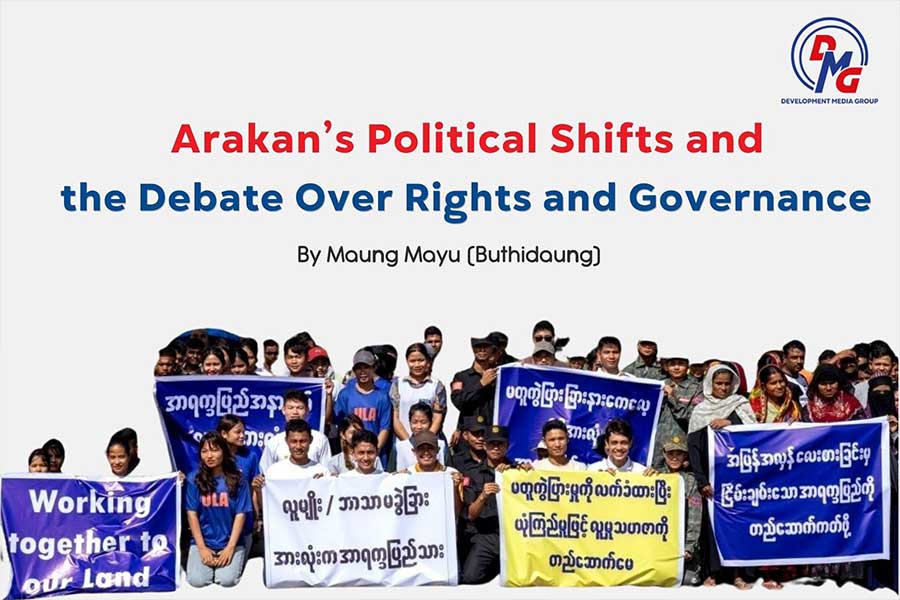
Arakan’s Political Shifts and the Debate Over Rights and Governance
By Admin 27 Aug 2026
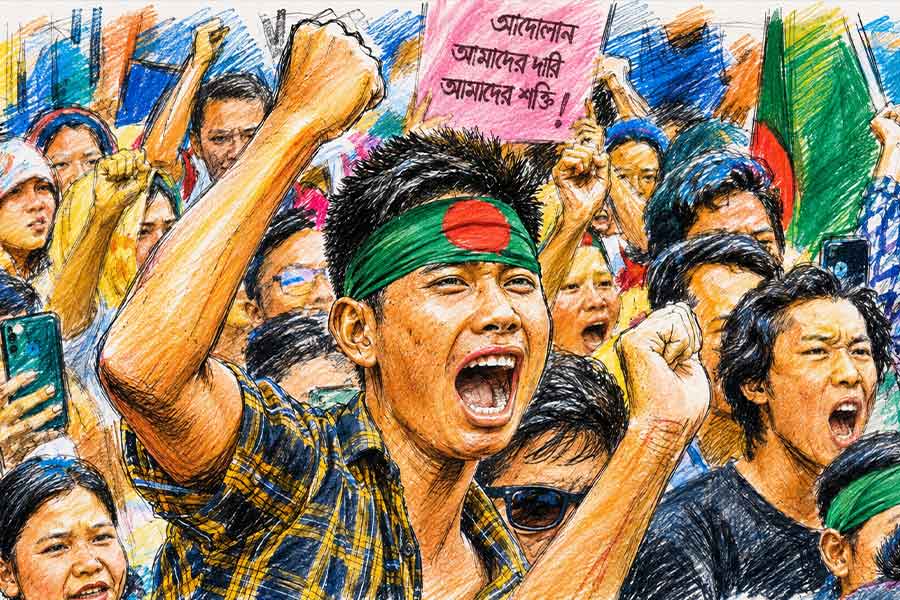
Securing Rights for Bangladesh's Indigenous Peoples is Indispensable
By Admin 09 Aug 2026
POLITICS


BUSINESS
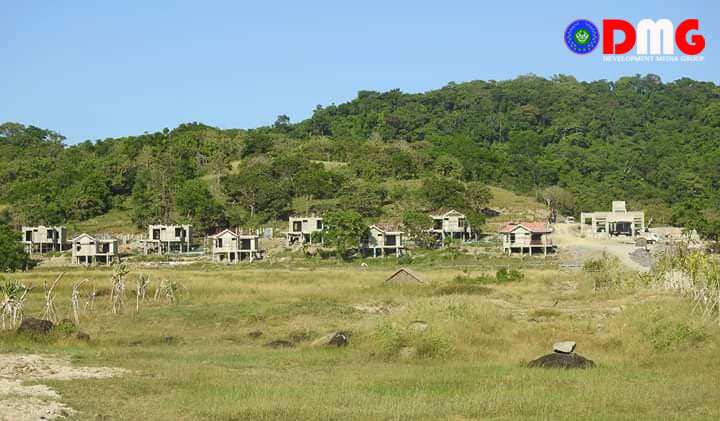
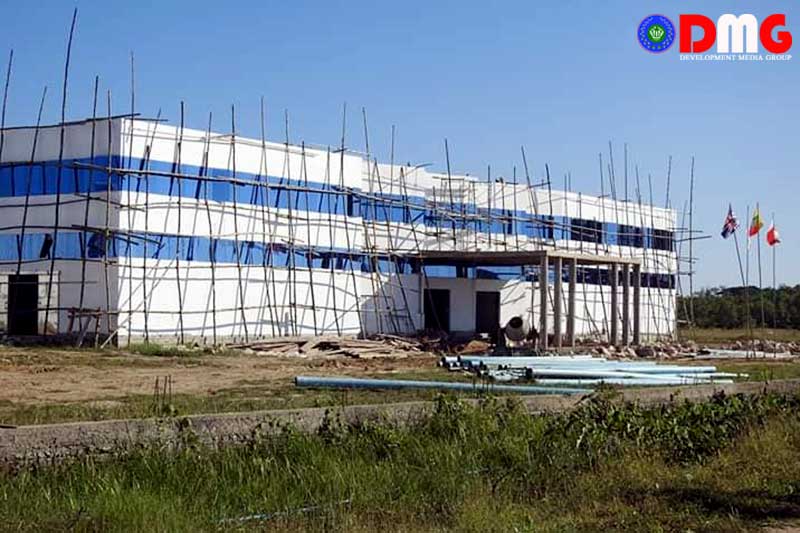
Industry to manufacture finished goods from coconut starting in early 2020
By Aung Kaung Zaw 20 Nov 2019