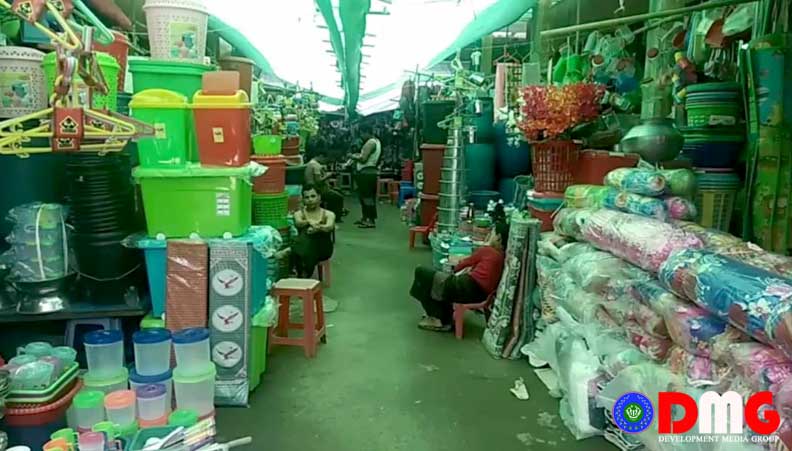


- Deadly junta airstrike leaves Kyauktaw daily-wage earners jobless
- India pushes to accelerate work on Kaladan road project in 2027 working season
- Junta launches fresh multi-aircraft bombardment of Kyauktaw mountain ranges
- Fierce combat erupts in Kyindwe, southern Chin State as resistance forces capture junta troops
- Malaysian firms linked to Myanmar military aviation supply chain: JFM
Editorial : Beyond Barbed Wire: Why Arakan's Crisis Requires Political Solutions
“Bangladesh's recent indication that it is facilitating dialogue between Myanmar's authorities and the AA reflects a growing recognition that long-term stability cannot be achieved by engaging only one side of Myanmar's fragmented political landscape.”
08 Jul 2026
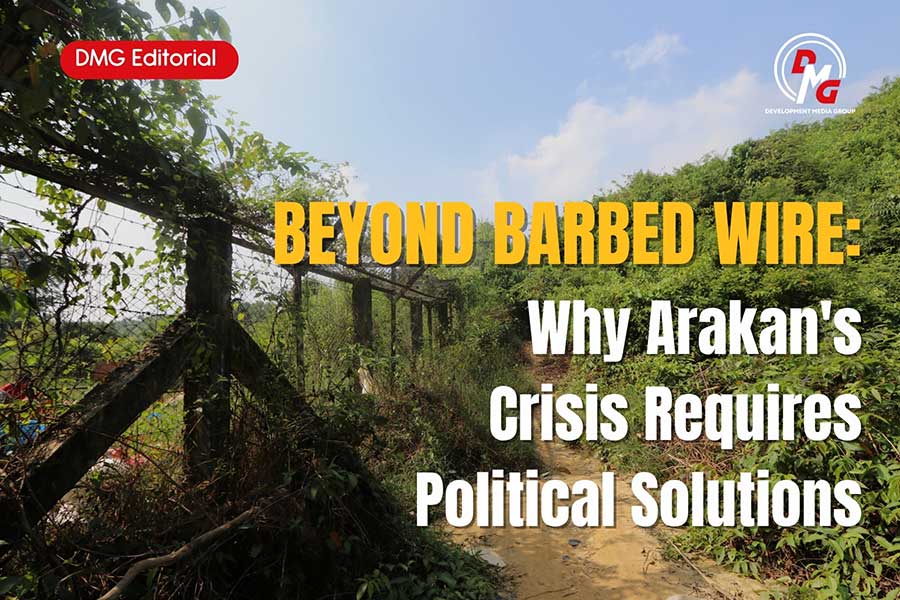
Bangladesh's decision to strengthen security along its frontier with Myanmar by expanding border fencing reflects growing concern over instability along one of South Asia's most fragile borders. Cross-border trafficking, landmine incidents, refugee movements, and continuing armed conflict have transformed the Bangladesh-Arakan frontier into a complex security zone.
Dhaka's concerns are understandable. Every sovereign state has the right and responsibility to protect its borders. Yet fences, however necessary, cannot resolve the deeper political realities that now shape the frontier. The Bangladesh-Arakan border is no longer simply a boundary between two states; it has become a meeting point of armed conflict, humanitarian crises, regional geopolitics, and competing systems of governance.
A Frontier Transformed
The current situation reflects profound political and military changes inside Myanmar. Following successive military offensives, the Arakan Army (AA) took control of most of northern Arakan, including the entire land border with Bangladesh after capturing Maungdaw in December 2024. As a result, Bangladesh now faces a frontier where Myanmar's military authorities no longer exercise effective control across much of the border.
For decades, border management relied on state-to-state cooperation with Naypyidaw. Today, however, issues such as border security, humanitarian access, cross-border trade, and the safety of fishing communities are increasingly shaped by authorities exercising de facto control on the ground. This shift has fundamentally altered the dynamics of the Bangladesh-Arakan frontier, whether regional governments formally acknowledge it or not.
Security Alone Cannot Solve the Crisis
Bangladesh faces genuine security challenges. Landmines continue to claim civilian lives. Cross-border narcotics trafficking remains a serious concern. Armed conflict has created uncertainty along the Naf River, while Bangladesh continues to host more than one million Muslim (Rohingya) refugees, placing enormous pressure on local communities and public resources.
Strengthening border surveillance, constructing new outposts, and expanding physical barriers are therefore understandable policy responses. However, these measures address the consequences of instability rather than its causes.
The root of the problem lies inside Myanmar, where continuing conflict, fragmented governance, and humanitarian suffering continue to generate cross-border insecurity that no fence alone can contain.
The Political Reality in Arakan
Across much of Arakan, the AA and the United League of Arakan (ULA) now administer local governance, policing, judicial affairs, taxation, and public services. Whether neighboring governments formally recognize these institutions or not, they increasingly shape realities on the ground.
This presents a diplomatic challenge. While engagement with Myanmar's central authorities remains necessary, practical solutions increasingly require communication with those exercising effective control in border areas.
Bangladesh's recent indication that it is facilitating dialogue between Myanmar's authorities and the AA reflects a growing recognition that long-term stability cannot be achieved by engaging only one side of Myanmar's fragmented political landscape.
Beyond Border Security
The Muslm (Rohingya) refugee crisis illustrates this reality. Repatriation has repeatedly failed not because agreements were lacking, but because the conditions for safe, voluntary, and dignified return have never existed. Security, citizenship, legal rights, livelihoods, and political guarantees all remain unresolved.
Likewise, Arakan has become increasingly significant to regional geopolitics. China continues advancing the China-Myanmar Economic Corridor and the Kyaukphyu Deep-Sea Port, while India seeks to complete the Kaladan Multi-Modal Transit Transport Project linking Sittwe to its northeastern states. At the same time, humanitarian organizations continue responding to conflict-related displacement across the region.
These overlapping interests demonstrate that Arakan is no longer merely a domestic conflict zone. It has become a strategic crossroads where regional security, economic connectivity, humanitarian concerns, and geopolitical competition intersect.
Beyond the Fence
Bangladesh's proposed border fence should therefore be viewed as a risk-management measure rather than a comprehensive solution. It may strengthen surveillance, improve border enforcement, and deter some forms of illegal movement. But it cannot eliminate the political conditions driving instability across the frontier.
A durable response requires sustained diplomacy, humanitarian cooperation, stronger action against transnational criminal networks, expanded livelihood opportunities for vulnerable communities, and meaningful political dialogue capable of addressing the root causes of conflict inside Myanmar.
As long as war continues, governance remains fragmented, and civilians continue to suffer, pressure along the Bangladesh-Arakan frontier will persist.
Barbed wire may strengthen a border. But only political dialogue, lasting peace, accountable governance, and regional cooperation can stabilize one of South Asia's most fragile and strategically significant borderlands.

Opinion
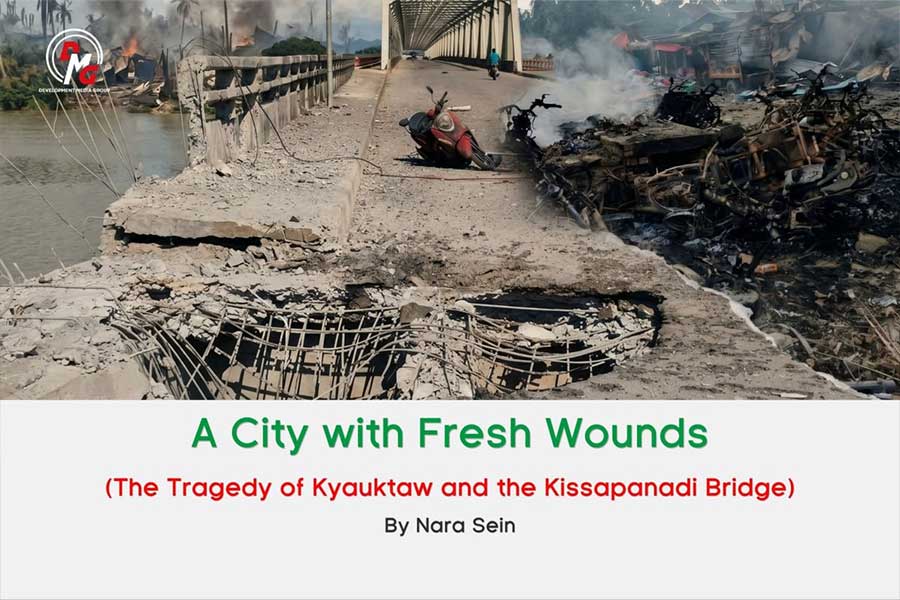
A City with Fresh Wounds (The Tragedy of Kyauktaw and the Kissapanadi Bridge)
By Admin 01 Oct 2026
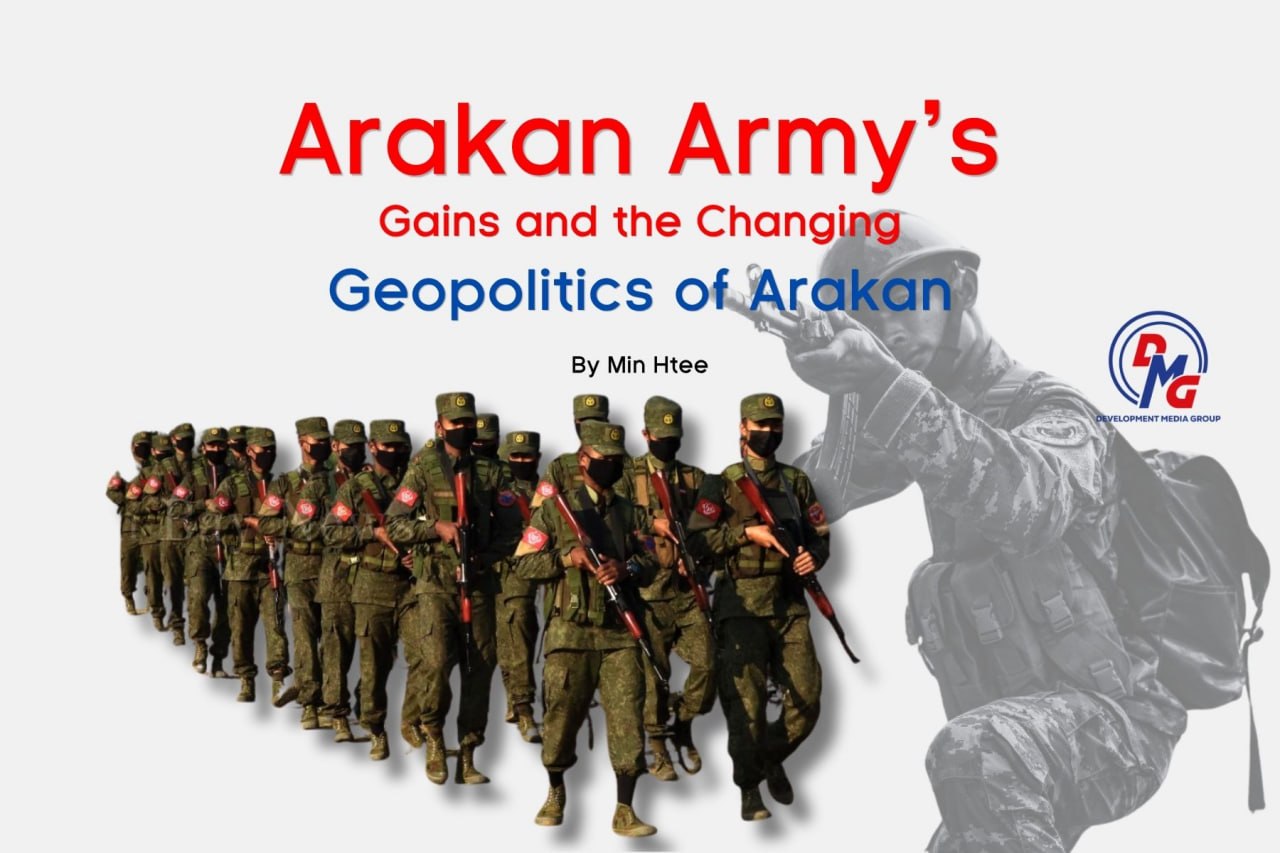
Arakan Army’s Gains and the Changing Geopolitics of Arakan
By Admin 29 Sep 2026
Beyond Military Victory: What Is Myanmar’s Ultimate Political Objective?
By Admin 26 Sep 2026
UN at a Crossroads: Six Priorities for a Shared Future
By Admin 23 Sep 2026
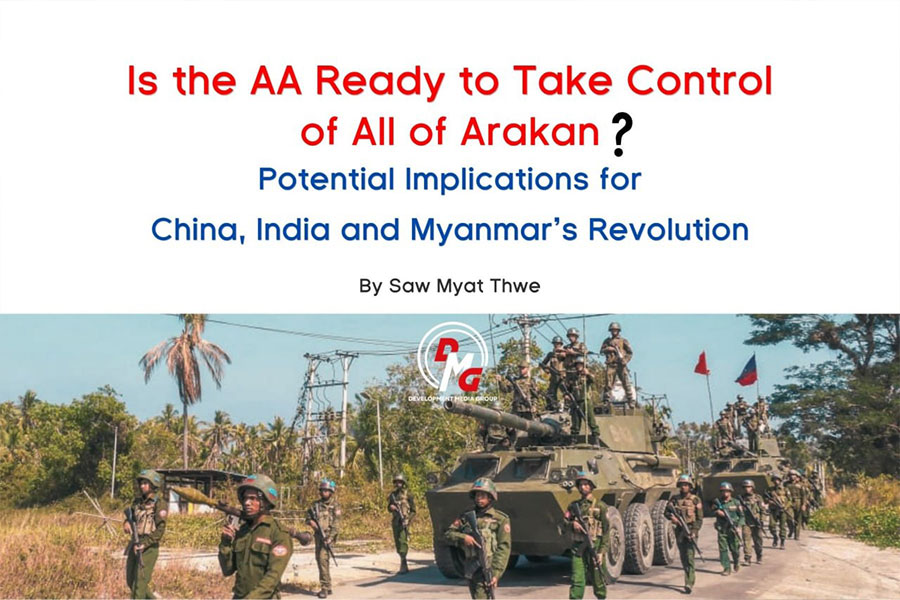
.jpg)
How Can Myanmar’s Political Crisis Be Brought to an End?
By Admin 13 Sep 2026
POLITICS


BUSINESS
Industry to manufacture finished goods from coconut starting in early 2020
By Aung Kaung Zaw 20 Nov 2019