
- Foreigners banned from renting homes in Lawngtlai
- Anjanapura child rape-murder case drags into second year without verdict
- War, conscription and unemployment threaten future of Arakan youth: study
- Vehicle shortages, weak information flow hamper relief operations in Arakan State
- Junta deploys naval vessels, steps up military operations in southern Arakan State
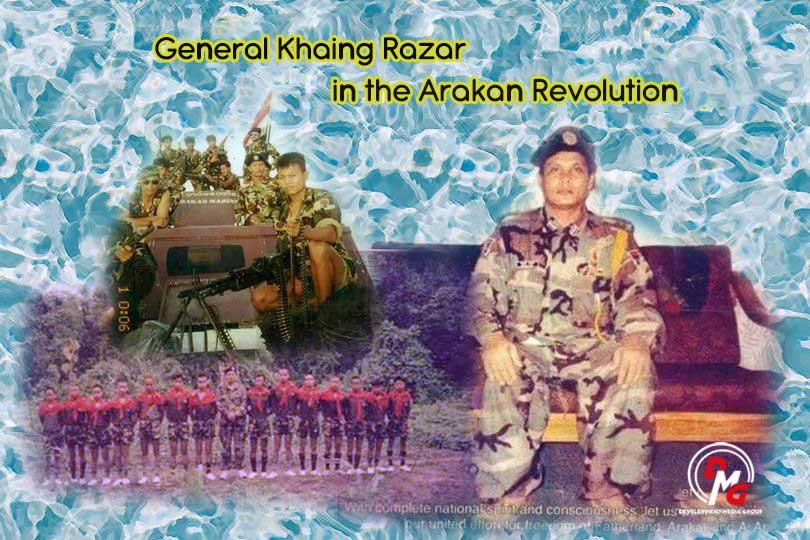
General Khaing Razar in the Arakan Revolution
General Khaing Razar was born in Kyaukchaung Village, Minbya Township, the third of seven children of U Tha Mya Aung and Daw Kyar Sein May. His childhood name was Hla Tun Aung.
11 Feb 2026
Written by Gaung
On a silver stretch of beach in the Bay of Bengal, a group of men were forced to kneel with their hands raised. Armed personnel tied their hands behind their backs and blindfolded them with strips of cloth. Moments later, about twenty gunshots rang out “Bang! Bang!”
Some of those present could not help but mutter bitterly to themselves: “We came here trusting you as friends. You betrayed us. You stabbed us in the back.”
From behind that tragic scene, six revolutionary leaders remembered in both the Rakhine and Karen struggles disappeared forever: General Khaing Razar, Major Saw Htun, Padoh Mu Lway, Bo Yan Naing, Bo Lin Khaing Zan, and Bo Myint Swe.
The incident took place on February 11, 1998, on Landfall Island in India’s Andaman Islands, where General Khaing Razar and five other Arakan and Karen leaders were violently executed. As of February 11, 2026, twenty-eight years had passed since that event.
What Happened?
On February 8, 1998, 27 Arakan soldiers from the Arakan Army (AA) and 13 members from the Karen National Union (KNU), including a foreign affairs officer, departed from the Thai border for India’s Andaman Islands a total of 40 people.
Indian officials had reportedly promised permission to establish an Arakan revolutionary naval base on the Andaman Islands. With that understanding, the group sailed toward Landfall Island carrying weapons and ammunition.
Upon arrival, they were welcomed by Major Saw Htun and other Indian officials already stationed there. On the evening of February 10, the revolutionary troops led by Khaing Raza were warmly received by Indian intelligence officer Lieutenant Colonel Biswajit Singh Grewal and others. That evening, they celebrated around a bonfire, marking what they believed to be a successful beginning.
At the request of Lt. Col. Grewal, the revolutionaries placed their weapons on display along the beach. The weapons were intended to be transferred in the coming days to Arakan revolutionary forces operating inside Arakan.
The next morning, February 11, at around 8 a.m., an Indian naval vessel approached the island. Groups of naval personnel were transferred ashore. Grewal told them that senior Indian officials would arrive by helicopter to share lunch and hold discussions.
When the sound of a helicopter was heard, General Khaing Razar, Major Saw Htun, Padoh Mu Lway, Bo Yan Naing, and Bo Lin Khaing Zan went with Grewal and Indian armed personnel to welcome the arriving officials.
Instead, after the helicopter landed, the six leaders were taken separately to a beach. Indian authorities accused them of being arms smugglers and summarily executed them.
In reality, General Khaing Raza and his comrades were engaged in armed struggle against Myanmar’s military regime, fighting for equality and self-determination for the Arakanese people. Trusting Indian authorities, they had approached them in good faith, a trust that ultimately led to their deaths.
A Brief Biography of General Khaing Razar
General Khaing Razar was born in Kyaukchaung Village, Minbya Township, the third of seven children of U Tha Mya Aung and Daw Kyar Sein May. His childhood name was Hla Tun Aung.
At the age of 13, he became a novice monk and studied Buddhist scriptures at monasteries in Sittwe. By the age of 16, while studying in Sittwe, he developed a strong interest in political affairs and became involved with revolutionary circles.
He worked in connection with the Arakan Liberation Party (ALP), conducting underground revolutionary activities in Sittwe and Yangon. When authorities became aware of his activities, he fled to Tanintharyi Region, including Myeik and Kawthaung.
His father had also been an Arakan guerrilla fighter, and Khaing Razar grew up with a strong nationalist and revolutionary spirit. Eventually, disagreements within ALP/ALA (Arakan Liberation Army) leadership led him to separate and build alliances in Karen Brigade 4 territory, where he gathered arms, personnel, and financial resources.
After strengthening his forces, he crossed the Bay of Bengal by motorboat and founded the Arakan Army (AA) along the Arakan–Bangladesh border in 1991. Through maritime routes, he transported significant arms supplies to Arakan revolutionary fighters, laying foundations for a modern revolutionary movement.
Beginning in 1993, AA appointed a commander to manage relations with India. He also worked to unite fragmented Arakan revolutionary organizations, forming the National Unity Party of Arakan (NUPA) alongside the Arakan Army.
In 1997, the All Arakan Students’ and Youths’ Congress (AASYC) merged with NUPA, and several armed organizations joined, except ALP. Relations with Indian regional authorities reportedly improved, leading to the relocation of NUPA headquarters from the Arakan–Bangladesh border to the Arakan–India border.
The AA representative handling India relations reportedly reached understandings with Indian authorities, including cooperation in monitoring Chinese maritime activities in the Bay of Bengal. These agreements fostered trust in Indian authorities, a trust that ended tragically.
Aftermath of the Assassination
Following General Khaing Raza’s execution, the remaining 36 members were arrested along with their weapons and detained in Port Blair Prison in the Andaman Islands for eight years without formal trial. During that time, two Arakan and Karen detainees reportedly escaped and disappeared.
With assistance from human rights activists and Arakan revolutionary networks, 34 detainees were later transferred to Kolkata Prison, where legal proceedings were eventually held. They were detained for more than twelve years before a final verdict was issued in July 2010.
Although a state-level court ruling ordered their release, India’s central government continued their detention. Through international advocacy, the United Nations High Commissioner for Refugees (UNHCR) recognized them as refugees, and they sought asylum in third countries.
Thirty-one revolutionaries were released on May 19, 2011. The remaining three received political asylum in the Netherlands in mid-2012.
Many in the public believe that Lt. Col. Grewal of Indian intelligence, who played a central role in the operation, acted in coordination with Myanmar’s military authorities in carrying out the killings.
NUPA/AA and ULA/AA
National United Party of Arakan (NUPA)/AA evolved from earlier Arakan organizations formed in 1988, including National United Front of Arakan (NUFA), Arakan Independence Organisation (AIO), Arakan Communist Party (ACP), Arakan National Liberation Party (ANLP), Tribunal National Party (TNP), and National Democratic Front of Arakan (NDFA).
After General Khaing Razar’s death, internal weaknesses, health issues among leaders, and political stagnation contributed to the organization’s decline. On December 12, 2020, NUPA/AA formally dissolved and merged with the United League of Arakan/Arakan Army (ULA/AA).
The current commander-in-chief of the Arakan Army, Major General Twan Mrat Naing, had also sought contact with General Khaing Raza in 1998. After Raza’s death, Twan Mrat Naing later established the AA in Laiza, under Kachin Independence Army (KIA) controlled territory.
Earlier chapters of modern Arakan resistance had also suffered similar losses. In 1976, AIO/AIA (Arakan Independence Army) leader Sayar San Kyaw Htun was killed during clashes with Myanmar forces while moving troops toward Arakan from Kachin State. In 1977, ALP/ALA leader Khaing Moe Lun was killed in heavy fighting during troop movement from Karen State toward Arakan.
Each year on February 11, Arakanese communities both inside Myanmar and abroad hold memorial ceremonies offering alms, sharing merit, and paying tribute to General Khaing Razar and the fallen revolutionaries.
Regardless of time passed, in the history of the Arakan revolutionary movement, General Khaing Razar remains remembered with respect and sorrow among the Arakanese people.
May General Khaing Razar rest in peace.

Opinion
A Modern August We Must Never Forget
By Admin 31 Aug 2026
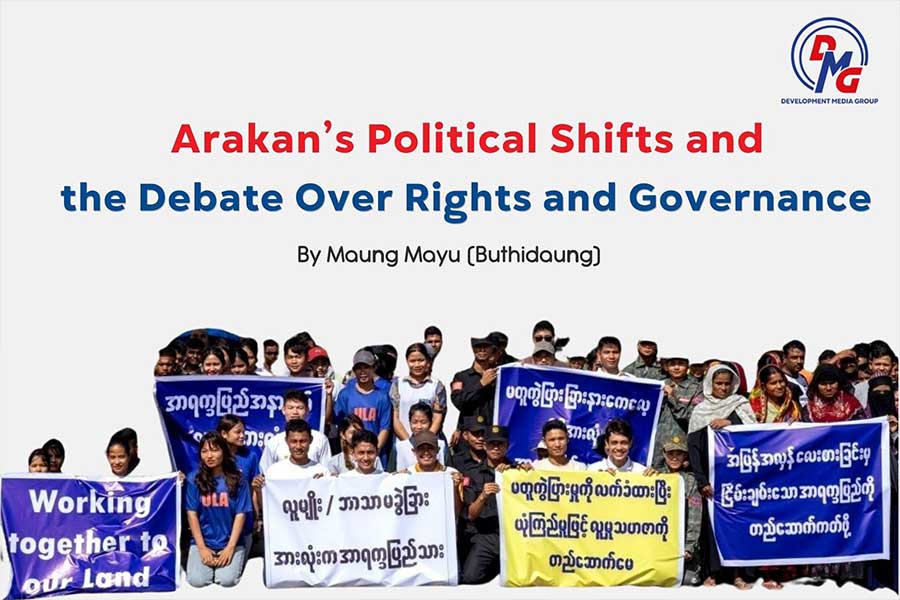
Arakan’s Political Shifts and the Debate Over Rights and Governance
By Admin 27 Aug 2026
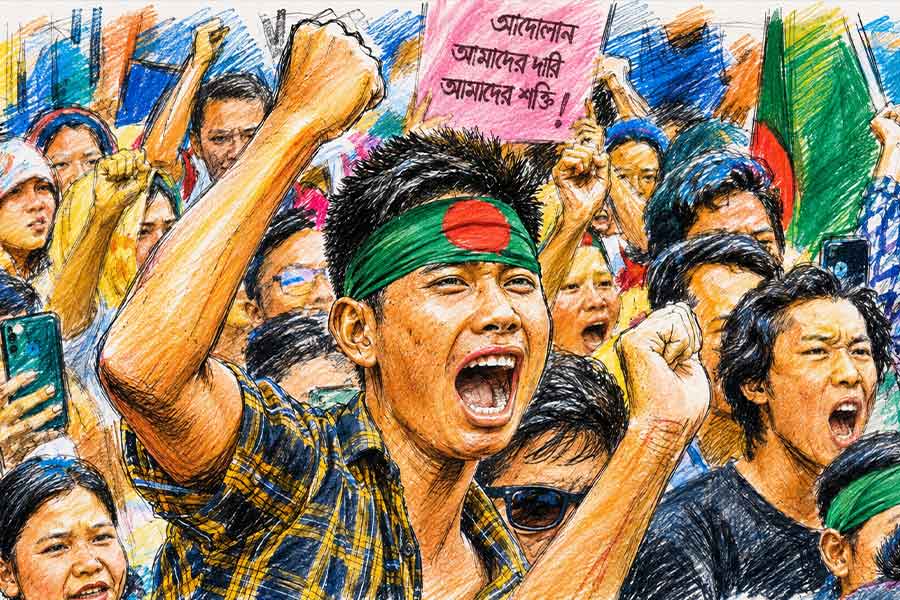
Securing Rights for Bangladesh's Indigenous Peoples is Indispensable
By Admin 09 Aug 2026

Reflections on the Arakanese (Rakhine) Language Curriculum
By Admin 14 Jul 2026
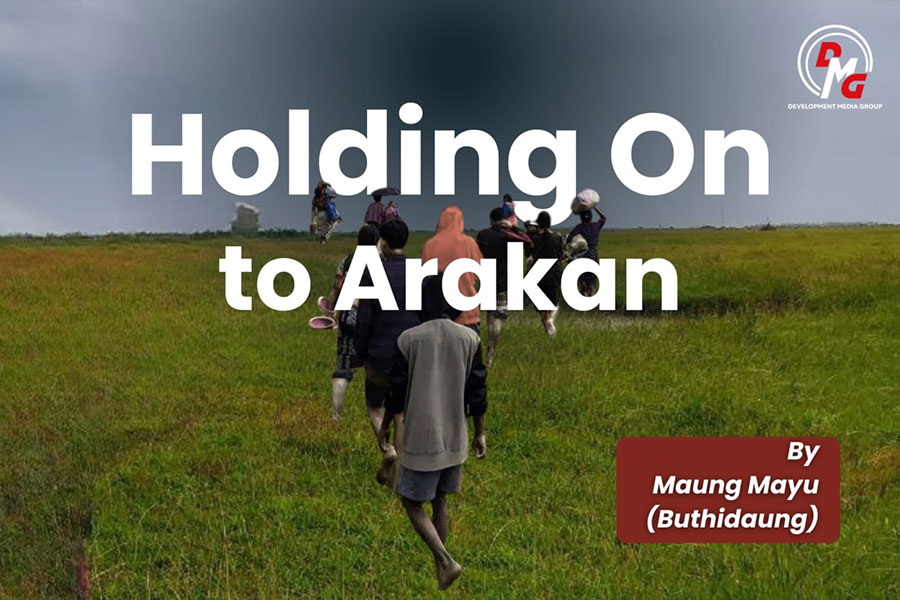
Holding On to Arakan
By Admin 26 Jun 2026
POLITICS

BUSINESS
Industry to manufacture finished goods from coconut starting in early 2020
By Aung Kaung Zaw 20 Nov 2019