
- El Niño threatens Arakan State with extreme heat, drought and water shortages
- Min Aung Hlaing seeks renewed ties with US, West in TIME interview
- Over 2,000 arrested in Myanmar for online activity since 2022: D4M
- Ponnagyun residents displaced by fighting urgently need humanitarian aid
- POW says junta soldiers offered cash, promotions and drugs before combat in Arakan
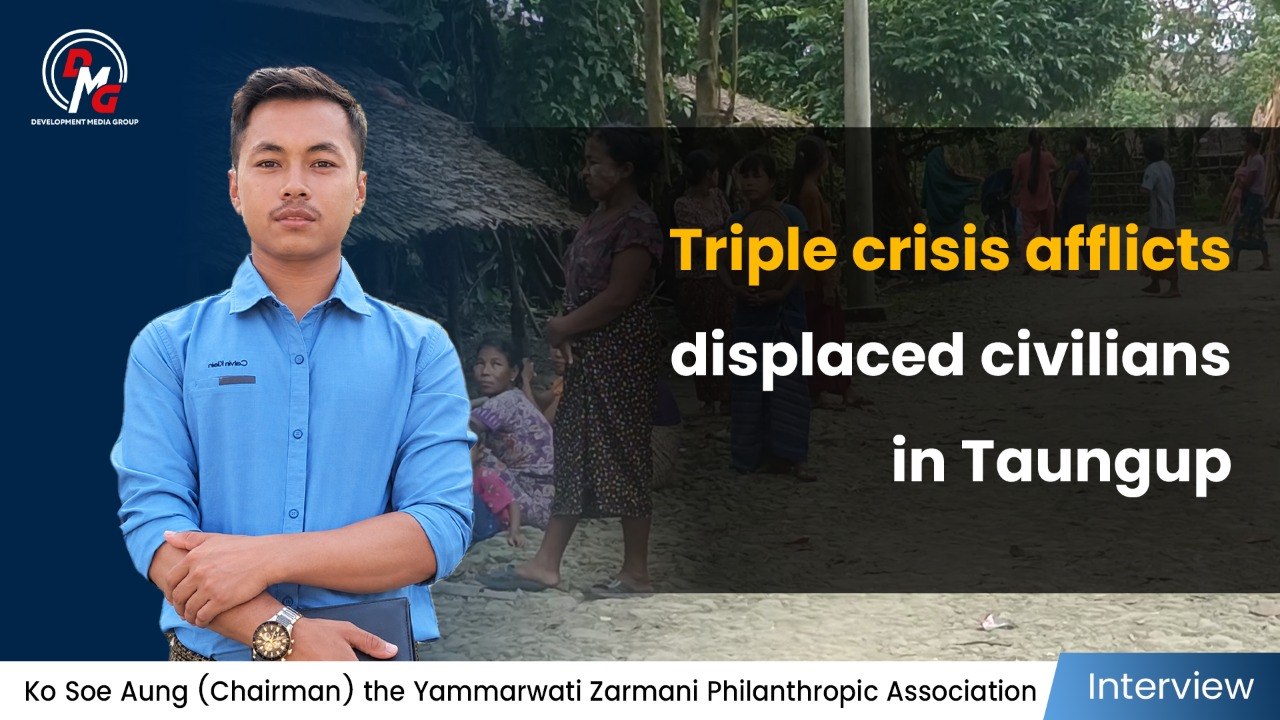
DMG Interview: Triple crisis afflicts displaced civilians in Taungup
DMG interviewed Ko Soe Aung, Chairman of the Yammarwati Zarmani Philanthropic Association, about the worsening living and health conditions, relief operations, and challenges facing local humanitarian groups in Taungup District.
24 Sep 2026
Military tensions and ongoing conflict have driven up the number of internally displaced persons (IDPs) across Taungup District in Arakan State. Beyond severe struggles to secure basic food and shelter, displaced families now face acute health problems driven by widespread seasonal flu outbreaks.
Relying solely on limited assistance from local philanthropic groups, these IDP communities struggle to meet their basic needs as flu transmission rates surge across at least 11 displacement camps. Depleted medicine supplies, severe financial hardship, and inadequate access to healthcare have left thousands facing extreme hardship.
DMG interviewed Ko Soe Aung, Chairman of the Yammarwati Zarmani Philanthropic Association, about the worsening living and health conditions, relief operations, and challenges facing local humanitarian groups in Taungup District.
DMG: What is the current situation regarding living conditions and shelter for displaced people in Taungup District?
Ko Soe Aung: Living conditions for displaced people in Taungup District have reached a critical state. Rice prices have skyrocketed from over K3,000 per pyi to more than K5,000 per pyi, making survival extremely difficult for IDP families.
While local philanthropic associations struggle with limited funds, local administrative authorities attempt to provide whatever assistance they can within Taungup District. However, because the displaced population is so large, we see IDPs facing severe food insecurity. Regarding shelter, many lack adequate protection from the elements, and some camps remain entirely without proper structures.
DMG: We understand seasonal flu outbreaks are spreading across Taungup District. What is the current medical situation?
Ko Soe Aung: A contagious seasonal flu is spreading across Taungup District. Because it spreads rapidly, a large number of people have fallen ill. Outbreaks are currently occurring across roughly 11 IDP camps, affecting hundreds of displaced residents. In households of four, all four members are sometimes bedridden, leaving no one well enough to cook meals. Many displaced residents lack the funds for medical treatment, live far from health facilities, or simply cannot afford to purchase medicine.
DMG: What is the state of healthcare support in these areas?
Ko Soe Aung: Mobile healthcare teams visit villages about once a week. However, in areas far from hospitals and clinics, poverty and a lack of communication mean many residents remain unaware of free medical services provided by health departments. During our field visits, we saw sick individuals lying in bed without care. Because some families cannot afford basic medicine, neighbors have to lend pills to one another for treatment.
DMG: Could you detail the level of relief assistance IDPs in Taungup District are currently receiving?
Ko Soe Aung: As displaced populations grow in Taungup District, job opportunities remain scarce and rice prices continue to soar, creating a severe survival crisis. Displaced families face daily hardship and cannot even secure enough food for a single day.
Local civil society organizations lack sufficient capacity and resources to meet the overwhelming demand. Our association also cannot provide adequate supplies. Displaced families are facing immense hardships. We are cooperating with local departments to address these challenges as best we can.
DMG: How many displaced people are currently in Taungup District, and where do they originate from?
Ko Soe Aung: There are displaced people from Thandwe, Gwa, Sittwe, and Myebon townships, though they number in the hundreds. The vast majority fled from Kyaukphyu Township. Overall, the IDP population in Taungup District approaches nearly 10,000.
DMG: What main challenges do local philanthropic organizations face?
Ko Soe Aung: Local philanthropic groups face severe constraints when donations from domestic and overseas networks decline. Substantial funding is essential to sustain relief operations. Operating costs have become unsustainable as rice prices have soared from over K70,000 per coarse rice bag to more than K130,000. Purchasing 70 or 80 bags of rice for displacement camps has become nearly impossible because of supply shortages and high costs. Sometimes, even when funds are available, rice cannot be found in the market. A camp that previously required K5 million now requires more than K10 million to maintain basic operations.
DMG: Are international non-governmental organizations (INGOs), NGOs, or broader civil society groups providing aid in Taungup District?
Ko Soe Aung: Since we began assisting IDPs in Taungup District, we have not seen international NGOs or other external organizations providing aid here. As far as I know, no NGO relief has reached this district.
In other townships where NGO aid reaches, displaced individuals receive monthly stipends ranging from K80,000 to K100,000 per person, which provides a crucial safety net even if it does not cover every expense. In Taungup District, where such support structures are absent, displaced families face total deprivation from the day they arrive.
DMG: What appeal would you make to NGOs and CSOs on behalf of displaced people?
Ko Soe Aung: As a local resident, I see how a strong CSO presence and NGO access in other regions allow IDPs to receive regular monthly cash support. We want such organizations to enter our district as well. We urge NGOs to recognize the severity of the crisis in Taungup District and come forward to assist displaced communities here.
DMG: How are rising commodity prices impacting displaced families in Taungup District?
Ko Soe Aung: Commodity prices remain inflated because goods transported from northern Arakan to southern Arakan incur high transportation costs. An egg that costs K500 to K700 in northern Arakan costs K1,000 here, and up to K1,200 in rural areas. These price increases impose severe hardship on displaced families.
DMG: Do you have any additional comments to add?
Ko Soe Aung: Severe flu outbreaks continue to afflict large numbers of displaced people and local residents alike. Many rural areas remain isolated from medical centers. Although our association wishes to help, our limited operating funds prevent us from providing adequate medical assistance. We appeal to international diaspora organizations and donor groups to support displaced families in Taungup District.
Furthermore, displaced people from Kyaukphyu have suffered longer and more acutely than IDPs from other areas. While others were displaced for months or up to a year before returning home to work, Kyaukphyu IDPs have been displaced for nearly three years. Having exhausted their personal savings over this prolonged period, displaced families from Kyaukphyu now face imminent starvation, a reality the Arakanese people must recognize.
Lastly, regarding rice prices, if costs continue to rise, broader civilian populations alongside IDPs will face severe hunger. I urge market actors to stabilize rice prices immediately. I also appeal to merchants holding rice stocks to release supplies onto the market so the public can afford basic food.
DMG: Thank you for taking the time to speak with us.

Opinion

UN at a Crossroads: Six Priorities for a Shared Future
By Admin 23 Sep 2026
.jpg)
How Can Myanmar’s Political Crisis Be Brought to an End?
By Admin 13 Sep 2026

By Cutting Trees, We Are Killing Ourselves
By Admin 06 Sep 2026
A Modern August We Must Never Forget
By Admin 31 Aug 2026
Arakan’s Political Shifts and the Debate Over Rights and Governance
By Admin 27 Aug 2026
POLITICS

BUSINESS
Industry to manufacture finished goods from coconut starting in early 2020
By Aung Kaung Zaw 20 Nov 2019