

- Junta shelling drives Mosel Island residents from homes in Rathedaung Twsp
- GSCN, SYCB urge revolutionary forces to end armed clashes, resolve disputes through dialogue
- POWs say junta orders troops to fight without retreat in Arakan counteroffensive
- Junta airstrike hits Anjanapura Twsp village, forcing residents to flee
- Junta airstrike kills woman, injures another in Werathani
Arakanese IDPs face worsening food insecurity and water shortages
Internally displaced persons (IDPs) across Arakan State are facing a worsening humanitarian crisis this summer, with severe food insecurity compounded by acute shortages of drinking water.
25 Mar 2026
DMG Newsroom
25 March 2026, Ponnagyun
Internally displaced persons (IDPs) across Arakan State are facing a worsening humanitarian crisis this summer, with severe food insecurity compounded by acute shortages of drinking water.
In Ponnagyun Township, where more than 20,000 IDPs are sheltering, displaced families are struggling to meet basic needs, including access to food, water and shelter.
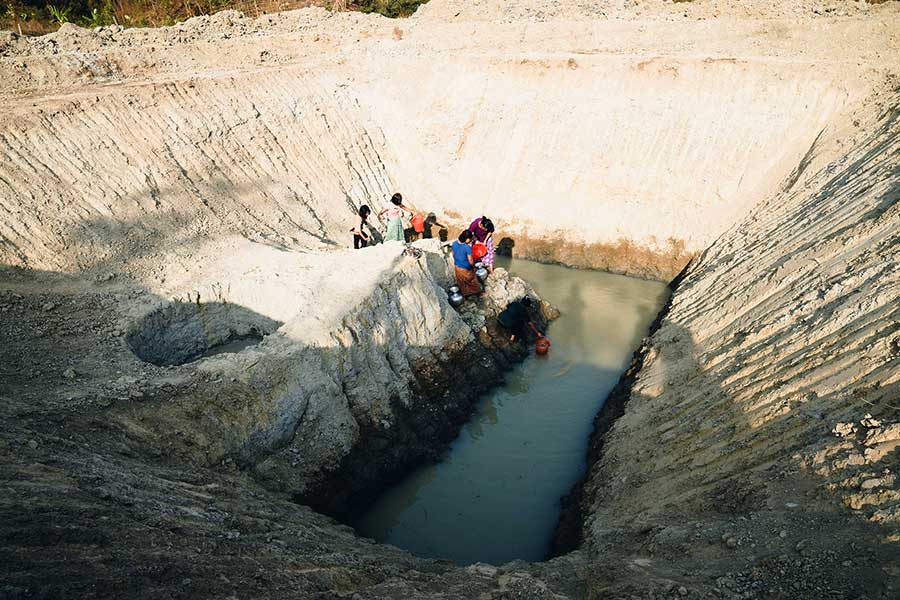
The IDPs, including those displaced from Ponnagyun, Sittwe and Rathedaung Townships, are reportedly digging shallow pits to obtain drinking water, while using stagnant ditch water for other daily needs.
“IDPs are facing serious livelihood difficulties, and the water situation is also dire. They are now relying on water from hand-dug pits. Even then, they have to wait about half an hour just to collect one pot. Some are using stagnant water left in roadside ditches,” said Ko Kyaw Win Tun, an aid worker in Ponnagyun.
Most IDPs rely on daily wage labor such as collecting firewood or foraging for vegetables, earning around K7,000 per day without stable income. As they struggle to survive, water scarcity has further intensified their hardship, prompting urgent calls for assistance.
“Water is extremely scarce, especially in IDP camps. Even in villages, water has to be rationed. Since they cannot afford to buy water, some IDPs are forced to use ditch water,” said a local man in Ponnagyun.
IDPs in Rathedaung Township are also facing water shortages. In camps located on Mosel Island and along the Mayu River, residents report growing concerns over health risks, including skin diseases.
“The water shortage is causing great hardship, along with health concerns. For drinking water, we have to travel long distances to mountain areas. It is very difficult without transportation. In some places, there are also restrictions on collecting water,” said a local man in Rathedaung.
In Kyaukphyu and Ramree townships, where fighting is ongoing, more than 60,000 IDPs are also facing water shortages.
“We are currently facing serious water difficulties. We only have enough for a day or two and do not know where to get more. Even if we go to other villages, we are unsure if we will be allowed to collect water,” said Daw Thazin Oo, an IDP woman from Hsinbote Village in Kyaukphyu.
Water shortages have already led to outbreaks of skin diseases among IDPs in the past year, with some cases of diarrhea now being reported.
With limited support from international organizations, local groups are attempting to address the crisis, though significant challenges remain.
An estimated 500,000 IDPs in Arakan State are facing food insecurity, and with the onset of the hot season, the lack of drinking water is further exacerbating their situation.

Top News
Junta shelling drives Mosel Island residents from homes in Rathedaung Twsp
By Admin 22 Sep 2026
POWs say junta orders troops to fight without retreat in Arakan counteroffensive
By Admin 21 Sep 2026

Junta airstrike hits Anjanapura Twsp village, forcing residents to flee
By Admin 21 Sep 2026
Junta airstrike kills woman, injures another in Werathani
By Admin 21 Sep 2026

.jpg)