


- Nay Pyi Taw talks between junta, MNDAA halt over special region demand
- Arakanese civilians face widespread violence, humanitarian aid blockades, UN mechanism warns
- India-Arakan trade route reopens after eight-day closure
- Clashes intensify along Sittwe-Ponnagyun border as Arakan Army captures military outposts
- Heavy fighting erupts in Laymyethna as junta launches offensive against Arakan Army-held territory
India-Arakan trade route reopens after eight-day closure
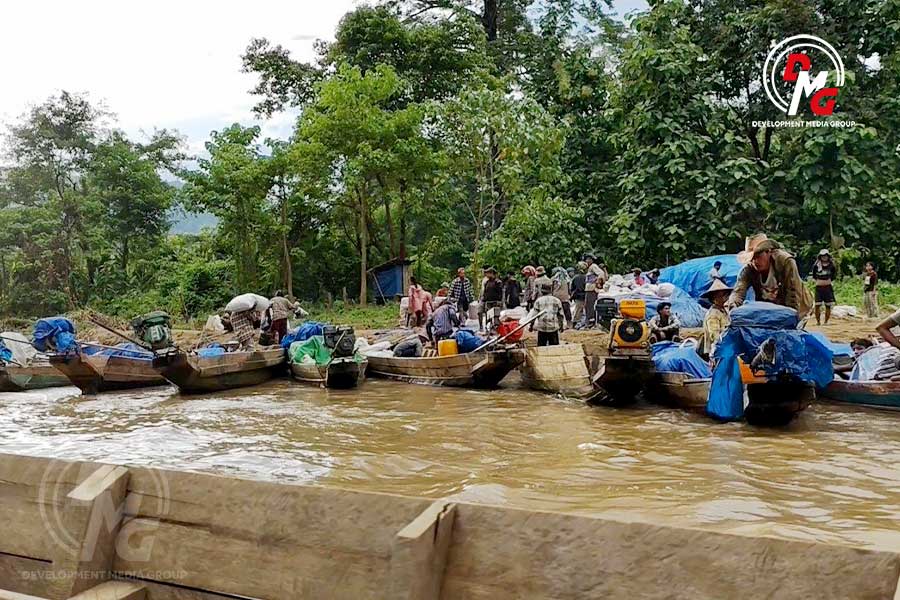
The India-Arakan trade route, which was temporarily closed following a dispute at Khaikhy Gate, reopened on September 24, according to a statement released by the Mara Thyutlia Py (MTP).
25 Sep 2026
DMG Newsroom
25 September 2026, Mrauk-U
The India-Arakan trade route, which was temporarily closed following a dispute at Khaikhy Gate, reopened on September 24, according to a statement released by the Mara Thyutlia Py (MTP).
Transit along the trade corridor was suspended on September 16 following a verbal dispute between local youths and Arakanese merchants at Khaikhy Gate on September 14.
The trade route reopened on the evening of September 24 after representatives of the Mara Thyutlia Py and Arakan Army held discussions.
“Traffic along the route has returned to normal. Vehicles and goods can move freely now, and cargo can be unloaded. However, some boat operators are still monitoring the situation since the route has just reopened,” a merchant from Mrauk-U currently at the Indian border told DMG.
Regarding the Khaikhy incident, the MTP statement said both sides had resolved their misunderstandings and differences through peaceful dialogue. The discussions also addressed future cooperation between the Arakanese and Mara peoples, peaceful coexistence, and the flow of regional trade.
The India-Arakan trade corridor serves as a vital lifeline for Arakan State, which remains under a severe military regime blockade. However, frequent disruptions along the route continue to affect local communities.
“Even during the few days the road was closed, the flow of goods slowed down significantly. With the military regime blocking all roads in Arakan State, everyone relies heavily on this trade route to survive, including merchants and daily wage laborers. Resolving the issue quickly and reopening the route benefits everyone,” a local Arakanese man said.
The corridor is crucial not only for maintaining regional food and commodity supplies but also for hundreds of local workers, including cargo boat operators and stevedores, whose livelihoods depend entirely on cross-border trade.
During the closure, boat operators and stevedores faced severe livelihood hardships.
“When boat traffic stopped, stevedores suffered immense hardship. On regular days, they earn K20,000 to K30,000 per day. Daily laborers faced the worst conditions, with earnings dropping to just K2,000 to K5,000 per day. Unable to get by, many returned to their home villages,” a local man from Shinletwa Village said.
Earlier this year, on February 12, the trade route was temporarily closed for a week after an Indian driver delivering goods was killed in Shinletwa Village, triggering fluctuations in local commodity prices.
Merchants emphasized that because the trade corridor remains the sole lifeline for the Arakanese public, all parties must make every effort to prevent future disruptions.

Top News
Nay Pyi Taw talks between junta, MNDAA halt over special region demand
By Admin 25 Sep 2026
India-Arakan trade route reopens after eight-day closure
By Admin 25 Sep 2026



.jpg)