
- Military operations spread despite decline in clashes, BNI report finds
- Junta aerial attacks force school closures across three Arakan townships
- Family demands swift arrest of statutory rape suspect in Werathani
- Women face shrinking employment opportunities in Myanmar, UNDP reports
- AA seizes five junta outposts as Arakan records most civilian-targeted airstrikes: NLTA
Arakan's Humanitarian Emergency at the Intersection of War, Floods and Political Change
Recent developments illustrate how rapidly the humanitarian situation is deteriorating. Severe monsoon flooding has inundated large areas of the state, disease outbreaks are spreading in several communities, and the Myanmar military continues to carry out airstrikes against civilian-populated areas despite the worsening humanitarian conditions.
11 Jul 2026
DMG Political Analysis
Arakan is confronting its most complex humanitarian emergency since the current conflict began. What was once primarily a war-driven crisis has evolved into a multidimensional emergency in which armed conflict, mass displacement, economic isolation, public health emergencies and climate-related disasters now reinforce one another.
For nearly two years, attention has largely focused on military developments as the Arakan Army (AA) expanded its territorial control across most of Arakan. Yet behind these changing frontlines, another crisis has steadily deepened. Thousands of civilians remain displaced, healthcare and education systems have been severely disrupted, livelihoods have collapsed, and restrictions on trade and transportation have driven up the cost of food, medicine and other essential goods.
Recent developments illustrate how rapidly the humanitarian situation is deteriorating. Severe monsoon flooding has inundated large areas of the state, disease outbreaks are spreading in several communities, and the Myanmar military continues to carry out airstrikes against civilian-populated areas despite the worsening humanitarian conditions.
These crises should not be viewed separately. They are increasingly becoming one.
War Meets the Monsoon
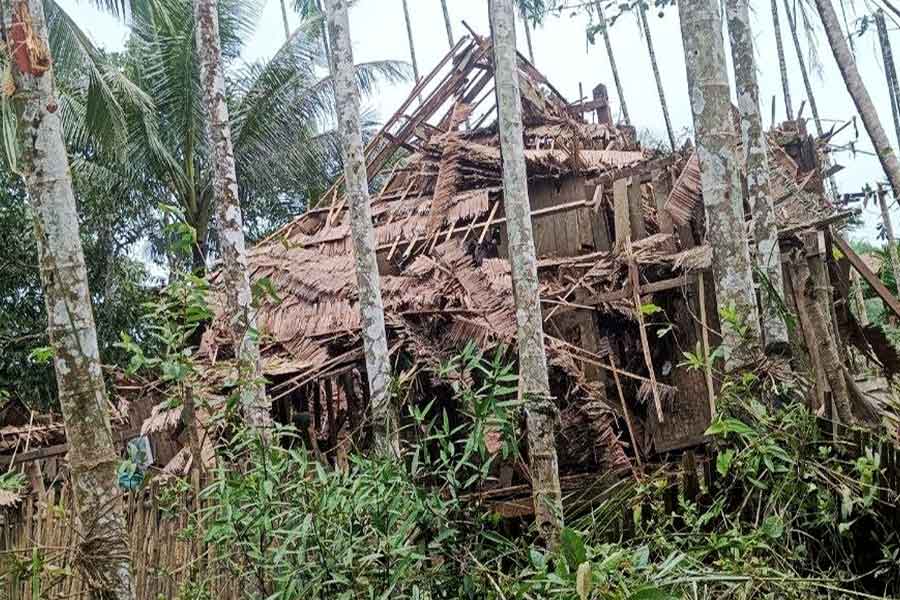
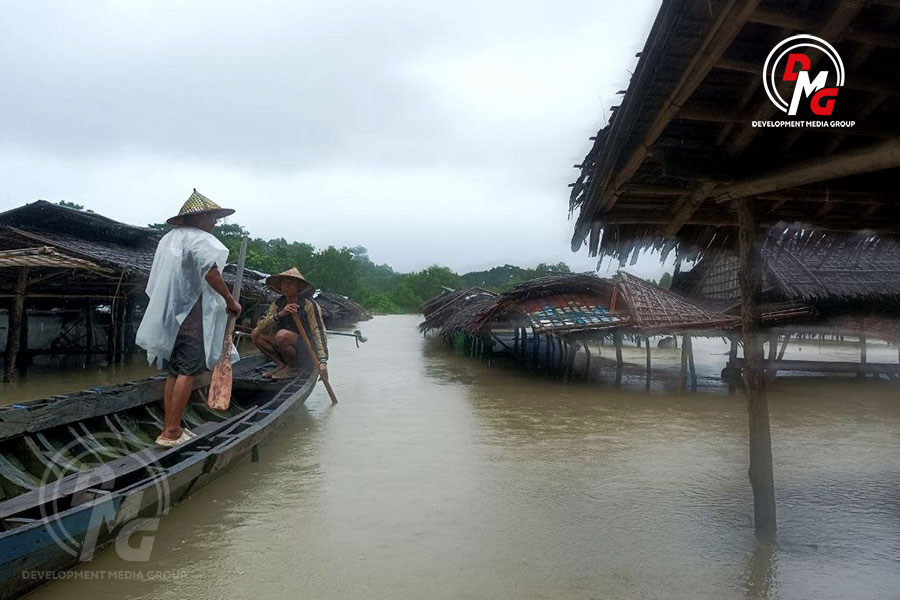
Since early July, heavy monsoon rains have battered Arakan following the strengthening southwest monsoon over the Bay of Bengal and the Andaman Sea. Flooding has affected at least eight townships, while riverbank erosion, landslides and strong winds have damaged homes, roads and bridges across large parts of the state.
According to recent assessments, more than 100,000 people have already been affected, and Myanmar's Department of Meteorology and Hydrology has warned that heavy rainfall is expected to continue until at least 18 July, raising concerns that the humanitarian situation could deteriorate further.
The floods have struck communities already weakened by conflict.
Central Arakan's major river systems, particularly the Kaladan and Laymyo rivers, remain the backbone of transportation, agriculture and local commerce. As floodwaters rise, cargo boats suspend operations, markets receive fewer supplies, farmland becomes inundated and thousands of daily wage labourers lose their primary source of income.
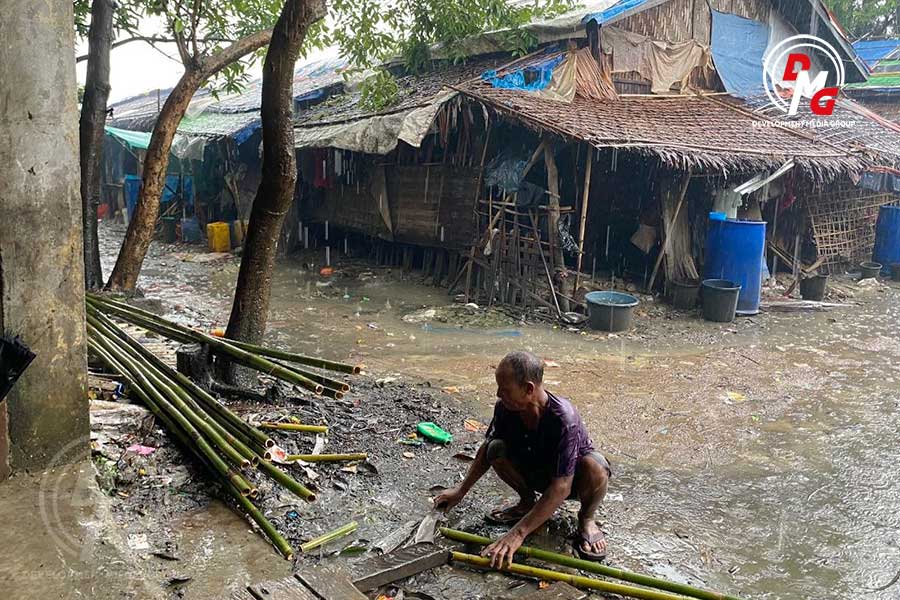
In Minbya Township, severe riverbank erosion has already swept away homes, forcing families to dismantle damaged houses and rebuild temporary shelters using salvaged timber, bamboo and corrugated iron sheets. Elsewhere, residents living near rivers continue to fear further collapse as saturated riverbanks weaken under persistent rainfall.
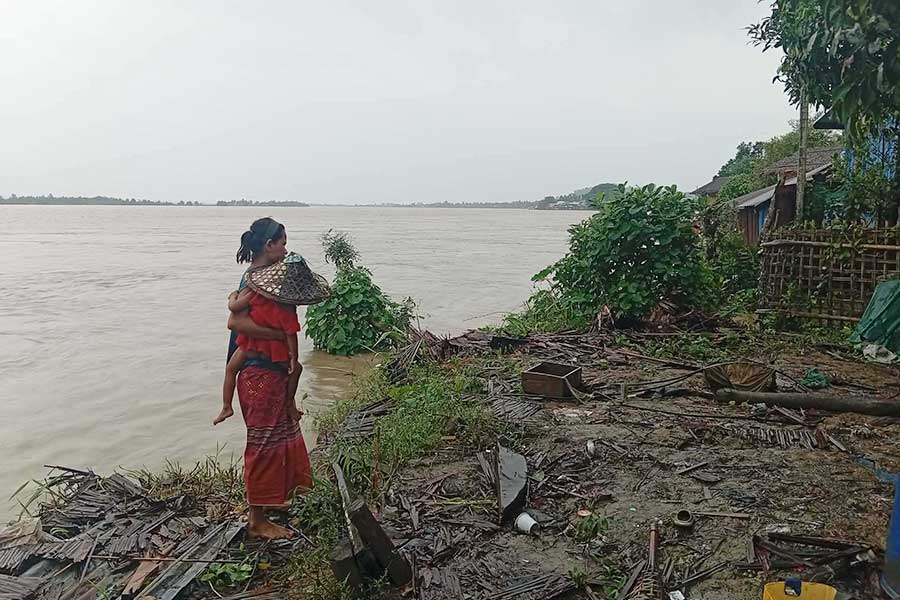
The floods have therefore become far more than a natural disaster. They have magnified vulnerabilities created by years of armed conflict.
Displacement Has Become a Way of Life
Recent reporting by DMG from displacement camps in Kyauktaw illustrates how deeply humanitarian conditions have deteriorated.
Many internally displaced families continue to live beneath temporary shelters made from tarpaulins, bamboo and old roofing sheets. Heavy rain and strong winds have left these shelters leaking, soaking bedding, food and personal belongings.
"We can tolerate and endure these living conditions as part of being displaced," one displaced resident, Daw Shwe Khin Aye, told DMG. "What we absolutely cannot tolerate is the struggle to survive."
Her words reflect the reality facing thousands of displaced families throughout Arakan.
For many households, displacement is no longer temporary. It has become a prolonged condition marked by uncertainty, declining livelihoods and limited humanitarian assistance.
Most displaced people rely on casual labour. During the monsoon season, however, outdoor employment declines sharply as river transport, construction work and agricultural activities slow or stop altogether. Even when work is available, rising prices mean that daily wages are barely sufficient to purchase rice, cooking oil and other essential commodities.
This is no longer simply a story of poverty.
It represents the gradual collapse of the coping mechanisms that displaced communities have relied upon since the conflict began.
War Continues Above the Floodwaters
Even as communities struggle with floods, the threat from the air has not diminished.
Despite losing effective ground control across much of Arakan, Myanmar's military continues to rely heavily on air power.
In recent weeks alone, repeated airstrikes have struck Kyauktaw, Buthidaung, Maungdaw and Gwa.
On June 17, an airstrike in Kyauktaw reportedly killed ten civilians and injured sixteen others.
On July 1, military aircraft bombed Kyet Mauk Taung, a Muslim village in Buthidaung Township, injuring three civilians including two children, and damaging nearly ten homes. Later the same day, more than ten bombs were reportedly dropped around Maungdaw.
The latest attack occurred on July 10, when a junta fighter jet bombed Kular Chaung Village in Gwa Township, killing three civilians including three-year-old Maung Pho Thar and seriously injuring two others.
The significance of these attacks extends beyond casualty figures.
They demonstrate that territorial control does not necessarily translate into civilian security.
Communities already coping with floods, displacement and economic hardship continue to live under the constant threat of aerial bombardment.
For many civilians, the choice is increasingly between escaping floodwaters or remaining exposed to airstrikes.
Disease Is Becoming the Next Humanitarian Front
Flooding has also begun generating a secondary public health emergency.
In Vesali Village, Mrauk-U Township, two residents have died following outbreaks of dengue fever and malaria, while nearly one hundred villagers have reportedly fallen ill. Residents say almost every household now has someone suffering from fever or related illnesses.
Similar outbreaks have also been reported in the Phon Thar Chaung area of Minbya Township, where local sources say at least five people have died from malaria and dengue fever.
These outbreaks illustrate how natural disasters can quickly compound humanitarian crises in conflict-affected regions.
Standing water creates ideal breeding grounds for mosquitoes. At the same time, displacement camps frequently lack proper drainage, safe drinking water, sanitation facilities, mosquito nets and adequate healthcare services.
Flood-damaged roads further complicate medical referrals, while shortages of medicines and transportation delay treatment.
Children, pregnant women, older people and those with chronic illnesses remain particularly vulnerable.
Without rapid public health interventions, disease outbreaks may become one of the most serious humanitarian consequences of this year's monsoon.
Humanitarian Response Faces Growing Constraints
The combination of conflict, flooding and disease is placing extraordinary pressure on humanitarian response mechanisms.
Flooded roads, damaged bridges and swollen rivers continue to restrict transportation throughout many parts of Arakan. At the same time, insecurity limits humanitarian access to some affected communities.
Local authorities, community organisations, volunteer groups and medical teams have responded quickly, often becoming the first responders during both flooding and conflict-related emergencies.
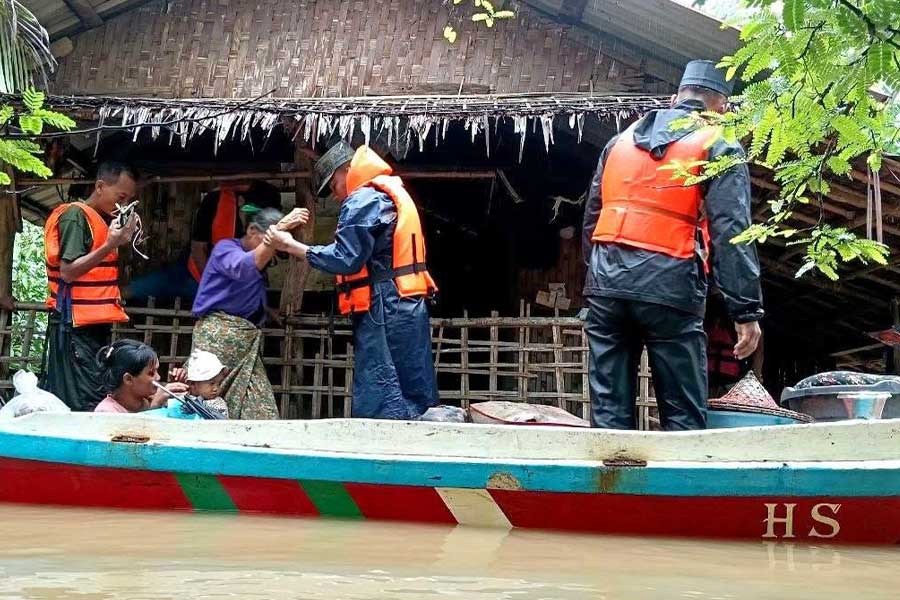
However, the scale of humanitarian need now exceeds local capacity.
Emergency shelter materials, food assistance, clean drinking water, medicines, mosquito nets, sanitation supplies and public health interventions all require resources beyond what local communities can provide on their own.
International humanitarian engagement should therefore be guided by practical humanitarian principles rather than political considerations.
International humanitarian practice has long distinguished between legal recognition and practical engagement. Around the world, humanitarian organisations routinely coordinate with de facto authorities controlling territory in order to reach civilians in need while maintaining political neutrality.
The same humanitarian approach will become increasingly important in Arakan as humanitarian needs continue to grow.
Beyond Relief: The Need for Long-Term Recovery
Emergency assistance remains essential, but it cannot by itself resolve Arakan's humanitarian crisis.
Communities will also require support to restore livelihoods, rehabilitate schools and healthcare facilities, repair roads and bridges, strengthen disease prevention systems and revive local agriculture.
Equally important is reducing the violence that continues to generate new humanitarian needs faster than they can be addressed.
Every airstrike creates new displacement. Every flood destroys fragile livelihoods. Every disease outbreak further weakens already vulnerable communities.
Without greater civilian protection, humanitarian agencies will remain trapped in a cycle of responding to successive emergencies rather than supporting long-term recovery.
A Crisis With Regional Consequences
Arakan's humanitarian emergency is no longer solely a domestic issue.
Bangladesh continues to host more than one million Muslim (Rohingya) refugees while simultaneously facing seasonal flooding and landslides around Cox's Bazar. Continued instability inside Arakan risks further displacement and complicates prospects for durable refugee solutions.
The crisis also affects wider regional interests.
India's Kaladan Multi-Modal Transit Transport Project, China's Kyaukphyu Special Economic Zone and other regional connectivity initiatives all depend upon long-term stability in Arakan.
Infrastructure investments alone cannot produce sustainable development while surrounding communities remain trapped in conflict, displacement and humanitarian crisis.
Humanitarian Action Cannot Wait
Arakan today stands at the intersection of war, natural disasters, disease outbreaks and political transformation.
Its humanitarian emergency can no longer be understood solely through the lens of armed conflict. It is now the product of multiple crises reinforcing one another.
Every new airstrike deepens humanitarian need.
Every day of heavy rain increases the vulnerability of displaced communities.
Every delay in humanitarian assistance leaves more families exposed to hunger, disease and insecurity.
Political negotiations may ultimately determine Arakan's future.
Humanitarian action, however, will determine how many people survive to participate in that future.
As the crisis continues to evolve, expanding humanitarian assistance, strengthening local response capacities, ensuring safe humanitarian access and protecting civilians should become urgent priorities for national, regional and international humanitarian actors alike.

Opinion

Shadows Over Childhood: Confronting the Reality of Missing Children
By Admin 16 Oct 2026
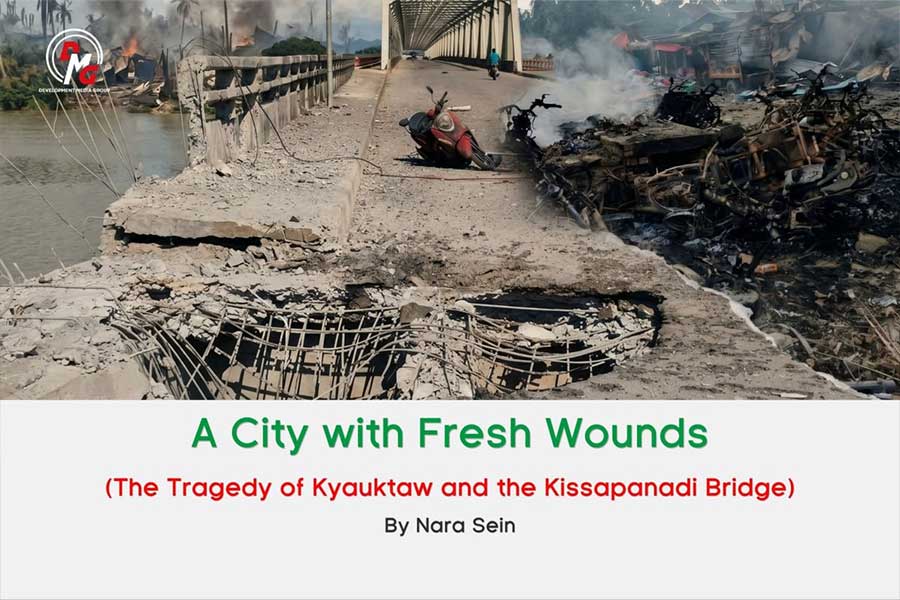
A City with Fresh Wounds (The Tragedy of Kyauktaw and the Kissapanadi Bridge)
By Admin 01 Oct 2026
Arakan Army’s Gains and the Changing Geopolitics of Arakan
By Admin 29 Sep 2026
Beyond Military Victory: What Is Myanmar’s Ultimate Political Objective?
By Admin 26 Sep 2026
UN at a Crossroads: Six Priorities for a Shared Future
By Admin 23 Sep 2026
POLITICS

BUSINESS
Industry to manufacture finished goods from coconut starting in early 2020
By Aung Kaung Zaw 20 Nov 2019