
- Y-12 aircraft, drones circle over Sittwe as clashes intensify
- Panic grips Sittwe after deadly reported Y-12 airstrike
- At least six killed, 37 injured in reported Y-12 bombing of downtown Sittwe
- Junta column heading toward Kyindwe suffers heavy casualties in resistance ambushes
- Junta replaces Arakan State security minister amid escalating battles near Sittwe
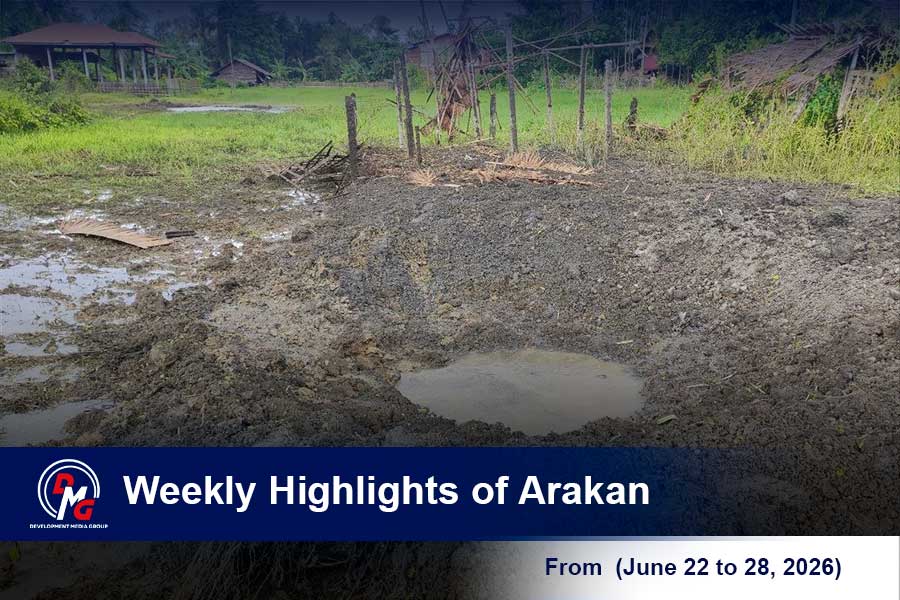
Weekly Highlights from Arakan (June 22 to 28, 2026)
In an era when daily news from Arakan is often fragmented and fast-changing, DMG's Weekly Highlights of Arakan brings clarity, depth, and context to the stories that matter most.
29 Jun 2026
In an era when daily news from Arakan is often fragmented and fast-changing, DMG's Weekly Highlights of Arakan brings clarity, depth, and context to the stories that matter most.
Each week, we round up key political, military, social, and humanitarian developments across Arakan State - connecting the dots between events and offering analysis to help audiences see the bigger picture.
This series is designed for readers and viewers seeking a concise yet comprehensive understanding of how ongoing conflict, governance shifts, and community issues continue to shape lives across Arakan.
Civilian dies after junta air raid on Kyeintali Town
A 45-year-old civilian has died from injuries sustained during a series of Myanmar military junta airstrikes on Kyeintali Town and nearby Yaykyaw Village in southern Arakan State’s Gwa Township, medical and local sources confirmed Saturday.
The death brings the toll from Friday’s aerial attack to one killed and five others seriously injured, several of whom remain in critical condition at local medical facilities.
The deceased has been identified as U Wai Yar Min, a resident of Yaykyaw Village.
According to consolidated operational logs from June 26, a junta jet fighter carried out a low-altitude strike over Kyeintali Town at around 3:10 PM, dropping two 500-pound bombs.
Minutes earlier, at approximately 3:00 PM, the same aircraft struck a monastic compound and nearby school buildings in Yaykyaw Village, causing severe destruction and civilian harm.
The five injured civilians under treatment include Ma Saung Hay Mahn Khin, 18, from Ward No. 2 of Kyeintali Town, along with Maung Htauk Myat Thu, 10; Ma Soe Myat Mon, 13; U San Min, 35; and U Phoe Ni, 75, all from Yaykyaw Village.
The strike represents a further escalation in an ongoing aerial campaign by the military junta across Gwa Township throughout June.
Earlier reports showed a June 23 air raid on Gantgawtaung Village that wounded four civilians, while a June 20 strike on central Kyeintali injured two others.
Humanitarian monitors say the regime has maintained near-daily airstrikes throughout the month, targeting populated areas in territories under or adjacent to Arakan Army control.
Heavy aerial attacks have also been reported in Kyauktaw, Maungdaw, Kyaukphyu, Ramree, and Gwa townships, contributing to rising civilian casualties across the region.
Rice prices in Sittwe surge to nearly K300,000 per bag amid monsoon inflation
Wholesale rice prices in the junta-controlled capital of Arakan State have surged close to K300,000 per bag during the monsoon season, worsening an already severe food insecurity crisis and contributing to rising urban crime, local merchants said Wednesday.
Retailers and supply chain sources said the price spike is being driven by rising fuel costs and unstable maritime transport fees affecting supply routes.
Sittwe remains heavily dependent on cargo shipments from Yangon to sustain its food supply.
However, the local economy is under strain amid restrictions on movement and trade. Internally displaced persons and low-income residents face widespread unemployment alongside rapidly rising living costs.
Sittwe residents said worsening economic conditions are contributing to rising petty theft and robberies in the Arakan State capital.
The military junta continues to enforce strict restrictions on land and sea transport routes into Sittwe, allowing only controlled shipping from Yangon for essential goods. Air transport for commercial cargo and medical supplies remains banned, while civilian movement out of the city is also restricted.
Humanitarian sources said aid supplies for displaced populations in Sittwe have been reduced, worsening living conditions.
Death toll rises to ten after junta airstrikes on Kyauktaw
The death toll from a devastating junta airstrike on Kyauktaw Town has risen to ten after another critically injured civilian died from severe blast injuries, rights monitors confirmed Thursday.
The latest victim was identified as U Hla Aung Kyaw, 65, from Ywama Ward in Kyauktaw. Local medical sources said he died on June 24 while receiving emergency treatment for multiple fractures and shrapnel injuries sustained during the June 17 airstrike.
His death followed that of Daw Ma Aye Hla, 62, from Paikthae Ward, who died at a medical facility on June 19. Of the 18 civilians who suffered severe injuries in the initial attack, continued deaths have raised the confirmed civilian death toll to ten.
The attack took place at around 3 pm on June 17, when a formation of four junta fighter jets conducted an air raid over Kyauktaw Town and nearby Lanmadaw Village.
The aircraft dropped multiple unguided bombs on densely populated areas, including civilian markets and residential zones.
Facing continued territorial losses in western Myanmar, the military junta has increasingly relied on air power, with repeated strikes targeting civilian areas and infrastructure.
The ongoing aerial campaign has damaged villages, urban areas, and religious sites across Arakan State, causing rising civilian casualties, including among women and children.
The air campaign continues across multiple areas. On June 24, a junta fighter jet struck the border town of Maungdaw, which is under Arakan Army (AA) administration, injuring two high school students and damaging civilian homes.
Family demands recapture of escaped child rape suspect in Pauktaw
Relatives of an eight-year-old rape victim in Arakan State’s Pauktaw Township are demanding the immediate recapture of a suspect who escaped from local law enforcement custody four months ago, according to independent monitoring sources on Friday.
The case has remained unresolved in the administrative area controlled by the Arakan Army (AA).
The victim’s family said that although they submitted formal appeals to the Department of Law Enforcement and Public Security (DLEPS), authorities have stopped active efforts to track down the fugitive.
According to legal records, the incident occurred on March 3, when an eight-year-old girl from Phaduchay Village was sexually assaulted. The suspect was identified as U Tun Aung Chay, 45, from nearby Thitpotechaung Village.
Security personnel arrested U Tun Aung Chay the following morning. However, the suspect later escaped from custody due to alleged negligence by local DLEPS officers and remains at large.
Although charges were filed through the Minbya District Court, authorities have not publicly disclosed the specific legal classifications applied to the case.
Under DLEPS legal guidelines, Section 376 (3) of the Penal Code states that a person convicted of raping a girl under the age of 12 can face life imprisonment or a 20-year prison sentence, along with financial penalties.
Women’s rights advocates in Arakan State have criticized weaknesses in the justice system and a lack of transparency surrounding sexual violence cases.
Records compiled across Arakan State show at least 15 confirmed cases of sexual assault and rape between June 2024 and April 2026. Suspects linked to at least four of those cases remain fugitives.
Rights groups warned that increasing cases of sexual violence in areas controlled by the Arakan Army, combined with weak enforcement mechanisms, pose growing risks to women and children in the state.
Junta-linked supply controls fuel food crisis in Kyaukphyu
Military officers and junta department officials in the junta-controlled port town of Kyaukphyu have allegedly established a monopoly over import channels, driving up food prices and worsening economic hardship for local residents, sources reported Saturday.
Since the military blockade isolated Kyaukphyu at the end of 2023, residents have depended heavily on limited maritime cargo shipments and air freight routes from Yangon for essential supplies.
Local traders said a monthly allocation of three cargo vessels is being controlled by junta-linked officials and affiliated merchants, restricting access for independent businesses.
Local sources said the situation intensified in late 2025 after Captain Aung Phyo Oo, also known as Dat Si, an officer from Light Infantry Battalion No. 34 based in Kyaukphyu, took control of the Township General Administration Department’s import licensing system. Since then, import permits have reportedly been limited to military-linked businesses.
The restricted supply chain has severely weakened the purchasing power of low-income families, with growing numbers of displaced and vulnerable residents struggling to afford basic food.
Local monitors reported a rise in urban poverty, including more residents seeking assistance and begging for food in public areas.
Survey finds 55 percent of Arakanese youth unemployed amid conflict
A severe economic crisis has left 55 percent of young people in Arakan State unemployed, according to a Livelihood Need Assessment Report released by the Youth Led Organization (YLO).
The assessment, published on June 22, collected data from 57 individuals aged 18 to 35 across five village-tracts in Kyauktaw, Ponnagyun, and Sittwe Townships.
The report identified limited employment opportunities, a lack of vocational skills, and insufficient start-up capital as the main factors contributing to high youth unemployment.
Among the 45 percent of young people currently employed, economic stability remains fragile. The report found that 40 percent of employed youths earn less than K100,000 per month.
The assessment also found that 60 percent of employed youths are working in fields unrelated to their educational backgrounds, highlighting a significant gap between skills and available employment opportunities.
The YLO urged the expansion of youth-focused training programmes in digital skills, language education, and basic entrepreneurship to improve access to employment opportunities.
However, the report noted that poverty, high education costs, and limited access to information continue to prevent many young people from participating in vocational programmes.
The ongoing conflict in Arakan State has further worsened economic challenges. Junta-imposed telecommunications restrictions and prolonged internet disruptions have isolated many youths from education opportunities and employment information.
To address these challenges, the YLO recommended establishing youth employment information centres in rural areas to provide job listings, vocational guidance, CV preparation support, interview training, and internship opportunities.
The organization also called for financial support programmes, including small grants and low-interest loans, to help young entrepreneurs establish businesses.
The report emphasized that financial assistance should be accompanied by business management training, financial literacy programmes, equipment access, and stronger links to regional markets and digital commerce platforms.
The YLO further proposed creating township-level community youth development networks involving village administrators, civil society organizations, community groups, relevant departments, and private sector actors.
The report concluded that conflict, displacement, communication restrictions, and insecurity have severely limited educational and economic opportunities for Arakanese youth, leaving many facing an uncertain future.

Opinion

Can the UN Restore Trust in a Fractured World?
By Admin 23 Oct 2026
Arakan Amid the Storm: From Survival to Rebuilding a People
By Admin 22 Oct 2026
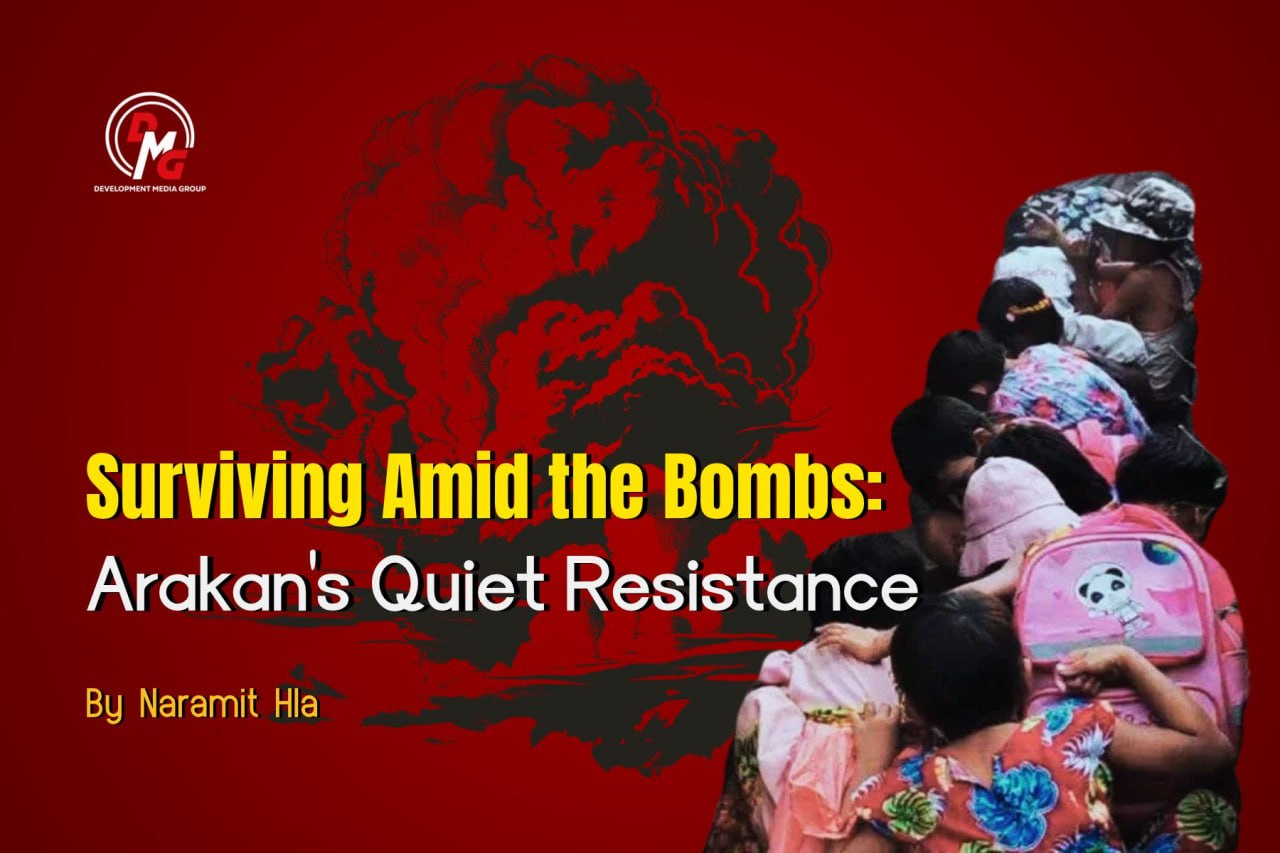
Surviving Amid the Bombs: Arakan's Quiet Resistance
By Admin 19 Oct 2026

Shadows Over Childhood: Confronting the Reality of Missing Children
By Admin 16 Oct 2026
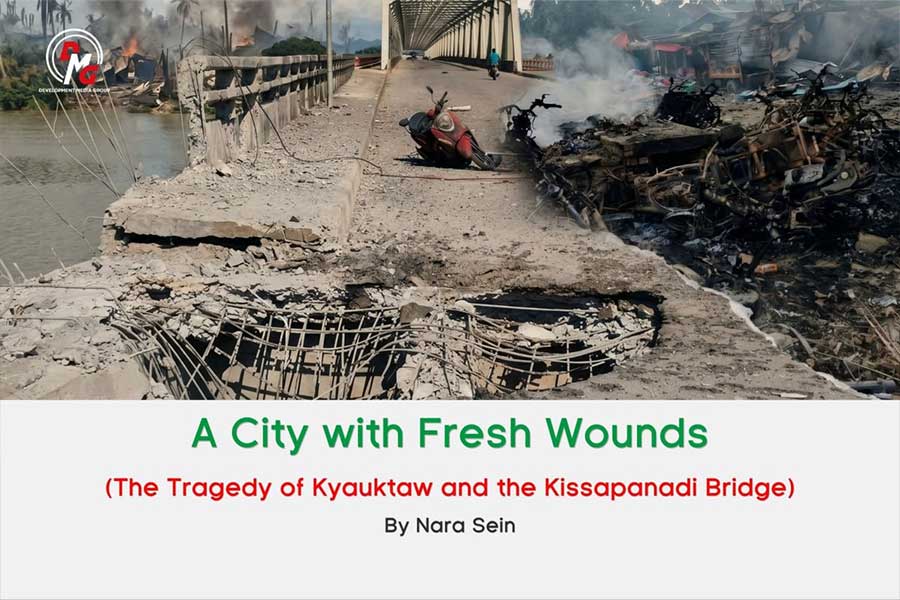
A City with Fresh Wounds (The Tragedy of Kyauktaw and the Kissapanadi Bridge)
By Admin 01 Oct 2026

Arakan Army’s Gains and the Changing Geopolitics of Arakan
By Admin 29 Sep 2026
POLITICS

BUSINESS
Industry to manufacture finished goods from coconut starting in early 2020
By Aung Kaung Zaw 20 Nov 2019