
- Y-12 aircraft, drones circle over Sittwe as clashes intensify
- Panic grips Sittwe after deadly reported Y-12 airstrike
- At least six killed, 37 injured in reported Y-12 bombing of downtown Sittwe
- Junta column heading toward Kyindwe suffers heavy casualties in resistance ambushes
- Junta replaces Arakan State security minister amid escalating battles near Sittwe
Weekly Highlights from Arakan (May 11 to 17, 2026)
In an era when daily news from Arakan is often fragmented and fast-changing, DMG's Weekly Highlights of Arakan brings clarity, depth, and context to the stories that matter most.
18 May 2026
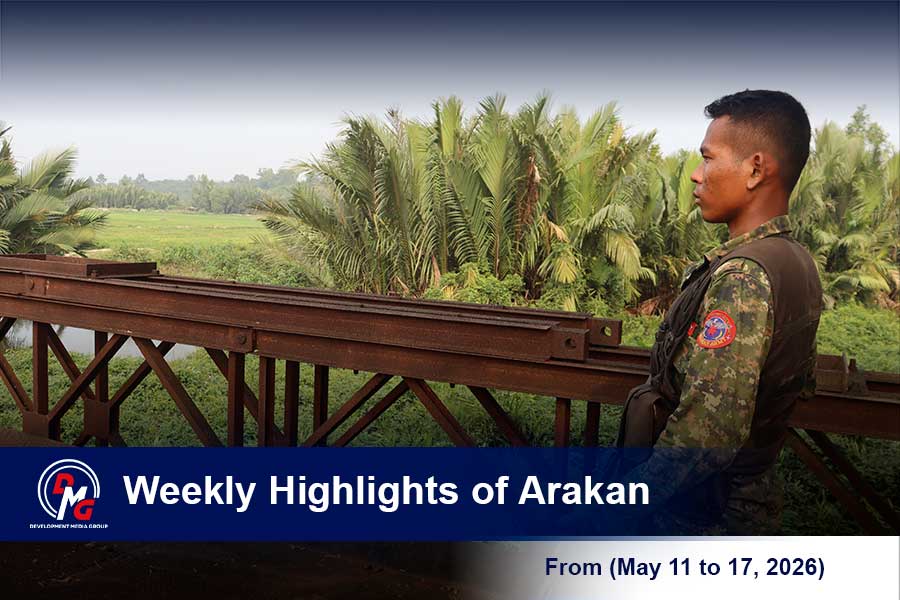
In an era when daily news from Arakan is often fragmented and fast-changing, DMG's Weekly Highlights of Arakan brings clarity, depth, and context to the stories that matter most.
Each week, we round up key political, military, social, and humanitarian developments across Arakan State - connecting the dots between events and offering analysis to help audiences see the bigger picture.
This series is designed for readers and viewers seeking a concise yet comprehensive understanding of how ongoing conflict, governance shifts, and community issues continue to shape lives across Arakan.
Regime bombs Ponnagyun with jet fighters
The regime carried out airstrikes on the town of Ponnagyun controlled by the Arakan Army using two jet fighters on the morning of May 15.
According to local residents, the bombing took place after 8:30 a.m. on Friday, while a kamikaze drone launched from Sittwe also targeted the area.
At least four houses were destroyed in the bombing, and DMG is still investigating whether there were any civilian casualties.
The Arakan Army captured Ponnagyun on March 4, 2024, but residents have still been unable to return home as the regime continues shelling the area from Sittwe.
The regime frequently carries out airstrikes, naval artillery attacks, and kamikaze drone strikes on Ponnagyun, Rathedaung, and Pauktaw townships, which are located near Sittwe.
Arakan Army beefs up security along Bangladesh border
The Arakan Army (AA) has recently strengthened security measures along the border between Arakan State and Bangladesh in Maungdaw Township, according to local residents.
People familiar with the situation said security along the border has been tightened to help maintain regional stability and prevent the movement of Muslim armed groups.
The Arakan Army has informed residents that anyone travelling for essential matters or emergency medical reasons must first report to administrative and security checkpoints operated by the United League of Arakan before continuing their journey.
In addition, the Arakan Army has advised people not to travel alone or in small groups through forested or remote areas.
Muslim armed groups have reportedly established bases near the Bangladesh border and frequently cross into Arakan State to carry out attacks.
Alongside increased security operations in border areas, the Arakan Army has also intensified patrols and security activities in Arakan waters.
The Arakan Coast Guard, which operates under the Arakan Army, has frequently detained Bangladeshi fishermen accused of illegally entering Arakan waters and later returned them to the Bangladeshi side.
Heavy fighting erupts near Taung Maw Oo naval station in Kyaukphyu
Intense clashes have broken out near Awa Taung Village in Kyaukphyu Township between the Arakan Army and regime forces advancing from the Taung Maw Oo naval station, with the military reportedly using two jet fighters to support its ground offensive through aerial bombardments.
At around 3 p.m. on May 13, two junta jet fighters carried out bombing raids near Hmyawchaung and Sabeichaung villages, located close to Sanae Town in Kyaukphyu Township.
The regime has reportedly been reinforcing troops from the Taung Maw Oo naval station in an attempt to launch an offensive toward Sanae Town, which is under Arakan Army control, resulting in fierce ongoing clashes.
In Kyaukphyu Township, the regime has frequently conducted drone attacks, naval artillery shelling, and airstrikes targeting not only conflict zones but also areas where internally displaced persons (IDPs) are sheltering.
As a result, residents from villages including Dwaycha, Alel Dwein, Sanae, and Kyaukse have been forced to flee to safer locations.
Fierce fighting also broke out in Kyaukphyu Township in April, during which the Arakan Army reportedly captured several military outposts.
Military observers believe the regime is reinforcing its troops and launching counter-offensives, which could lead to even more intense clashes in the area.
More than 10 Muslims killed in boat capsize in Mrauk-U
More than 10 Muslims were killed after a boat capsized in Mrauk-U Township, Arakan State, an area controlled by the Arakan Army, according to preliminary reports.
On the evening of May 12, residents of Aungtaing Village in Minbya Township were returning by boat along the Laymyo River after attending a football match in Shantaung Village, Mrauk-U Township.
One of the two boats carrying the passengers capsized, resulting in the deaths of more than 10 people.
Preliminary information indicates that the deceased include residents of Aungtaing Village as well as people from Minbya, Mrauk-U and Myebon townships. The victims were males ranging in age from 8 to over 50 years old.
Boat accidents frequently occur in Arakan State, a region with many rivers and a long coastline, often resulting in fatalities among local residents.
The incident highlights the dangers of overcrowding on motorboats traveling along rivers and creeks.
Locals urge wider use of air raid warning systems in Arakan State
As the regime intensifies airstrikes in areas controlled by the Arakan Army (AA) in Arakan State, local residents are calling for the effective operation of already installed air raid warning systems to improve civilian safety.
Although warning systems have been installed in some areas controlled by the Arakan Army, residents said many are rarely used in practice, with sirens remaining silent even when aircraft are flying overhead.
Recently, the regime has increasingly carried out coordinated bombing raids using groups of aircraft, significantly escalating its air operations across Arakan State.
On May 7, regime forces used multiple aircraft to conduct prolonged bombing raids in Minbya and Kyauktaw townships on the same day. During the attacks, three people were killed and at least 10 others were injured.
The rise in aerial bombardments has heightened fear among local residents, many of whom now live under constant concern over further strikes.
The regime has repeatedly carried out airstrikes on non-military targets in areas controlled by the Arakan Army, including schools, monasteries, hospitals, and densely populated civilian locations, worsening security conditions for residents.
As a result, locals are urging authorities to prioritize the installation of air raid warning systems at schools, hospitals, monasteries, and crowded public areas.
Residents also noted that online based warning systems are ineffective in Arakan State due to internet and mobile network shutdowns, increasing the need for more ground-based warning systems.
FDA under ULA warns private pharmacies against selling free TB and ART medicines
The Food and Drug Administration under the United League of Arakan has urged private pharmacies not to sell TB and ART medicines distributed free of charge.
The FDA under the Arakan Department of Public Health issued a warning urging private pharmacies and clinics not to import and sell TB and ART medicines provided free of charge for the public in Arakan State.
Regarding this matter, FDA officials are reportedly conducting field inspections at private pharmacies and clinics in various townships, including Mrauk-U, Minbya, Kyauktaw, Ponnagyun, and Rathedaung.
Officials warned against selling TB and ART medicines provided free of charge to the public for profit, and also strictly prohibited the sale of expired or unsafe medicines.
Healthcare workers stated that medicines used in the treatment of TB and HIV/AIDS are crucial for patients to take systematically and on time.
They also analyzed that if medicine shortages or systematic trading issues occur, the effectiveness of treatment could decline.

Opinion
Can the UN Restore Trust in a Fractured World?
By Admin 23 Oct 2026
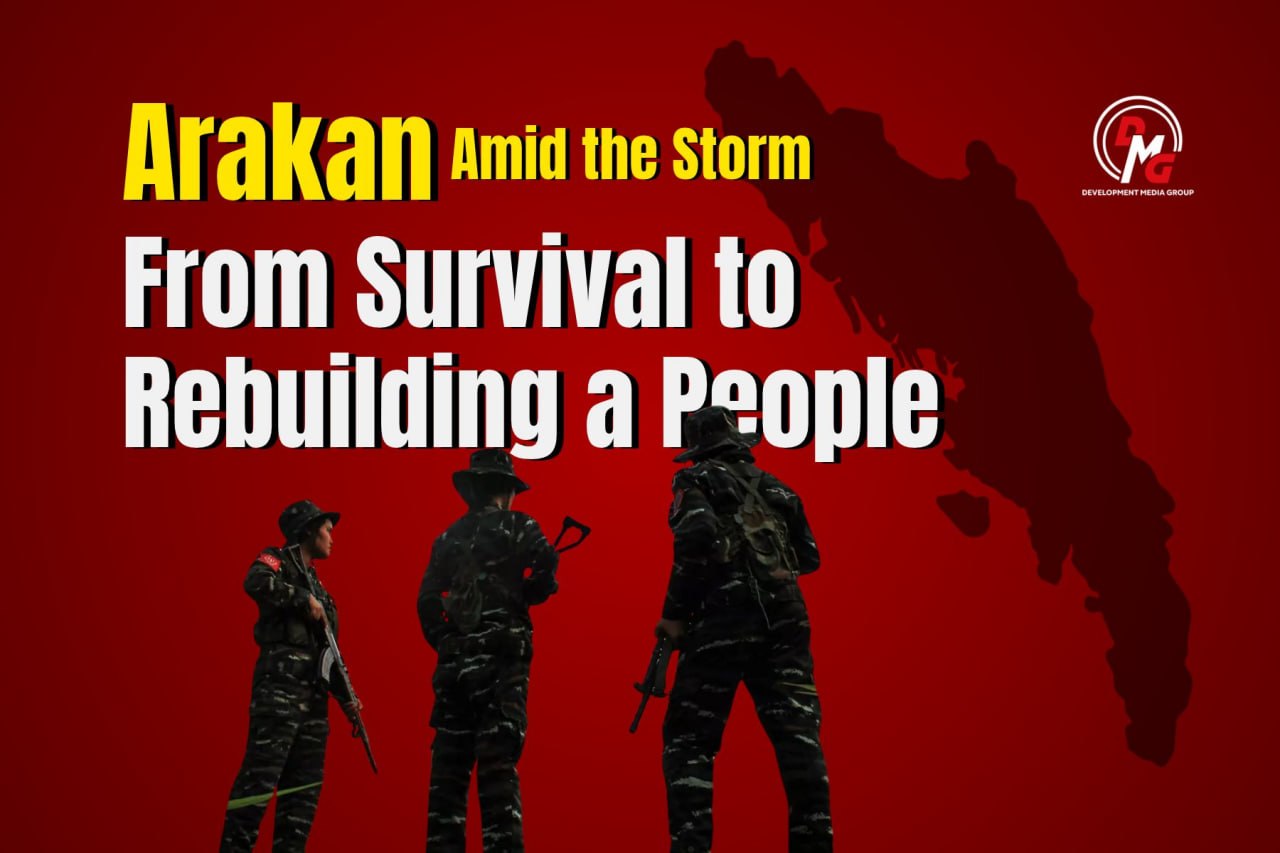
Arakan Amid the Storm: From Survival to Rebuilding a People
By Admin 22 Oct 2026
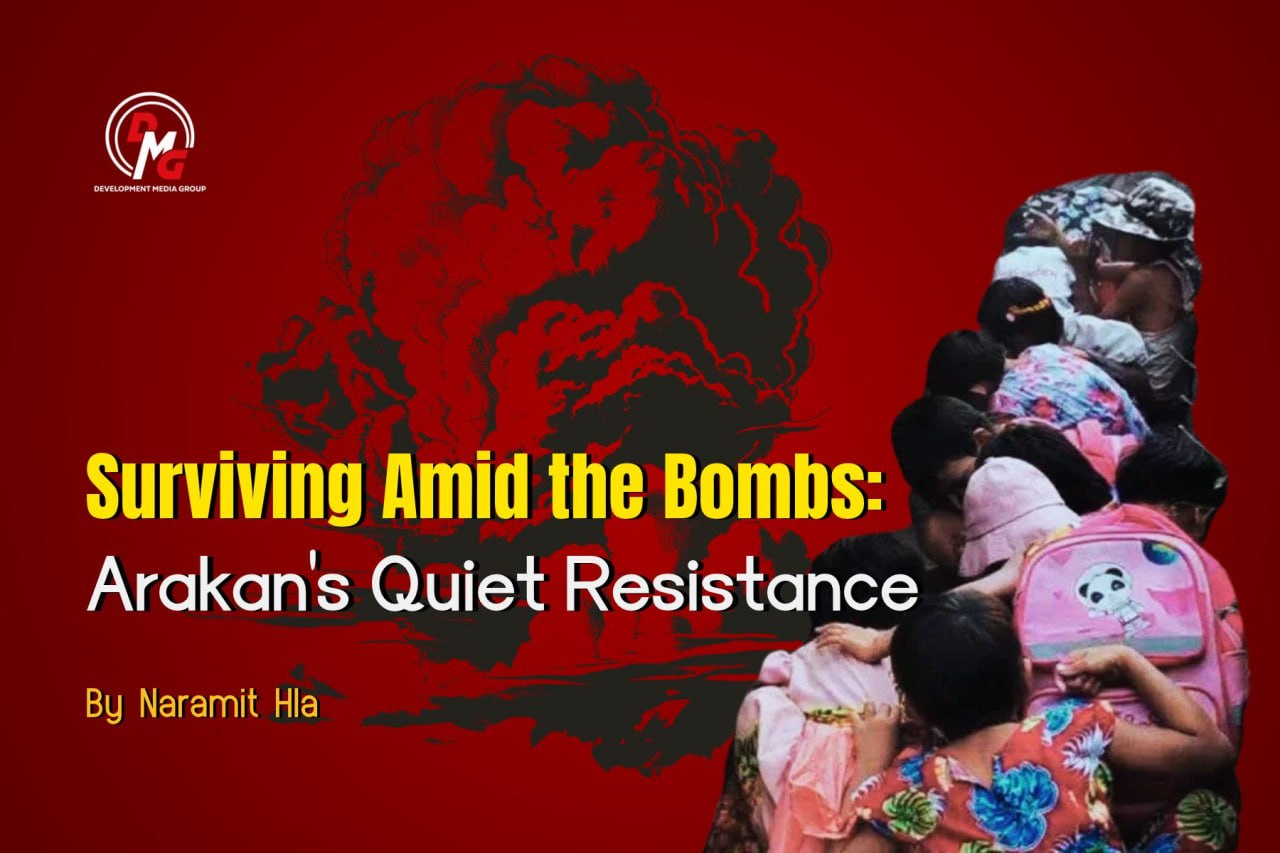
Surviving Amid the Bombs: Arakan's Quiet Resistance
By Admin 19 Oct 2026

Shadows Over Childhood: Confronting the Reality of Missing Children
By Admin 16 Oct 2026
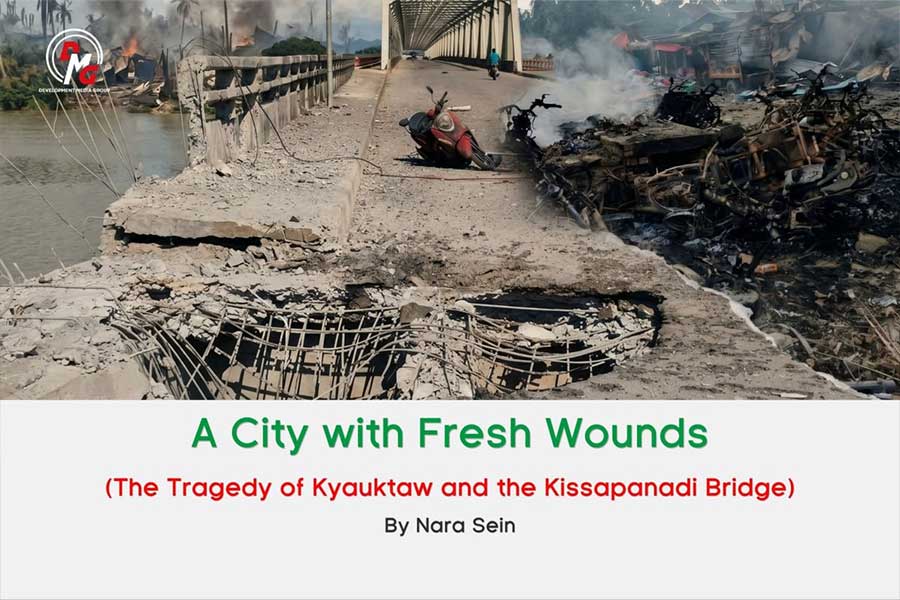
A City with Fresh Wounds (The Tragedy of Kyauktaw and the Kissapanadi Bridge)
By Admin 01 Oct 2026
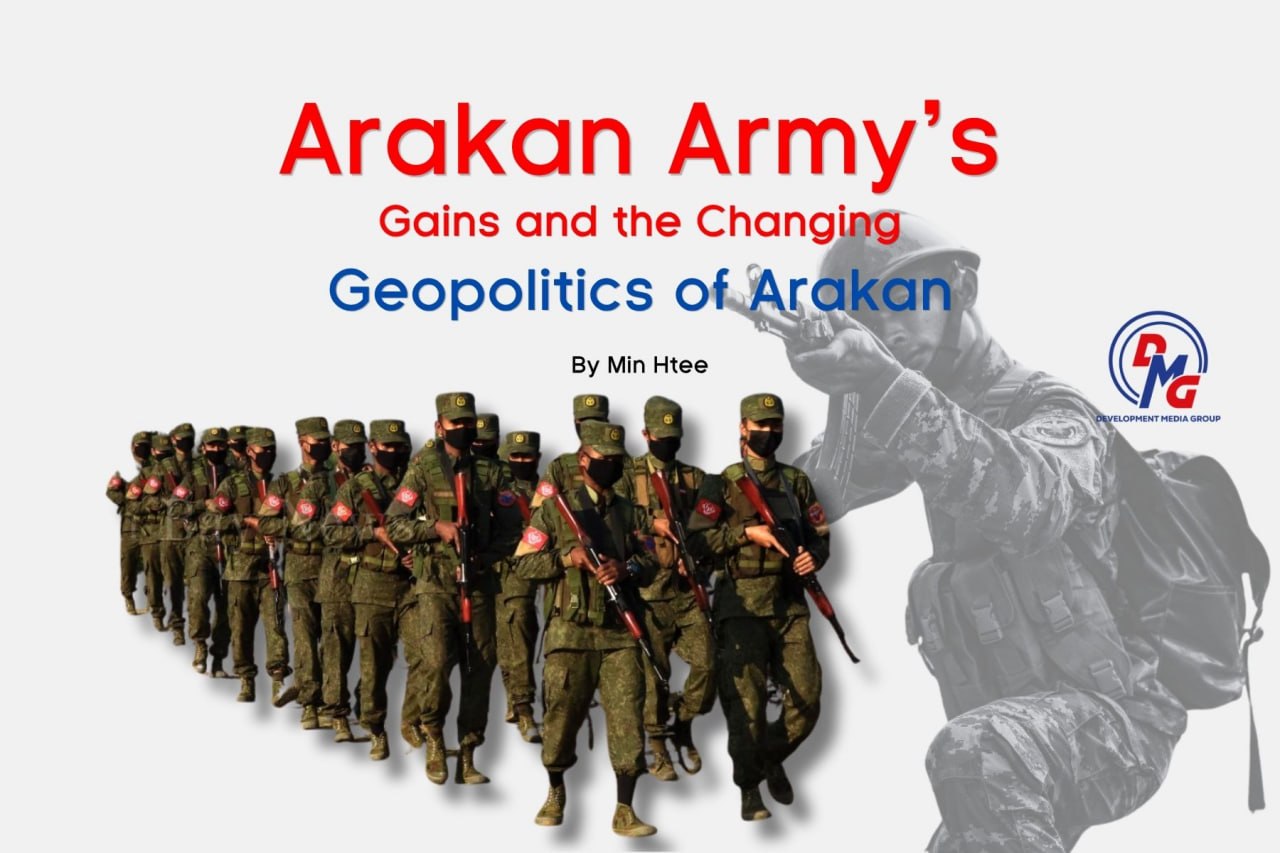
Arakan Army’s Gains and the Changing Geopolitics of Arakan
By Admin 29 Sep 2026
POLITICS


BUSINESS
Industry to manufacture finished goods from coconut starting in early 2020
By Aung Kaung Zaw 20 Nov 2019