
- Fighting remains intense along Sittwe-Ponnagyun border
- Mizoram tightens restrictions on foreigners in key Arakan trade gateway
- ULA expands governance, anti-drug measures amid deepening Arakan crisis: CAS
- Heavy fighting enters fourth day along Sittwe-Ponnagyun border
- BWU calls for precise, practical action to end junta violence
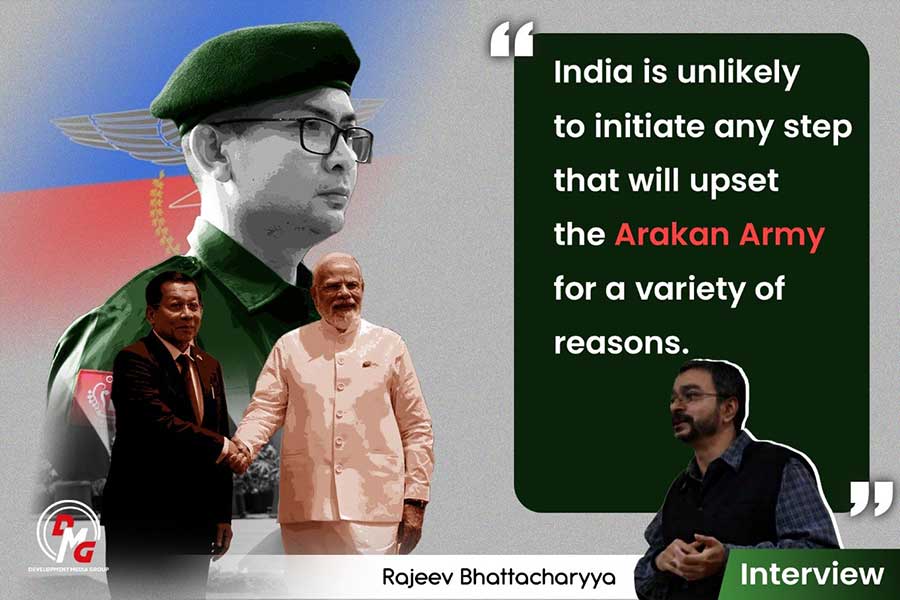
“ India is unlikely to initiate any step that will upset the Arakan Army for a variety of reasons”
To explore these issues, DMG spoke with Rajeev Bhattacharyya, a senior journalist and author based in Assam, India, who closely follows developments in Myanmar and India’s Northeast. He shares his views on India’s Myanmar policy, the implications of Min Aung Hlaing’s visit, and the future of regional security and cooperation.
11 Jun 2026
DMG | Interview
Indian Prime Minister Narendra Modi’s recent meeting with Myanmar junta leader Min Aung Hlaing has attracted significant attention across the region, particularly as the military regime continues to lose territory while resistance forces and ethnic armed organizations expand their control in many parts of the country.
The visit comes at a time when India is seeking to protect key strategic interests in Myanmar, including border security, regional connectivity, the Kaladan Project, and competition with China. It also raises important questions about how New Delhi views the changing balance of power in Myanmar, especially in western Myanmar where the Arakan Army (AA) has emerged as a dominant political and military force.
To explore these issues, DMG spoke with Rajeev Bhattacharyya, a senior journalist and author based in Assam, India, who closely follows developments in Myanmar and India’s Northeast. He shares his views on India’s Myanmar policy, the implications of Min Aung Hlaing’s visit, and the future of regional security and cooperation.
DMG : The Indian government and Min Aung Hlaing recently held talks. During the meeting, Min Aung Hlaing invited India to increase investment in Myanmar. Given the current political, economic, and security realities on the ground particularly the fact that the junta no longer controls large parts of the country, including much of Arakan State, how do you assess India’s current attitude toward the Myanmar military regime? What does this engagement suggest about New Delhi’s policy toward the junta?
Rajeev: New Delhi has a multipronged policy on Myanmar. The Indian government does not want to put all the eggs in one basket. It has a cosy relationship with the Myanmar military regime. At the same time, refugees and some leaders of resistance groups from Myanmar have been allowed to stay in several states of India’s northeast. The results, however, for New Delhi have not been satisfactory. Construction of the 109 kms highway between Zorinpui and Paletwa is on but completion of the project is uncertain. The Trilateral Highway is stalled. And the separatist outfits from the northeastern region continue to have a presence in Myanmar and they have joined hands with the military regime against the pro-democracy resistance outfits.
DMG : During the meeting with Indian Prime Minister Narendra Modi, both sides discussed expanding bilateral trade, and India expressed willingness to support greater economic cooperation. However, considering the current situation in Myanmar, especially in western Myanmar where many key trade routes and project areas are no longer under junta control, does the military regime have the practical capacity to implement meaningful trade and economic cooperation? How would you assess its ability to deliver on these commitments?
Rajeev: All these commitments by the Myanmar military regime are gibberish including its statement that no anti-India activities would be allowed in the country. The regime is in no position to implement trade and economic cooperation in western Myanmar. As I have noticed from my recent visit to Arakan, the Arakan Army and its political wing United League of Arakan have entrenched themselves and they have the support of the people. It will not be very easy for the military regime to dislodge the Arakan Army.
DMG : Min Aung Hlaing also stated that ethnic armed organizations and revolutionary groups operating along the India-Myanmar border, including the Arakan Army (AA), should cooperate in peace and development efforts for the benefit of the country. How are revolutionary organizations likely to view or respond to such a call, especially while the junta continues military operations elsewhere in Myanmar? Is there any realistic prospect that these groups would engage with the junta on these terms?
Rajeev: The junta has always tried to engineer splits among the resistance groups and EAOs if you observe the developments over the past several decades. This was most apparent after the 1988 uprising. Most of the functionaries of resistance groups and EAOs I am in touch with are of the opinion that talks are not possible when the regime has stepped up airstrikes and shelling resulting in the killing of innocent civilians.
DMG : Another reported outcome of the visit was an agreement to accelerate implementation of the Kaladan Multi-Modal Transit Transport Project. However, much of the Kaladan Project corridor is currently under the control or influence of the Arakan Army. Some analysts argue that the project cannot realistically move forward without direct or indirect engagement with the AA. Given that fighting in Arakan and Paletwa has largely subsided for now, do you think the Kaladan Project can genuinely be revived and implemented? What challenges and opportunities do you see?
Rajeev: The Indian government has arrived at an understanding with the Arakan Army and the military regime for implementation of the project in Myanmar. The construction of the 109 kms highway between Zorinpui on the border and Paletwa has started. There are two firms of the Myanmar government also engaged in the construction. So it can be safely assumed that this part of the project will be completed sooner or later. But that does not mean that the project will be ready and ships all the way from India would sail up to Paletwa. The highway from Lawngtlai to Silchar (in Assam) is narrow and would be unable to handle a large volume of cargo. The Indian government has stepped up efforts to broaden the highway in Mizoram and Assam but this will take time.
DMG : India has maintained contacts with Myanmar’s opposition forces, including the National Unity Government (NUG) and various ethnic armed organizations, while also formally inviting Min Aung Hlaing to India. What does this suggest about India’s strategic approach toward Myanmar? Is New Delhi pursuing a dual-track policy? Could India’s closer engagement with the military regime be part of a broader effort to counter growing Chinese influence in Myanmar? How do you assess this possibility?
Rajeev: As mentioned above, India is following a multipronged policy with Myanmar. China’s growing influence is certain a cause of concern for India. And New Delhi’s continuous engagement with the military regime is part of a broader effort to counter China. But China has already taken a huge lead. It has been able to leverage the current situation in Myanmar to its advantage which India has not been able to do. The primary reason is the lack of forward planning by the Indian government and the problem lies with the bureaucracy. New Delhi wakes up very late to every situation. And most of its policies are reactive and not proactive.
DMG : Looking at the visit as a whole, what practical benefits has Min Aung Hlaing gained beyond diplomatic symbolism and international visibility? Conversely, what strategic, political, economic, or security advantages has India gained from engaging with him at this time?
Rajeev: India and Myanmar employ the carrot-and-stick policy with each other but they need each other for different reasons. There is a high possibility that both the governments have arrived at an understanding on certain issues which would be kept under wraps. And this could include a deal on rare earth minerals from Myanmar to India. And I also get the feeling that efforts would be on by the Indian government to eradicate the presence of separatist groups in north Sagaing Region contiguous to the eastern districts of Arunachal Pradesh and Nagaland.
DMG : How might this visit affect the political and security situation in Arakan State, particularly regarding the Arakan Army’s growing role in governance, border trade, regional connectivity, and relations with neighboring countries? Do you expect India’s engagement with the junta to have any tangible impact on the balance of power in western Myanmar?
Rajeev: I don’t think this episode will have any impact on the political and security situation in Arakan. India is unlikely to initiate any step that will upset the Arakan Army for a variety of reasons. However, the possibility of more military equipment from India to the military regime cannot be ruled out and this could lead to more bombings and killings of civilians in Arakan and elsewhere in the country. Airstrikes have increased in Arakan over the past couple of years but the Arakan Army’s military capabilities have not been crippled so far.

Opinion
By Cutting Trees, We Are Killing Ourselves
By Admin 06 Sep 2026
A Modern August We Must Never Forget
By Admin 31 Aug 2026
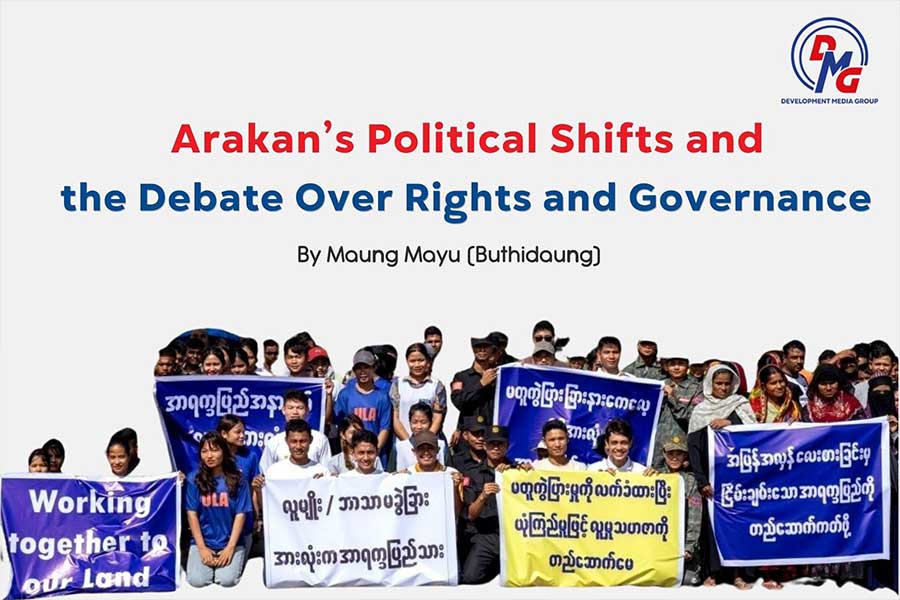
Arakan’s Political Shifts and the Debate Over Rights and Governance
By Admin 27 Aug 2026
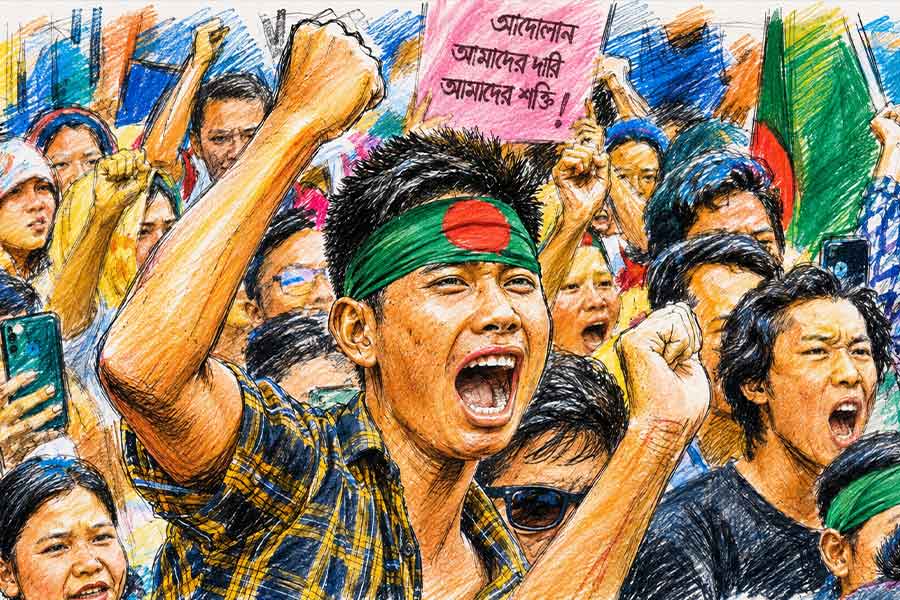
Securing Rights for Bangladesh's Indigenous Peoples is Indispensable
By Admin 09 Aug 2026

Reflections on the Arakanese (Rakhine) Language Curriculum
By Admin 14 Jul 2026
POLITICS

BUSINESS
Industry to manufacture finished goods from coconut starting in early 2020
By Aung Kaung Zaw 20 Nov 2019