
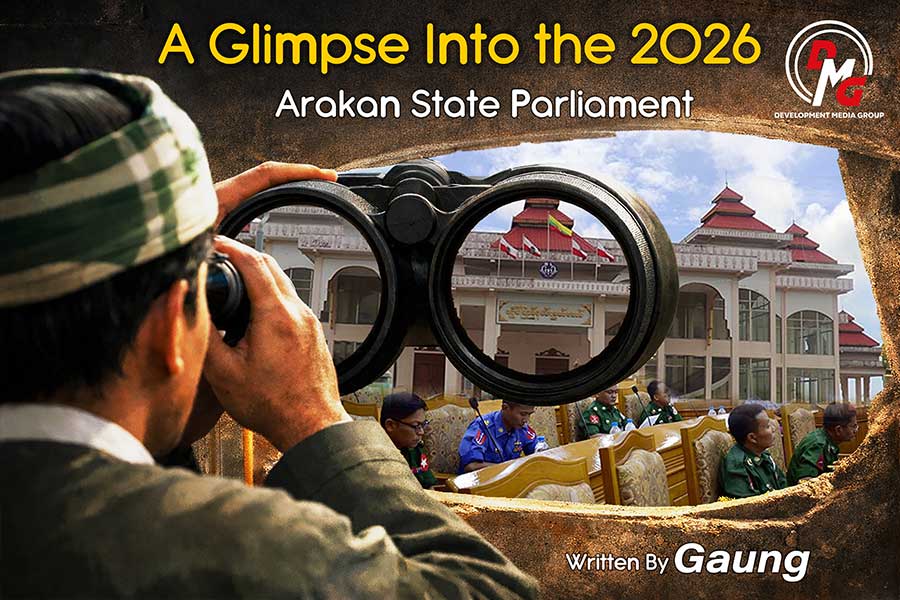
- A Glimpse Into the 2026 Arakan State Parliament
- Junta airstrikes target military outposts seized by Arakan Army in Arakan State
- Motorbike spare part prices skyrocket in Arakan State amid tighter traffic rules
- Kyauktaw IDP camps struggle with inadequate latrines
- Religious freedom, interfaith harmony expand in areas controlled by AA in Arakan State
A Glimpse Into the 2026 Arakan State Parliament
Arakan State has 17 townships. The Arakan Army (AA) controls 14 of them. As a result, the military regime was able to conduct elections in only three townships, Sittwe, Kyaukphyu, and Manaung and even there, voting was incomplete in Sittwe and Kyaukphyu.
08 Feb 2026
Written By Gaung
An election held in just three townships
Arakan State has 17 townships. The Arakan Army (AA) controls 14 of them. As a result, the military regime was able to conduct elections in only three townships, Sittwe, Kyaukphyu, and Manaung and even there, voting was incomplete in Sittwe and Kyaukphyu.
The first phase of voting effectively ended on December 28, 2025. The regime says it will convene the Arakan State Parliament in April 2026 and form a new government.
“This was not a statewide election, it was an election confined to a narrow pocket of territory.”
Only about 100,000 votes out of 3.1 million people
According to the Union Election Commission (UEC), 195,888 people were listed as eligible voters across the three townships. Yet actual turnout was far lower.
• Sittwe: 40,044 of 92,430 eligible voters
• Kyaukphyu: 10,324 of 47,848
• Manaung: 50,000 of 55,561
In total, only 100,368 people cast ballots.
Based on the 2014 census, Arakan State has a population of more than 3.1 million meaning this election involved barely three percent of the population.
“An election in which one hundred thousand people voted cannot credibly claim to represent more than three million.”
Results: USDP dominates, PR fills the map
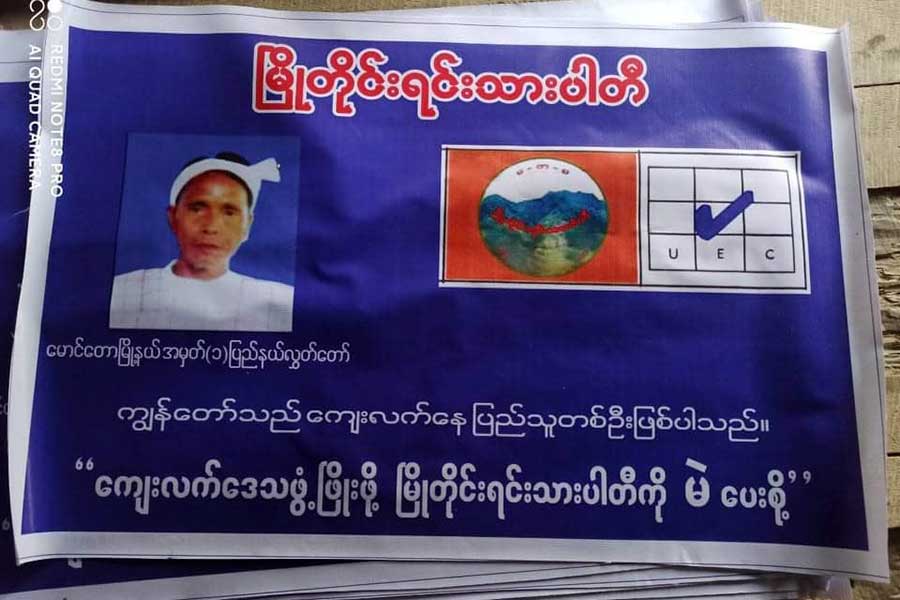
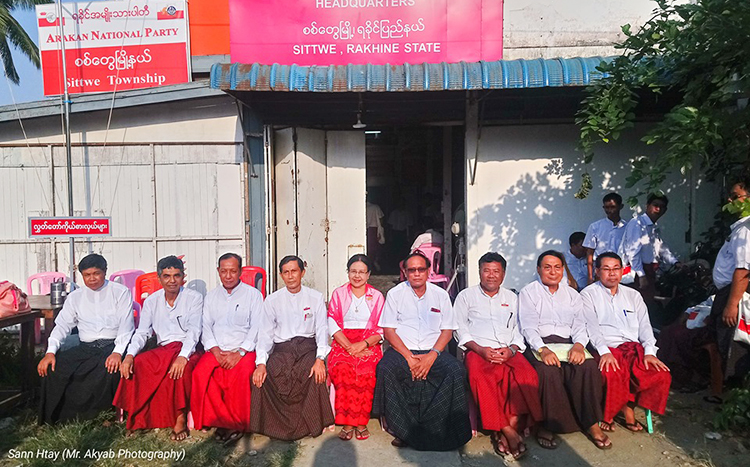
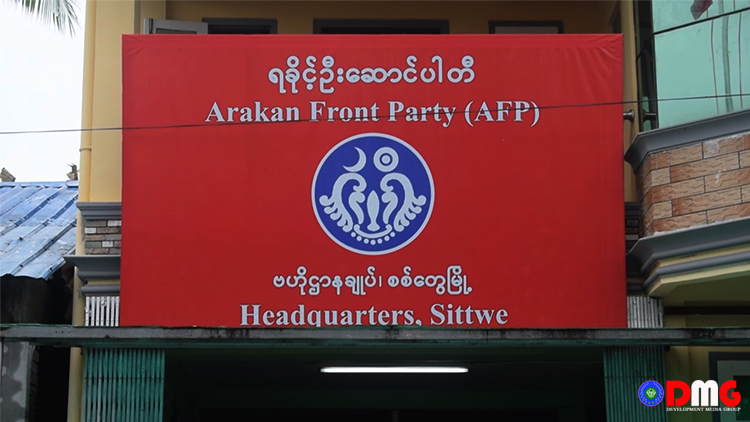
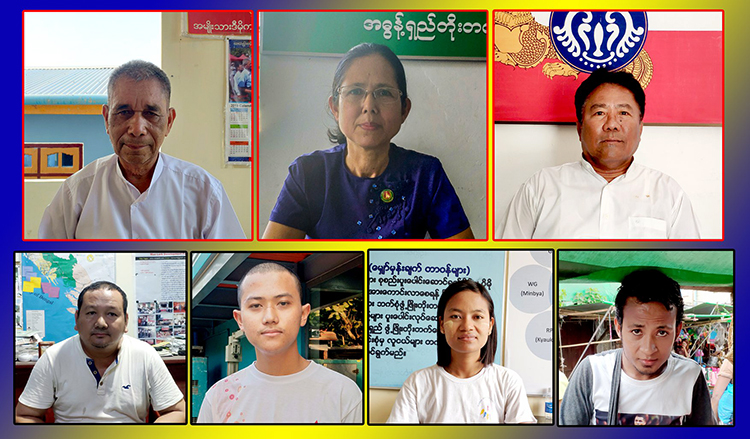
Using the first-past-the-post (FPTP) system in the three townships, the Union Solidarity and Development Party (USDP) won the majority of contested seats. The Arakan Front Party (AFP) and Rakhine Nationalities Party (RNP) won only a handful.
Afterward, the UEC used proportional representation (PR) to allocate seats across the entire state including areas where no voting took place.
Under the UEC’s final list, seats eligible to represent Arakan State are distributed as follows:
• USDP: 19 seats
• AFP: 8 seats
• RNP: 6 seats
A smaller parliament and more military weight
On January 5, 2026, the UEC announced 33 MPs eligible to represent Arakan State:
• 3 Pyithu Hluttaw MPs
• 9 Amyotha Hluttaw MPs
• 21 Arakan State Hluttaw MPs
The emerging 2026 Arakan State Parliament will therefore consist of:
• 21 civilian MPs, and
• 12 military-appointed representatives
That is a sharp reduction from the previous 47-seat structure. Nineteen seats have effectively disappeared.
“With fewer seats and the same number of military appointees, civilian representation is structurally weakened.”
MPs without elections and the PR controversy
The most contentious issue is how MPs were assigned to represent townships where elections were never held, including areas fully controlled by the Arakan Army.
To make this possible, the military regime blended FPTP and PR into a system resembling mixed-member proportional (MMP) representation. All 17 townships were grouped into two PR constituencies:
• PR Constituency (1): Sittwe, Maungdaw, Mrauk-U districts
• PR Constituency (2): Kyaukphyu, Taungup, Thandwe, Ann districts
In reality, voting occurred only in Sittwe within Constituency (1), and only in Kyaukphyu and Manaung within Constituency (2). Yet PR seats were allocated as if the entire constituencies had voted.
Legal experts argue this system contradicts the 2008 Constitution, which is based on township-level representation. Lawyer U Aung Htoo has publicly stated that applying PR in this way violates both the letter and spirit of the constitution.
“The rules were rewritten to fit the outcome not the other way around.”
Can MPs represent places they cannot reach?
Beyond legality, there is a practical question: How can MPs represent townships they cannot enter?
Many MPs assigned to conflict-affected townships will be unable to:
• travel to their constituencies,
• meet residents, or
• hear local concerns.
Under such conditions, their ability to submit proposals, scrutinize budgets, or hold the state government accountable is deeply questionable.
Bottom line: representation shrinks, military control grows
With 12 military appointees in a 33-seat parliament, the military bloc holds more than one-third of seats automatically. Combined with the USDP, this bloc can dominate key decisions including the appointment of the Chief Minister, Speaker, and state government positions.
In past parliaments, Arakan parties elected by popular vote debated laws, questioned ministers, and shaped policy. The 2026 Arakan State Parliament, by contrast, appears set to operate within narrow boundaries defined by war, restricted voting, and engineered electoral rules.
“What emerges is less a representative parliament than a political stage managed to fit the military’s design.”

Top News
Junta airstrikes target military outposts seized by Arakan Army in Arakan State
By Admin 07 Feb 2026
Motorbike spare part prices skyrocket in Arakan State amid tighter traffic rules
By Admin 07 Feb 2026
Kyauktaw IDP camps struggle with inadequate latrines
By Admin 07 Feb 2026
IDPs in Kyauktaw struggle with collapsing shelters amid aid shortages
By Admin 06 Feb 2026