
- Heavy clashes erupt between junta and Arakan Army near Sittwe
- Arakan residents suffer severe mental and physical distress amid junta airstrikes
- Junta jet fleet bombs at least three locations in Kyauktaw
- Junta aerial bombardment of Taungup leaves two residents dead, one injured
- Junta deploys 2,000 troops in major offensive against AA-held territory: ISP-Myanmar
Heavy rains deepen livelihood crisis for Arakan IDPs
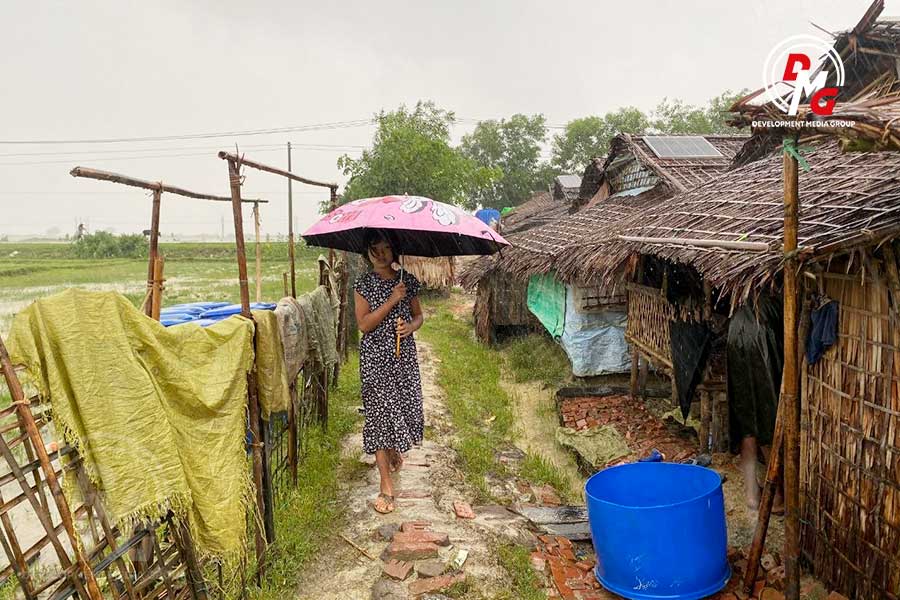
Internally displaced persons (IDPs) in Arakan State are facing worsening hardships related to shelter, food and healthcare as heavy monsoon rains have battered the region for about a week, leaving many unable to work outdoors.
09 Jul 2026
DMG Newsroom
9 July 2026, Kyauktaw
Internally displaced persons (IDPs) in Arakan State are facing worsening hardships related to shelter, food and healthcare as heavy monsoon rains have battered the region for about a week, leaving many unable to work outdoors.
IDPs in displacement camps in Kyauktaw Township said continuous rain and strong winds have caused their temporary shelters to leak, while dwindling food supplies have heightened concerns over their survival.
"We use tarpaulins for shelter, covering holes in the corrugated iron sheets, but it is not secure. Rain leaks through. Yesterday, while we were eating rice, the wind blew and soaked everything. It is that difficult. But we can tolerate and endure these living conditions as part of being displaced. What we absolutely cannot tolerate is the struggle to survive," said Daw Shwe Khin Aye, an IDP in Kyauktaw Township.
Caught between the constant threat of junta airstrikes and severe weather, displaced people say they are enduring growing physical and emotional hardship.
Most IDPs rely on daily wage work to support their families. However, recent torrential rains have halted cargo boat operations, leaving many without work.
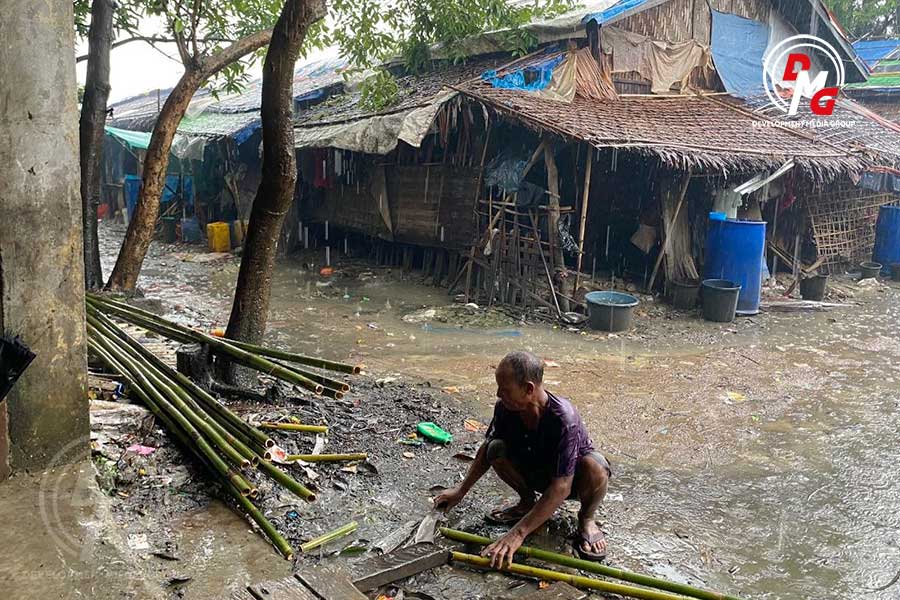
Even those who have found seasonal employment during the monsoon say low wages and soaring commodity prices have made it increasingly difficult to make ends meet.
"A woman earns only about K8,000 a day, and men do not make much more, getting around K20,000 daily. Families with active workers get a little income, but those without earn nothing at all. IDPs spend whatever they can scrimp up on oil and salt. Almost no one has extra money to live on," said U Aung Thein Tun, another IDP in Kyauktaw Township.
The junta's trade restrictions on routes into Arakan State have driven commodity prices sharply higher, worsening the daily survival challenges faced by displaced communities.
Rising prices have also left many IDPs unable to afford raincoats, forcing them to work in heavy rain despite the risk of illness.
"When it rains, I can't afford to buy a raincoat. Going to work makes us sick, but we still have to go out in this heavy rain because we need to eat. Whether we earn K10,000, K20,000, or just K5,000, we have to make do to feed our families," Daw Shwe Khin Aye added.
The persistent wet conditions have also raised concerns about seasonal influenza and diarrhea, particularly among children and the elderly, due to limited access to safe drinking water and a shortage of mosquito nets.
The ongoing conflict in Arakan State has displaced thousands of civilians, most of whom depend on daily wage labor for their livelihoods.
Many displaced children have also been unable to return to school despite the start of the academic year because of high education costs, expensive school supplies, and the long distances between displacement camps and schools.
"With the heavy rains in Arakan State, jobs are scarce. The regime bombed my previous workplace, so I can no longer work there. Displaced people face immense challenges across livelihoods, education and health. Everyone is struggling right now," said Ma Hnin Nwel, a displaced resident.
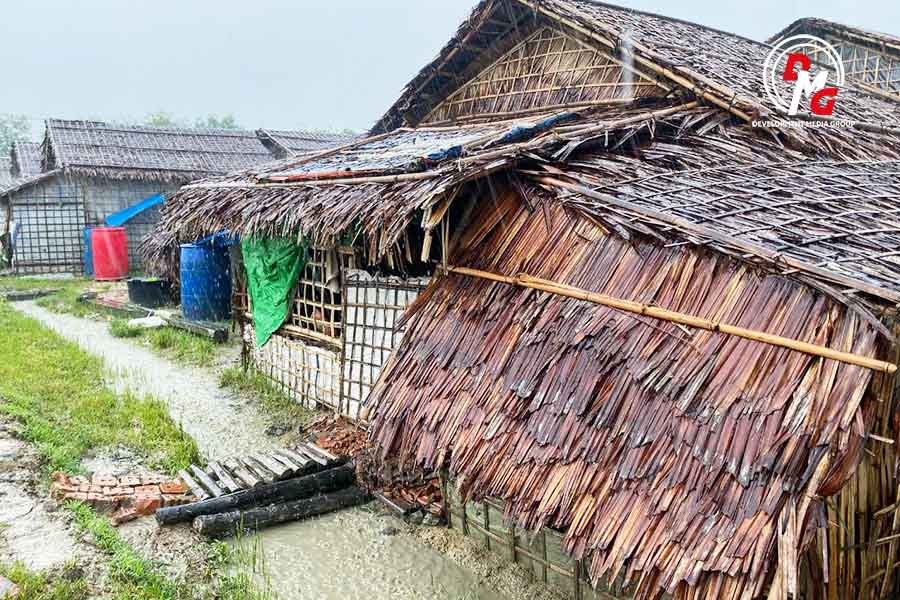
In addition to displacement, IDPs continue to face the threat of junta airstrikes, which have caused numerous civilian casualties.
Camp residents said they urgently need mosquito nets, tarpaulins, medicines, basic food supplies and feminine hygiene products, but have yet to receive external humanitarian assistance.
Heavy rains have lashed Arakan State since 4 July, forcing residents living near rivers, creeks and low-lying areas to evacuate to safer locations.

Top News
Heavy clashes erupt between junta and Arakan Army near Sittwe
By Admin 07 Oct 2026
Arakan residents suffer severe mental and physical distress amid junta airstrikes
By Admin 07 Oct 2026
Junta jet fleet bombs at least three locations in Kyauktaw
By Admin 07 Oct 2026
Two ethnic Chakma men injured in Maungdaw landmine blast
By Admin 07 Oct 2026
Ponnagyun residents flee en masse as junta airstrikes target displacement camps
By Admin 06 Oct 2026