
- ISP-Myanmar reports at least 115 mass civilian killing incidents across Myanmar
- Junta airstrikes on Ponnagyun, Rathedaung villages kill one, injure three
- UN High Commissioner, UK condemn Kyauktaw airstrike killing at least 50 civilians
- ULA/AA faces governance challenges as it consolidates control in Arakan: ISP-Myanmar
- Death toll from Kyauktaw airstrike rises to 50
Editorial : Kyauktaw Airstrike Exposes Arakan’s Deepening Civilian Protection Crisis
Kyauktaw was not an isolated incident. On the same day, military airstrikes were reported in Ponnagyun, Anjanapura (Minbya) and Thandwe townships. In the preceding 11 days, airstrikes and artillery attacks across nine Arakan townships killed at least six civilians and injured 16 others, according to an Arakan Army (AA) statement reported by DMG.
30 Sep 2026
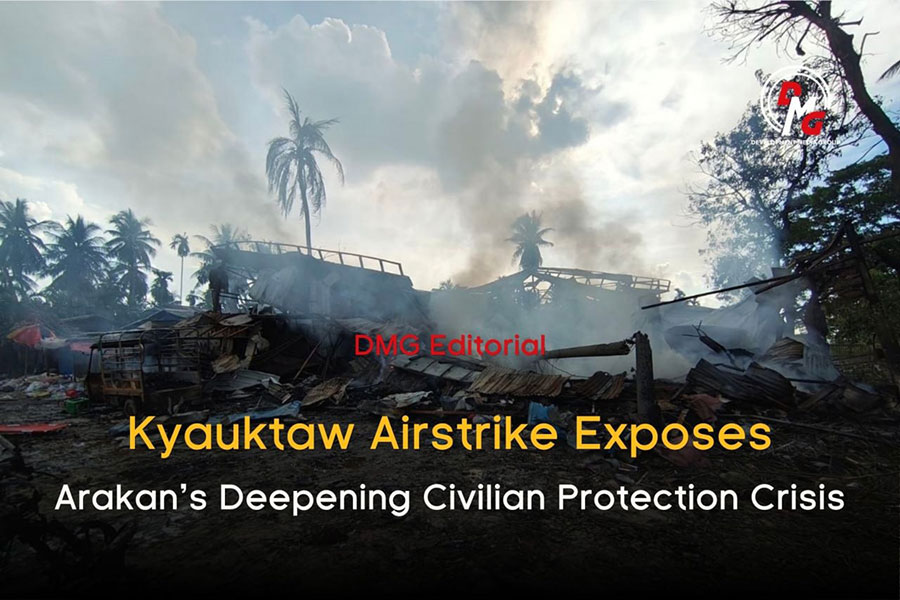
The September 28 airstrike on the crowded India Market and Kissapanadi Bridge area in Kyauktaw has brought into sharp focus one of the most serious realities confronting civilians in Arakan: territorial control does not necessarily guarantee civilian security.
The death toll from the attack has risen to 50 after another critically injured person died while receiving medical treatment, according to DMG’s latest reporting. Fifty-eight people were recorded as injured, with many of them seriously wounded. The bombs struck shortly after noon, when the market and surrounding area were crowded with shoppers, traders and travellers.
Kyauktaw was not an isolated incident. On the same day, military airstrikes were reported in Ponnagyun, Anjanapura (Minbya) and Thandwe townships. In the preceding 11 days, airstrikes and artillery attacks across nine Arakan townships killed at least six civilians and injured 16 others, according to an Arakan Army (AA) statement reported by DMG. Civilian homes, religious buildings and a school were also damaged.
The broader figures illustrate the scale of the danger. ISP-Myanmar documented at least 222 military airstrikes in Arakan between March 31 and August 31, placing the state among the areas with the highest recorded numbers of airstrikes nationwide during that period. DMG’s own records show that at least 602 civilians were killed and 1,211 injured in military airstrikes across Arakan between April 2024 and September 12, 2026. Those figures are not exhaustive and do not include the latest September attacks, including the Kyauktaw bombing.
The strategic implications are increasingly clear. Although the Myanmar military has lost control of most of Arakan, it retains the capacity to strike communities from the air. ISP-Myanmar recently assessed that the ULA/AA controls 92.6 percent of Arakan State, while the military retains key footholds including Sittwe, Kyaukphyu and Manaung. Despite its reduced territorial presence, air, artillery and naval power continue to give the military the ability to threaten areas beyond its effective ground control.
For civilians, this creates a dangerous contradiction. Front lines may shift and territorial control may change, but communities can remain exposed to attacks from the sky. Markets, schools, hospitals, religious buildings and transport hubs can remain vulnerable even when they are far from immediate ground fighting.
This reality means civilian protection must become an urgent priority. Effective air-raid warnings, accessible shelters, emergency medical preparedness and evacuation procedures can help reduce casualties. Humanitarian and medical organisations must also be able to reach affected communities, while independent journalists need access to document casualties, destruction and the circumstances surrounding attacks.
The international reaction to Kyauktaw has again raised the question of accountability. ASEAN Parliamentarians for Human Rights (APHR) condemned the September 28 attack, demanded accountability and called for an end to military violence and impunity. APHR also urged governments to halt supplies of arms, aviation fuel and dual-use materials to the Myanmar military, support international justice efforts, and allow unhindered humanitarian and medical assistance to reach survivors in Kyauktaw and elsewhere in Arakan.
Such international attention is important, but repeated expressions of concern have not prevented further civilian casualties. The more difficult question is how regional and international actors can turn concern into practical measures that strengthen civilian protection, humanitarian access, independent documentation and credible accountability for alleged violations of international humanitarian law.
At the same time, casualty figures and allegations arising from the conflict must continue to be carefully documented and independently verified wherever possible. In a war marked by restricted access and competing narratives, professional journalism and the preservation of evidence are essential both for informing the public and for any future accountability process.
Kyauktaw should therefore be understood as more than another deadly episode in Arakan’s long conflict. It exposes a widening gap between territorial control and actual human security.
Who controls a town matters politically and militarily. For ordinary people, however, security has a more immediate meaning: whether they can go to a market, send their children to school, seek medical treatment or travel between communities without fearing an attack from the sky.
The September 28 tragedy is a stark reminder that control of the ground alone cannot protect civilians from air power. As the conflict in Arakan evolves, protecting civilian life must remain at the centre of the response. Otherwise, the military map may continue to change while ordinary people continue to bear the heaviest cost.

Opinion
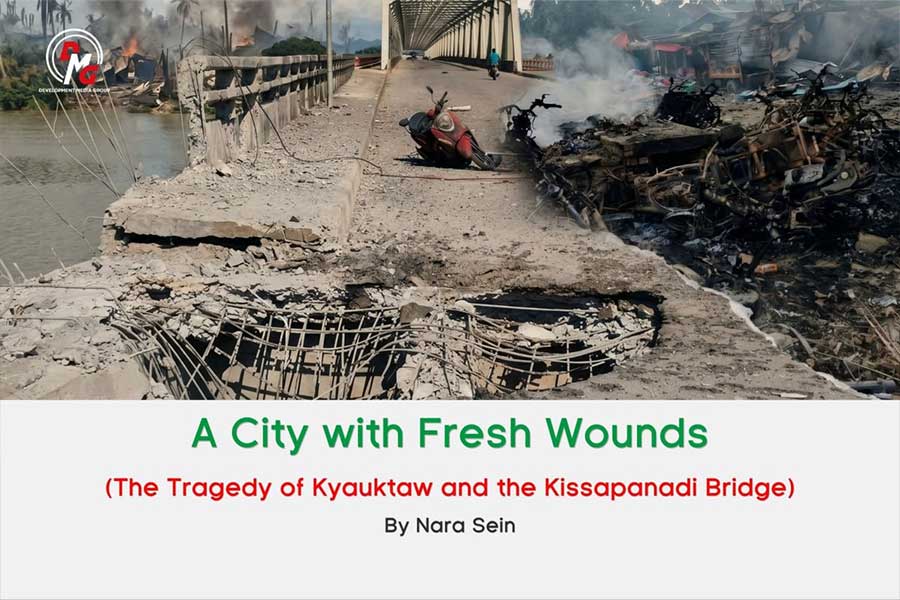
A City with Fresh Wounds (The Tragedy of Kyauktaw and the Kissapanadi Bridge)
By Admin 01 Oct 2026
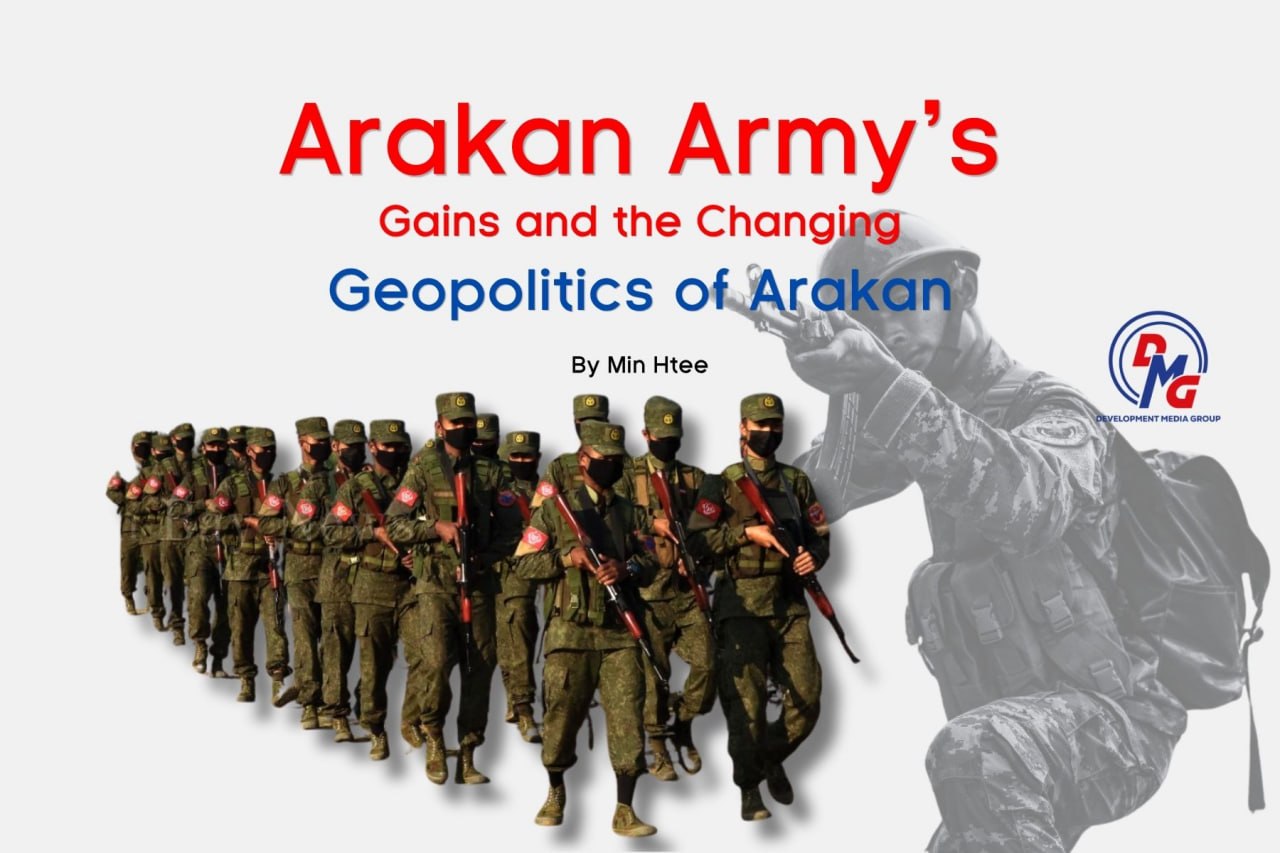
Arakan Army’s Gains and the Changing Geopolitics of Arakan
By Admin 29 Sep 2026
Beyond Military Victory: What Is Myanmar’s Ultimate Political Objective?
By Admin 26 Sep 2026
UN at a Crossroads: Six Priorities for a Shared Future
By Admin 23 Sep 2026
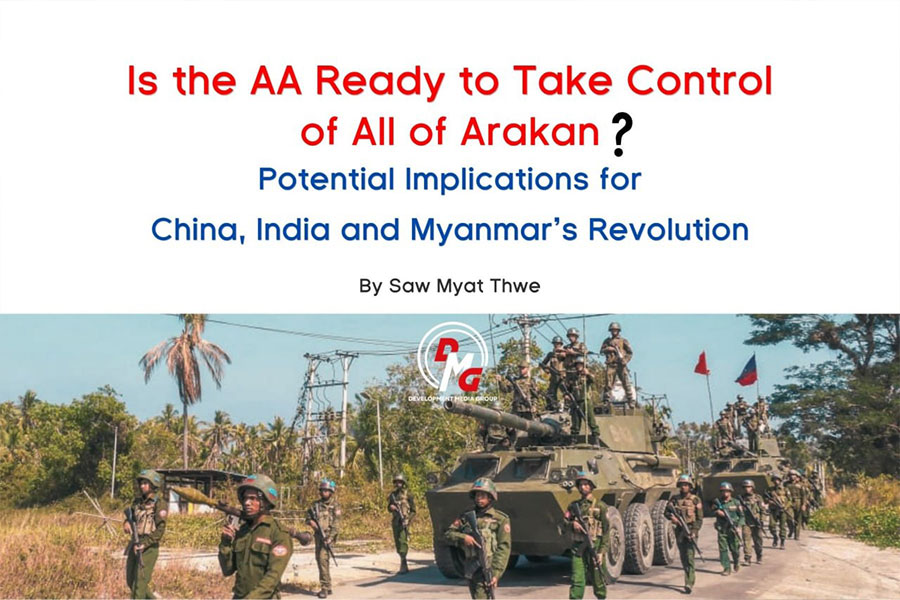
.jpg)
How Can Myanmar’s Political Crisis Be Brought to an End?
By Admin 13 Sep 2026
POLITICS

BUSINESS
Industry to manufacture finished goods from coconut starting in early 2020
By Aung Kaung Zaw 20 Nov 2019